“Identity Cannot Become a Death Sentence, Crime Must Be Treated as Crime, Not Ethnicity”, MACBAN Warns Against Collective Blame in Plateau
By: Zagazola Makama
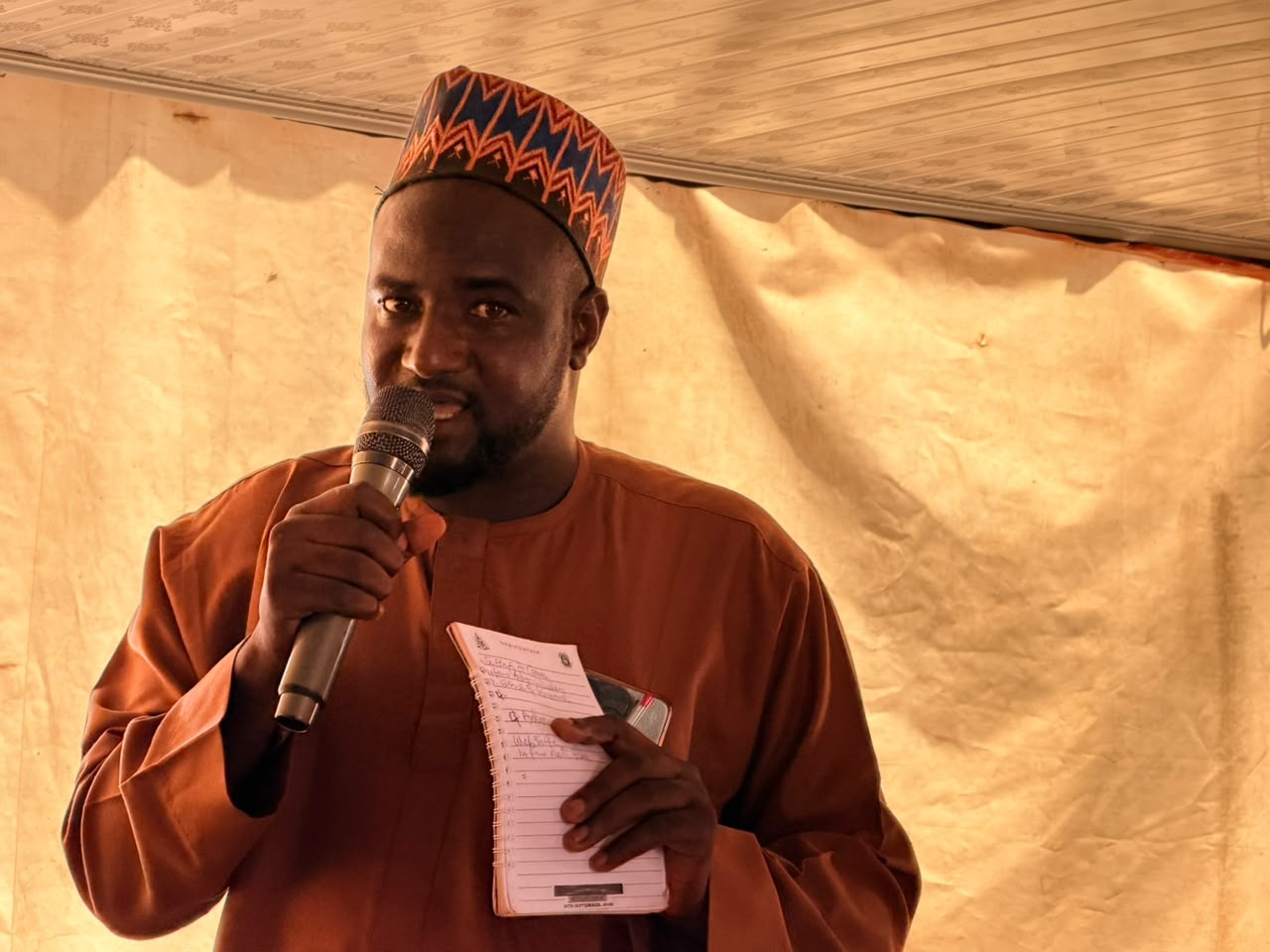
The Assistant Youth Leader of Miyetti Allah Cattle Breeders Association of Nigeria (MACBAN), Barkin Ladi branch, Idris Saidu Adamu, has identified collective blame, civilian vigilantism, identity-based killings, social-media incitement and what he described as unequal treatment of displaced communities as major factors sustaining violence in Plateau State.
Adamu made the submission during an interaction with journalists in Plateau State, where he argued that lasting peace would remain difficult unless government and communities stopped treating criminality as a crime belonging to a particular ethnic or religious group.
He said the presence of criminals in every community should make investigation, evidence and due process the basis for determining responsibility for crimes.
“We are having criminals in all parts. Every tribe, every religion has criminals.”
According to him, one of the most dangerous developments in the Plateau crisis is the practice of civilians taking the law into their own hands whenever an incident occurs.
Adamu alleged that while the Fulani community generally accepts the prosecution of suspects arrested for crimes, there have been instances where community members from other groups have protested against the arrest or prosecution of suspects from their communities.
“As far as the Fulani community in Plateau State is concerned, we have never protested the arrest of any criminal that was. In fact, we want the law to take its course on any criminal that is caught.”
He added: “But on the contrary, in the part of the natives and other tribes, when a criminal is caught, they will come out and protest that such a criminal should not be prosecuted.”
Adamu said such behaviour creates an environment in which criminal suspects can become protected by communal identity, while victims and security agencies are placed under additional pressure.
‘If suspect is not caught, it must be Fulani’
The MACBAN youth leader also accused sections of the population of prematurely attributing crimes to Fulani people whenever the actual perpetrators are not immediately identified.
“If there is any ordinary incident that happens, be it a kidnapping, be it a robbery, anything, any criminality that everyone is capable of doing, if the suspect or the criminal is not caught, the final conclusion to the negative crimes is that it must have been committed by a Fulani.”
He said such assumptions can transform an ordinary criminal investigation into an ethnic confrontation.
Adamu cited Mushere as an example, recalling the kidnapping of the father of former Plateau State Governor Joshua Dariye.
He claimed that the initial suspicion at the time was that Fulani people were responsible, but that subsequent investigations, according to his account, pointed to individuals from the same community as the victim.
“The first thing they did that time was that it was Fulani that kidnapped him. But investigations later revealed that it was his close ally, his tribesman, that kidnapped him under the leadership of one Jethro Bassey.”
That historical claim was presented by Adamu as an illustration of the danger of assigning ethnic responsibility before investigations are completed.
May 2025 Mushere violence
Adamu also referred to the violence that followed the killing of a pastor in the Mushere area in May 2025, arguing that accusations against Fulani residents should have been subjected to investigation before retaliatory action was taken.
Contemporary reports from May 2025 documented the killing of Pastor Mimang Lekyil in Kwakas-Mushere and subsequent violence, including the reported burning of Fulani structures by youths, followed by further killings in Mbor and surrounding communities. Accounts of responsibility for the attacks differed, underscoring the complexity of the sequence of events.
Read Also:
Adamu said: “Instead of them to just let the allegation and fall back and allow security agencies to investigate, they came out and protested it. They began to pull in first that Fulani houses and they burn houses. They killed people on the 27th of May 2025.”
He alleged that Fulani residents were subsequently forced out of Mushere Central and neighbouring areas.
“So they chased all Fulani people out of Mushere central and all other neighboring areas in Mushere city.”
He argued that the incident demonstrated how an allegation, when converted into communal action without investigation, could produce a cycle of retaliation and further displacement.
Adamu further alleged that women confronted security personnel during the violence, some soldiers were wounded, and their houses were burnt while people were inside.
‘Identity cannot become a death sentence’
The MACBAN Youth Leader said another dimension of the crisis was the targeting of passengers travelling on public transportation simply because of their ethnic or religious identity.
“Passengers, people who are in public transit, that are moving from one place to another, they don’t even know what is happening where. They will be singled out of public bus and killed on highway because of their identity.”
He described this as unacceptable, arguing that an individual’s ethnicity or religion cannot constitute evidence of criminal involvement. “That one too must be stopped.”
This, perhaps more than any other issue, goes to the heart of Plateau’s security challenge: when identity becomes a substitute for evidence, ordinary criminality can rapidly become communal violence.
A kidnapper, robber or killer should be identified through investigation, intelligence and evidence. The failure to immediately identify a suspect cannot legitimately become proof against an entire ethnic group.
Social media and the escalation of violence
Adamu also raised concerns over social-media activity by individuals he described as influential figures who allegedly use their platforms to encourage retaliation and violence.
“You will see people that are supposed to be leaders, people that are supposed to take responsibility for this trend, they will come out and gather people and record it and put on social media.”
He alleged that some messages amount to direct calls for attacks. “They are calling for anarchy in this land.”
According to him, repeated public calls for violence should attract the attention of law-enforcement agencies.
“If one Fulani person will come out and do that on social media space, he will not stay more than 24 hours without being arrested.”
In addressing such allegations, however, the same principle of due process should apply: credible threats or incitement to violence should be investigated on the basis of evidence, while lawful expression should not itself be treated as a crime.
Political will and the question of displaced Fulani communities
Adamu said the deeper challenge was what he described as a lack of political will to apply peace and resettlement policies equally to all communities.
“That lack of political will, in fact, anything that we want to do, as far as we are doing it in order to have a lasting peace in this land, that political will must be there.”
He argued that government should not distinguish between displaced citizens on the basis of ethnicity or religion.
“You cannot be segregating among people who are supposed to be your subjects.”
He said some Fulani families who had lived for years in Plateau communities, owned houses and farmland, and established livelihoods had been forced to leave their homes during periods of violence.
“They are chased away. Some of them are now taking refuge in Bauchi, some are in other parts of Plateau.”
According to him, the question of their return has received insufficient attention.
“But this government has never talked about how to resettle the Fulani people back to where they were born and brought up.”
Adamu contrasted this with public calls for other displaced communities to return to their ancestral homes.
“But they are always saying that natives that have been displaced should go back to their houses.”