JRB Construction: How an Indigenous Contractor Is Rewriting Nigeria’s Road-Building Story
By Chidi Omeje
There is a quiet revolution taking place on Nigeria’s highways.
For decades, the narrative surrounding major infrastructure projects in Nigeria has often been dominated by foreign construction giants. Indigenous contractors were frequently regarded as second-tier players—capable of handling smaller projects, but supposedly lacking the technical capacity, equipment, financial muscle and managerial competence required to execute major federal road projects.
That narrative is changing.
And one of the companies at the centre of that change is JRB Construction Company Limited, under the leadership of its Managing Director, Dr. Jimoh Rauf Badamosi.
Indeed, the emergence of JRB as one of the most trusted indigenous construction companies in the country is becoming increasingly difficult to ignore. More significantly, its rise is helping to change the perception of what Nigerian-owned construction companies can achieve when given the opportunity—and when they themselves rise to the occasion.
Few endorsements illustrate this transformation better than the repeated commendation of the Minister of Works, Senator Dave Umahi.
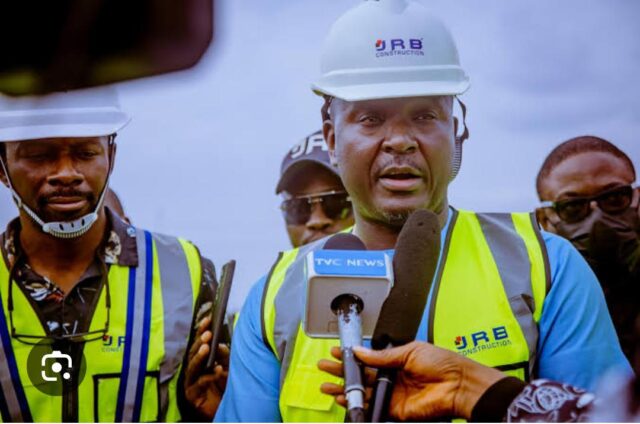
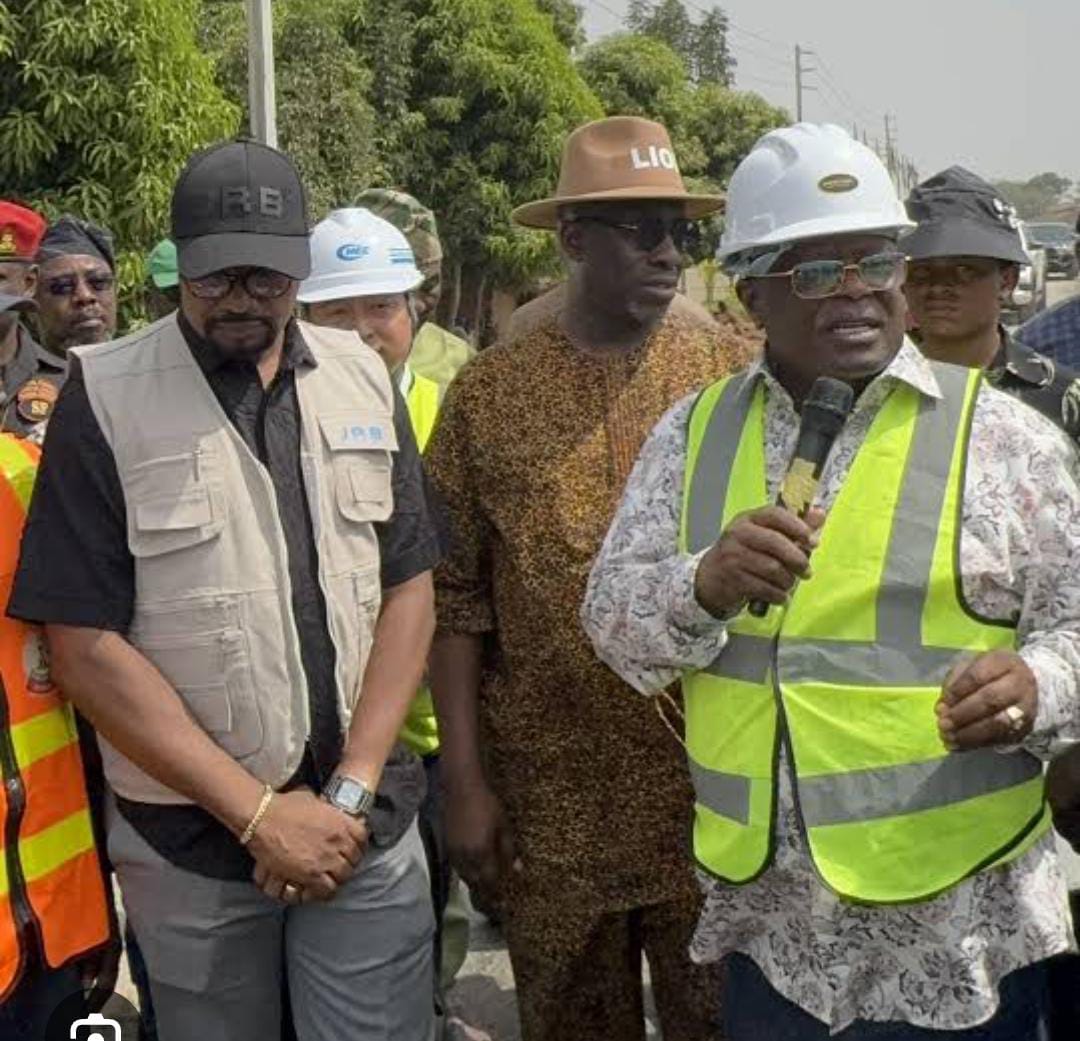
During an inspection of the Oyo–Ogbomoso dual carriageway in 2025, Umahi did not merely praise JRB. He made an unusually emphatic declaration, describing it as the best indigenous contractor in the Ministry of Works after witnessing the transformation of the project following JRB’s takeover. The Minister said he was “shocked” by the quality of work and praised the company’s drainage, equipment, workforce and overall capacity.
That was not an isolated compliment.
On the Abuja–Keffi road project, the Minister again described JRB’s work as “top-notch”, comparing its performance favourably with that of a major international construction company and commending the speed with which it mobilised and executed the project.
Then, in June 2026, during another inspection, Umahi once again singled out JRB for commendation, describing the company as a model of professionalism and commitment and praising its significant investment in Nigeria’s infrastructure development.
These endorsements matter because they come from the man directly responsible for the Federal Government’s road infrastructure programme. They are not merely corporate accolades; they amount to an important vote of confidence in the capacity of Nigerian companies to deliver projects of national significance.
From Taking Over Failed Projects to Delivering
Perhaps the most compelling part of the JRB story is that the company has increasingly found itself stepping into difficult projects where performance has fallen short.
The Oyo–Ogbomoso road provides a striking example.
The project had been awarded to another contractor but was subsequently terminated by the Federal Government. JRB was brought in to complete the remaining section. Rather than treating the inherited difficulties as an excuse, the company mobilised to site, undertook fresh investigations and commenced work with the stated objective of delivering within the revised timeline.
That experience appears to have reinforced an important principle: the true test of a contractor is not the ease of the project it receives, but what it does with a difficult project.
JRB has increasingly demonstrated that capacity.
The company has been involved in critical road interventions across different parts of the country, including the Oyo–Ogbomoso dual carriageway, Abuja–Keffi road and the emergency intervention on the East-West concrete road in Delta State. Its expanding portfolio is evidence of a company moving beyond the traditional limits often associated with indigenous contractors.
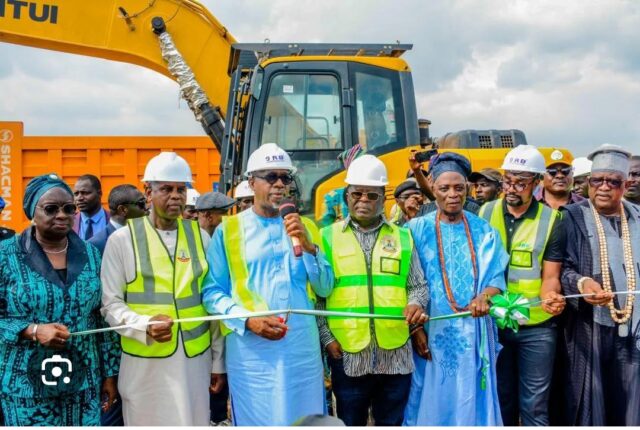
And now, the Federal Government has entrusted JRB with another major responsibility in the South-West: the 114.5-kilometre equivalent dualisation of the Ibadan–Ijebu Ode Road, a project valued at about ₦295.997 billion. The award, announced by the Federal Ministry of Works in May 2026, is another significant vote of confidence in the company’s capacity. The Ministry specifically cited JRB among indigenous contractors whose previous performances had earned commendation.
The Badamosi Factor
Behind this institutional rise is the leadership of Dr. Jimoh Rauf Badamosi.
The story of JRB is, in many respects, also a story about leadership philosophy.
Read Also:
Badamosi appears to have approached construction not simply as a business of securing contracts, but as an opportunity to demonstrate that Nigerian enterprise can compete on quality, technology, speed and professionalism.
That philosophy is reflected in the company’s growing capacity and equipment base, its willingness to undertake challenging projects and its emphasis on quality execution.
It is also significant that Badamosi’s business interests extend beyond construction into renewable energy and other infrastructure-related investments. His wider business footprint suggests a strategic understanding that Nigeria’s development challenges are interconnected: roads, electricity, transportation, security and economic productivity are all part of the same national development equation.
But it is on the nation’s roads that the JRB story has become most visible.
Building More Than Roads
A road is never merely a road.
A properly constructed highway connects farmers to markets, workers to jobs, businesses to customers and communities to opportunities. It reduces travel time, lowers transportation costs, improves security and stimulates economic activity.
This is why the quality and speed of road construction matter.
Every kilometre of durable road constructed is an investment in the Nigerian economy.
And this is where the JRB experience becomes larger than one company.
If an indigenous company can take over problematic projects, mobilise equipment, deploy professional personnel and deliver work that earns repeated commendations from the Federal Government, then the old argument that Nigeria must invariably depend on foreign contractors for major infrastructure projects becomes increasingly difficult to sustain.
Indeed, the Federal Government’s growing confidence in companies such as JRB is consistent with the administration’s stated policy of empowering indigenous contractors capable of delivering quality infrastructure. At the May 2026 contract-signing ceremony, the Federal Ministry of Works explicitly linked the selection of contractors to competence, track record and proven capacity, while emphasising confidence in indigenous firms.
That is perhaps the most important legacy emerging from the JRB story.
A Confidence Builder for Indigenous Nigeria
For years, Nigeria’s infrastructure conversation has contained an uncomfortable contradiction.
The country has produced engineers, architects, surveyors, project managers and other professionals of international standing. It has also produced entrepreneurs with substantial financial and managerial capacity. Yet, when major public infrastructure projects are discussed, foreign companies have often occupied the commanding heights.
JRB is helping to challenge that model.
The company is demonstrating that being Nigerian-owned does not have to mean being technologically inferior, slow or incapable of handling large and complex assignments.
On the contrary, the evidence emerging from its projects suggests that with the right leadership, investment in equipment, professional personnel, financial discipline and commitment to quality, an indigenous contractor can compete credibly with established international players.
That is why Umahi’s repeated recognition of JRB deserves to be viewed beyond the company itself.
It represents a larger statement about Nigeria’s indigenous capacity.
When the Minister of Works publicly declares an indigenous company the best in its category, compares its performance favourably with international firms and subsequently entrusts it with increasingly important projects, something bigger than a corporate success story is unfolding.
A new confidence is being built.
The Road Ahead
The greater challenge for JRB now is not merely to justify the confidence already reposed in it, but to sustain it.
Every new project brings greater scrutiny. Every additional kilometre of highway brings greater responsibility. And every commendation from the Federal Government raises the bar for future performance.
That is the burden of success.
For Dr. Jimoh Rauf Badamosi and his team, the task is therefore bigger than completing contracts. It is about preserving a reputation that has increasingly become associated with quality, speed and indigenous capacity.
Nigeria needs many more companies like JRB.
Not companies that merely carry Nigerian names, but Nigerian companies with the capacity, discipline, technology, equipment and professional culture to deliver Nigerian projects to world-class standards.
The JRB experience offers a compelling lesson: when indigenous capacity is matched with competence and opportunity, the results can be transformative.
And perhaps that is the most significant road JRB Construction is building—not just roads across Nigeria, but a road to renewed confidence in the Nigerian contractor.
Under Dr. Jimoh Rauf Badamosi, JRB Construction appears determined to prove that Nigeria does not merely have indigenous contractors capable of executing major infrastructure projects.
Nigeria has indigenous contractors capable of doing them exceptionally well.