When Grief Should Come Before Judgment: A Response to Etim Etim’s Hasty Intervention on Ondo Air crash
By Chidi Omeje
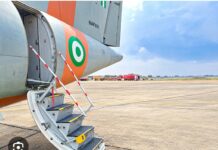
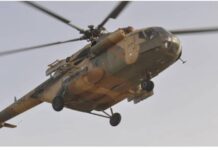
In an article published in the Cables less than 24 hours after the tragic air crash involving a Nigerian Air Force aircraft in Ondo State, Etim Etim asked: “Why do our military aircraft fall from the skies so often?”. He also sought to contrast the safety record of Nigeria’s commercial airlines with that of military aviation, raising questions about why military aircraft appear to suffer more frequent crashes.
Well, Etim is entitled to ask questions, and there will certainly be a time to ask them. But he is grossly mistaken in drawing a direct comparison between commercial jetliners and military aircraft, as though both operate under similar conditions, perform similar missions and face comparable risks. They do not.
Commercial airlines generally operate on established routes, under carefully controlled air-traffic environments and, most importantly, are not deliberately sent into hazardous operational theatres. Military aircraft, on the other hand, are instruments of national defence. Surveillance aircraft, helicopters and other military platforms routinely operate in demanding environments and undertake missions that can expose crews and machines to considerably greater operational risks. Some are deployed over hostile or difficult terrain, at low altitudes, in adverse weather and under conditions that have little or no equivalent in commercial aviation.
Therefore, to juxtapose the two statistics and use the impressive safety record of Nigeria’s commercial aviation sector as evidence that the Nigerian military must necessarily be failing is an apples-to-oranges comparison. More importantly, military aviation accidents are not a Nigerian phenomenon. Even the United States, home to the world’s most technologically advanced and best-resourced military, has suffered its share of tragic military aviation accidents involving aircraft, highly trained personnel and, sometimes, senior commanders.
Military aviation accidents have occurred in virtually every major military power and across different theatres of operation around the world. Technology, training, experience and resources reduce risk; they do not abolish it.
Read Also:
This is not an argument against asking legitimate questions about maintenance, aircraft age, training, operational procedures or human factors. Those are perfectly legitimate questions. But they should be asked after the facts are established, not converted into insinuations while rescue personnel are still searching for victims. That is where Etim Etim’s intervention becomes particularly unfortunate.
At a moment when the nation is mourning, when families are desperately hoping for news of their loved ones, when the Nigerian Air Force and other agencies are engaged in search-and-rescue operations, and when President Bola Ahmed Tinubu has declared three days of official mourning, the appropriate national instinct should be empathy, solidarity and restraint.
Instead, the article chose this moment to ask whether the Nigerian military has a “problem”, suggest that catastrophic crashes occur “almost on a yearly basis”, and describe these accidents as “senseless air accidents”, even before the cause of the latest tragedy has even been established. That is not responsible analysis. It is premature judgment laced with insensitive words.
There will certainly be a time to ask difficult questions. There will be a time for an investigation into the aircraft, its maintenance history, operational circumstances, weather conditions, crew procedures and every other factor that may have contributed to the tragedy. There will be a time to demand accountability if negligence is established. But that time is not while the wreckage is still being searched and families are still waiting for answers.
The Nigerian Air Force does not need condemnation today. It needs the support of a nation whose servicemen and women routinely put their lives on the line in defence of that nation. Those who choose to write about such tragedies should understand an important distinction: asking questions is legitimate; reaching conclusions before the evidence is available is not.
Perhaps the most patriotic thing Etim Etim could have done at this particular moment was to hold his peace. At least until the dead are found, the families are properly informed, the nation has mourned its fallen and the competent authorities have established what actually happened.
Grief deserves silence before speculation.
*Chidi Omeje is the publisher of Security Digest