
The Indispensability of NAF and Other Stories, by Chidi Omeje
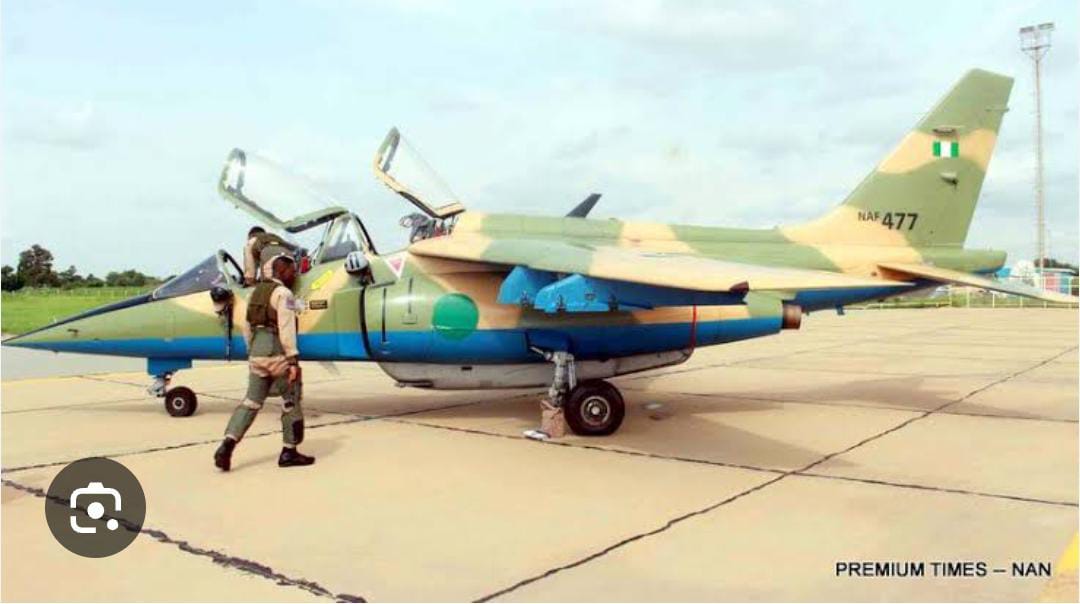
As Nigeria continues to confront the hydra-headed security challenges assailing almost every part, one institution continues to operate with quiet efficiency, decisive impact, and extraordinary courage: the Nigerian Air Force (NAF).
While public attention often gravitates toward ground engagements, the decisive edge in many of Nigeria’s counterterrorism and counterinsurgency successes is increasingly shaped from the skies.
The story of the NAF is that of relentless vigilance, unseen sacrifice, and an unwavering commitment to national survival. Truth be told, modern warfare, especially the kind of insurgency and banditry that Nigeria is confronting, is no longer confined to trenches and checkpoints. It is fluid, intelligence-driven, and multidimensional. In such a battle environment, airpower has proven indispensable, and the NAF has always risen to the occasion.
From the insurgency in the North-East to the banditry-prone North-West and North-Central, and other volatile regions, NAF platforms provide critical Intelligence, Surveillance, and Reconnaissance (ISR), enabling precision targeting and minimizing collateral damage.
These operations are the product of painstaking mission planning, real-time intelligence fusion, and technical expertise. Behind every successful sortie is a chain of professionals including pilots, engineers, air traffic controllers, intelligence analysts, and ground crew, working in seamless coordination. Their work often unfolds far from the public eye, yet its impact reverberates across the country.
The NAF’s contribution to joint operations has fundamentally altered the trajectory of Nigeria’s fight against terrorism and organized crime. Through sustained aerial bombardments of terrorist enclaves, logistics hubs, and supply routes, the Nigerian Air Force has significantly degraded the operational capabilities of insurgent groups.
These precision strikes have not only neutralized high-value targets but have also disrupted command structures, weakened morale, and constrained the mobility of criminal elements. In many instances, air interdictions have paved the way for ground troops to advance, reclaim territory, and stabilize communities. A case in point was the successful vanquishing of no fewer than 61 ISWAP terrorists and their commanders during a foiled infiltration attempt at Malam Fatori, Abadam Local Government Area of Borno State, a fortnight ago.
Read Also:
That successful operation signposts the important synergy between air and ground forces. It is very obvious that without the NAF’s dominance of the airspace, many of such gains recorded in recent years would have been far more difficult to achieve.
What even sets the NAF apart is not just its operational effectiveness, but the human courage that underpins it. NAF personnel routinely operate in high-risk environments, flying into hostile territories, often under the threat of enemy fire and unpredictable weather conditions. Their missions demand split-second decision-making, technical precision, and nerves of steel.
Apart from courageous officers manning the cockpits of NAF fighter jets, there are also gallant ground crews who work tirelessly, sometimes through the night, to ensure aircraft are mission-ready. These are long hours marked by intense pressure, with little margin for error. This culture of professionalism and sacrifice reflects a deep sense of duty. It is a testament to a force that understands the stakes: the security of a nation and the lives of millions.
One of the defining features of the NAF’s operations is its sustained operational tempo. Terrorist groups thrive on regrouping and exploiting gaps in pressure. The Air Force denies them that opportunity. By maintaining round-the-clock vigilance, the NAF ensures that criminal elements remain on the defensive. This persistent pressure has led to the dismantling of hideouts, the destruction of weapons caches, and the disruption of recruitment and training networks. Even when these efforts go unreported, their outcomes are evident in safer highways, reclaimed communities, and the gradual restoration of normalcy in previously troubled areas.
The NAF’s role extends beyond kinetic operations. It is also a key player in humanitarian efforts: conducting medical evacuations, delivering aid to hard-to-reach areas, and supporting disaster response operations. These contributions reinforce its position not just as a fighting force, but as a critical national institution committed to the well-being of citizens.
In an era where narratives are often shaped by what is seen and shared, the work of the Nigerian Air Force reminds us that some of the most consequential efforts occur out of sight. Their sacrifices may not always make headlines, but they are written in the security gains the nation continues to record.
As Nigeria confronts its security challenges, one truth remains clear: the indispensability of the Nigerian Air Force is not in doubt. It is etched in every successful mission, every disrupted threat, and every life protected through their vigilance.
You want other stories? Keep a date with Security Digest.
*Chidi Omeje is the publisher of Security Digest (www.securitydigestng.com)