
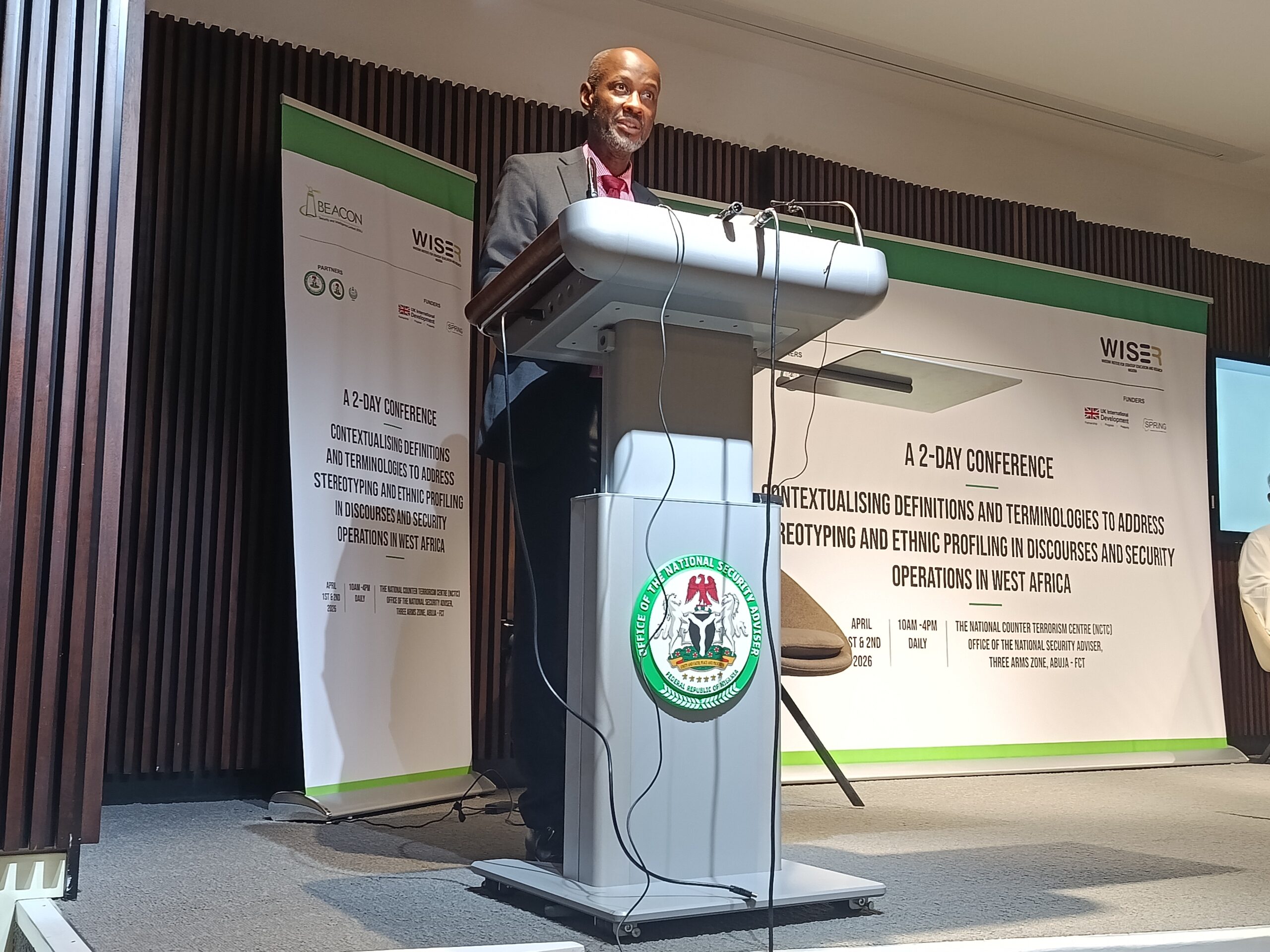
Conference Ends in Abuja with Launch of Anti-Ethnic Profiling Toolkit for Security and Media
By Chidi Omeje
A two-day high-level conference focused on addressing ethnic stereotyping and profiling in security operations and public discourse across West Africa has concluded in Abuja, with stakeholders unveiling a comprehensive Anti-Ethnic Stereotyping and Profiling Toolkit aimed at promoting responsible communication and enhancing national cohesion.
The conference, which brought together security practitioners, policymakers, media professionals, and civil society actors, centred on contextualising definitions and terminologies that often fuel bias, mistrust, and tension within communities. Participants examined how entrenched stereotypes and ethnic profiling have contributed to insecurity and strained relations between security agencies and the public.
Presenting the communiqué at the close of proceedings, the Executive Director of the Whiteink Institute for Strategy Education and Research (WISER), Brigadier General Saleh Bala (rtd), underscored the urgency of adopting the toolkit’s recommendations. He called on stakeholders—particularly those in the security and media sectors—to internalise and apply the framework in their operations and reporting.
According to him, the newly developed toolkit provides practical guidelines for identifying and eliminating prejudicial language, promoting conflict-sensitive communication, and fostering inclusivity in both security engagements and media narratives. He stressed that reducing ethnic profiling and stereotypes is critical to mitigating tensions that have historically exacerbated insecurity in Nigeria and the wider West African region.
Read Also:
In his closing remarks, the Managing Director of Beacon Security and Intelligence Limited, one of the principal organisers of the conference, Dr Kabiru Adamu, revealed that the conference took a critical look at the nature of information and communication circulating both in the digital space and mainstream media, with particular concern over the growing threats posed by deepfakes and misinformation. He noted that the National Assembly, especially the Senate, was carried along in the process and had requested that the conference outcomes be formally submitted to support legislative and policy actions.
He disclosed that the initiative received the support and buy-in of the Federal Ministry of Information and National Orientation, while the Rwandan Embassy was invited to share lessons from Rwanda’s experience in managing post-conflict narratives and fostering national unity.
Highlighting the key outcomes of the conference, he stated that two major deliverables were produced: the Anti-Ethnic Profiling Toolkit and a policy brief on strategic communication to the government, drafted by an expert committee constituted during the conference.
He called on the media to play a central role in advancing the objectives of the initiative, emphasising that responsible journalism and peace-oriented reporting are essential to achieving the broader goal of reshaping narratives and addressing ethnic bias.
“There is value in this conversation that humanises us as a people,” he added, urging all stakeholders to remain committed to fostering mutual understanding and national cohesion.
Dr Adamu also commended participants for their insightful contributions, describing the deliberations as “robust and solution-driven.” He assured that the outcomes of the conference would not remain at the policy level but would be cascaded to subnational actors, including state and community-level institutions, to ensure tangible impact.
He further noted that effective implementation of the toolkit would require sustained collaboration among government agencies, the media, and civil society organisations. He expressed optimism that, if properly adopted, the initiative would help reshape narratives, build trust, and ultimately contribute to improved security outcomes across the region.
The conference marks a significant step in ongoing efforts to address the non-kinetic drivers of conflict, particularly harmful narratives and perceptions, which experts say are as critical to national security as conventional threats.