Jilli Airstrike: The True Story, by Yunusa Bunu Zana
An airstrike by the Nigerian Air Force (NAF) in Jilli, a remote community in northern Borno State, has triggered concern over civilian casualties, with local sources indicating that more than 200 people may have been affected in the aftermath of the operation.
The strike, which occurred on Saturday afternoon, reportedly hit Jilli Market, a location long associated with insurgent activity, at a time when both suspected militants and civilians were present.
Several injured persons have since been evacuated to medical facilities in Damasak and Geidam, where they are currently receiving treatment.
Jilli, situated between Gubio Local Government Area of Borno State and Geidam Local Government Area of Yobe State, has gained notoriety among residents as “Kasu Daulaye,” loosely translated from Kanuri as “the terrorists’ market,” due to its longstanding control by fighters linked to Boko Haram and Islamic State West Africa Province.
Market Under Insurgent Influence
Local accounts indicate that the market has operated for years beyond the reach of government security forces, with insurgents reportedly overseeing commercial activities and moving freely, often armed. The absence of formal authority in parts of northern Borno has forced many residents into uneasy coexistence with militant groups, blurring the line between civilian and insurgent spaces.
Witnesses said the airstrike occurred at about 3:00 p.m., a period when suspected fighters were dispersing from the market. However, the presence of civilians, many of whom rely on the market for survival, contributed to the scale of those affected.
Official and Military Responses
In an official response, Brigadier General Dahiru Abdulsalam (Rtd), Special Adviser on Security Matters to the Yobe State Governor, confirmed that the strike targeted a known insurgent enclave in Jilli on April 11, 2026. He noted that some of the victims were residents of Geidam Local Government Area who had travelled to the market.
Read Also:
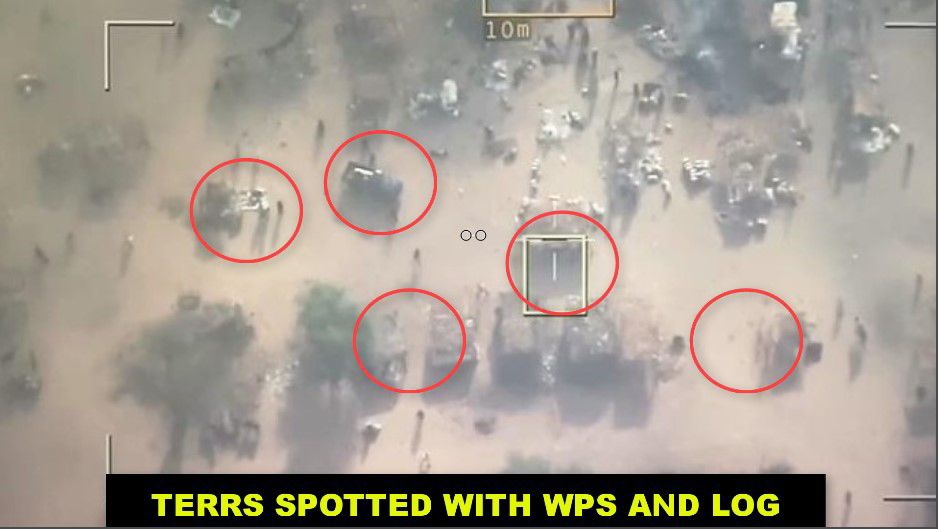
Meanwhile, the military, through Operation HADIN KAI (OPHK), maintained that the strike was a carefully executed, intelligence-driven operation aimed at dismantling a key terrorist logistics hub.
According to the military, the operation followed sustained Intelligence, Surveillance, and Reconnaissance (ISR) missions over the Bindul–Jilli corridor—identified as a major route for insurgent movement and supply chains. Surveillance reportedly tracked the convergence of motorcycles and vehicles at the site, with multiple intelligence sources confirming the presence of ISWAP terrorists and logistics handlers.
Following what it described as a rigorous target validation process, the Air Component carried out the strike, which it said destroyed the enclave, neutralised several fighters, and disrupted planned attacks on military positions in the Gubio axis. Surviving militants were reportedly seen fleeing the area.
Heightened Security Context
The incident comes against the backdrop of renewed insurgent activity in Nigeria’s North East. In January 2026, an improvised explosive device (IED) attack along the Gubio–Damasak road killed eight soldiers, while recent coordinated attacks in Ngamdu and Benisheik have been linked to the same logistics network targeted in Jilli.
Security forces also confirmed the arrest of a suspected logistics courier, identified as “Turja Bulu,” who allegedly confessed to involvement in recent attacks and supply operations for insurgent groups.
Ongoing Concerns and Military Assurances
Operation HADIN KAI reiterated that the use of motorcycles remains banned across the North East due to their persistent use by insurgents for mobility and attacks. The military assured residents that operations would continue with increased intensity to dismantle terrorist strongholds and restore stability to the region.
However, the reported civilian impact of the Jilli strike underscores the complex realities of counterinsurgency operations in areas where civilian populations and militant elements remain deeply intertwined.
*Yunusa Bunu Zana writes for YERWA EXPRESS NEWS