
Plateau’s Cycle of Violence: What Soldiers on Ground Say Must Change
By Chidi Omeje
For years now, Plateau State has remained one of Nigeria’s most volatile flashpoints, a land where cycles of violence have repeatedly defied government interventions, security operations, and peace initiatives. While policymakers, community leaders, and analysts continue to debate the root causes of the crisis, those who stand at the frontline of the conflict every day often possess insights that rarely make it into public discourse.
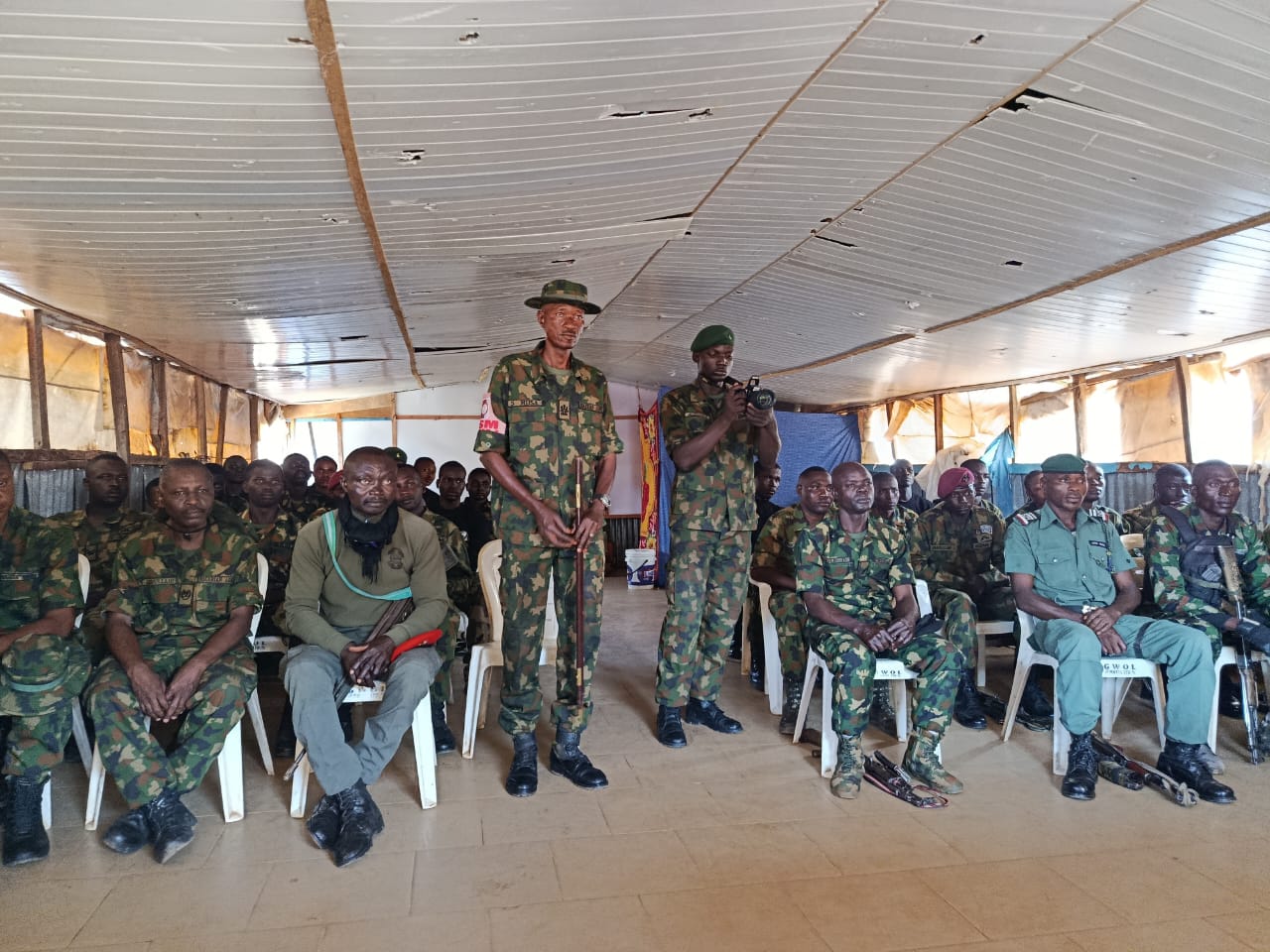
Penultimate week, a team of defence and security correspondents visited Plateau State on a fact-finding mission aimed at understanding the drivers of the protracted insecurity that has plagued the state. During the visit, the team engaged in frank conversations with soldiers of Sector 4, Operation Safe Haven, stationed in Barkin Ladi, one of the epicentres of recurring violence in the state.
In a rare, no-holds-barred interaction, the soldiers shared their observations, frustrations, and perspectives on what continues to fuel the crisis despite years of military deployments and peacebuilding efforts.
For Martins (not his real name), a corporal in the Nigerian Army who has spent nearly eight months in the area, the conflict runs deeper than many outsiders realise.
According to him, the mutual distrust and hostility between sections of the indigenous communities and Fulani groups have become deeply entrenched over the years, making reconciliation increasingly difficult.
“I have been here for less than a year, but what I have seen is difficult to describe,” he said. “The level of hatred and suspicion on both sides is alarming.”
While acknowledging that Fulani militias are often portrayed as the primary aggressors in many of the attacks, the soldier noted that certain actions and attitudes from some local actors also contribute to escalating tensions.
Asked what he believed could bring lasting peace to Plateau, Martins was unequivocal: government action remains the decisive factor.
“The government holds the key,” he said. “If there is genuine political will, this crisis can be addressed. Those instigating violence, funding attacks, or provoking communities should be dealt with decisively, regardless of their status, ethnic background, or religious affiliation.”
His views reflect a sentiment commonly expressed within security circles, that impunity remains one of the biggest obstacles to sustainable peace in conflict-prone areas.
Another soldier who is deployed at a checkpoint along the Barkin Ladi highway, highlighted what he described as a major operational challenge confronting troops on the ground.
Read Also:
According to him, military authorities should authorise personnel to stop and thoroughly search every vehicle passing through security checkpoints, particularly during periods of heightened tension.
He expressed frustration that troops are often compelled to wave through convoys of siren-blaring, heavily tinted sport utility vehicles (SUVs) believed to belong to senior government officials or politically connected individuals.
“Whenever such vehicles approach, they are usually in a hurry, moving at high speed, and we are expected to let them pass without proper checks,” he said.
For soldiers tasked with intercepting weapons and criminal elements, such exemptions can be deeply unsettling.
Kabir noted that some personnel privately fear that the unchecked movement of certain vehicles creates vulnerabilities that could be exploited by actors seeking to transport arms, ammunition, or other materials capable of fuelling violence.
His recommendation was straightforward: no vehicle, regardless of ownership or status, should be exempt from security screening in conflict zones.
“Every vehicle should be subjected to the same level of scrutiny,” he argued. “Security should not recognise privilege.”
Another soldier whose unit regularly patrols communities across the general area pointed to a different concern, the widespread use of motorcycles as a means of commercial transportation.
In his assessment, motorcycles have become one of the most effective tools exploited by criminal elements operating within the state’s difficult terrain.
According to him, attackers often use motorcycles to move swiftly across remote locations, evade security checkpoints, and carry out attacks before disappearing into surrounding communities and forests.
“Many of those involved in violent activities rely on motorcycles because they provide mobility and anonymity,” he observed.
He suggested that authorities should reassess existing regulations governing commercial motorcycle operations in high-risk areas, arguing that tighter controls could help limit the operational freedom of criminal groups.
While the opinions expressed by the soldiers represent personal observations rather than official military positions, they offer a rare glimpse into the realities confronting security personnel deployed in one of Nigeria’s most enduring conflict theatres.
For the troops standing watch in Barkin Ladi and other troubled parts of Plateau, peace remains possible. But in their view, achieving it will require more than guns and checkpoints; it will require difficult decisions, consistent leadership, and a determination to confront the underlying factors that continue to sustain the cycle of bloodshed.