Nigeria Makes Major Strides in Disrupting Terror Financing Networks — NCTC, NFIU Commend National Progress
In a significant development in the country’s counter-terrorism efforts, Nigeria has made marked progress in cutting off illicit financial flows to terrorist groups, thereby weakening their ability to operate, plan, and recruit.
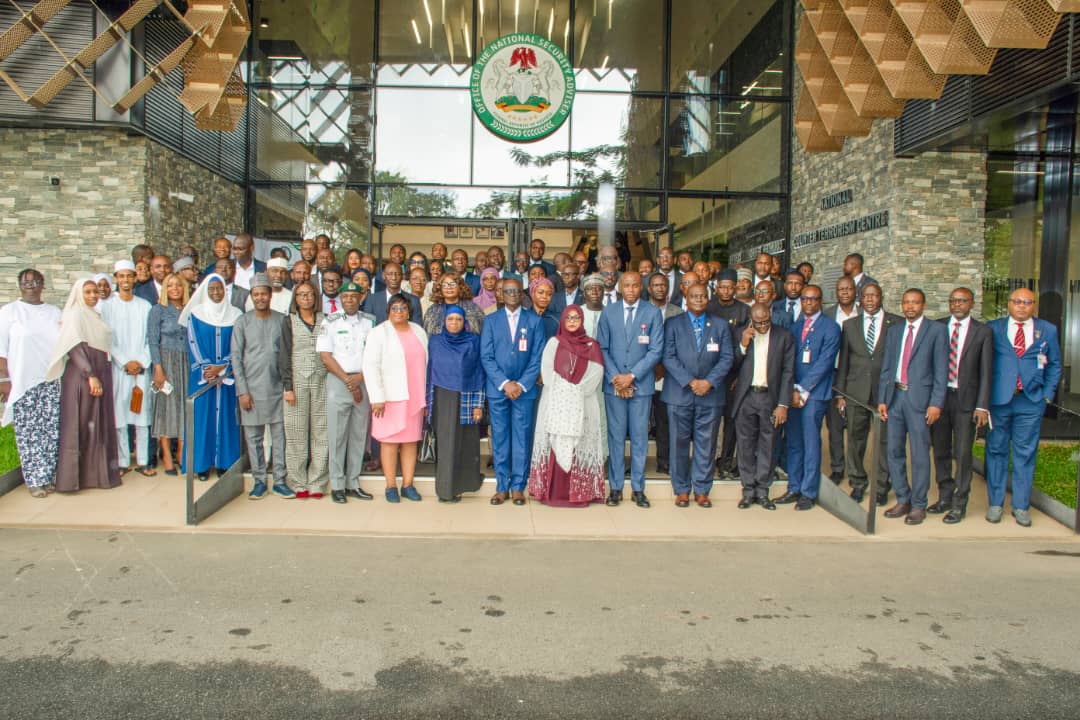
This was disclosed by the National Coordinator of the National Counter Terrorism Centre (NCTC), Office of the National Security Adviser (ONSA), Major General Adamu Garba Laka, during the opening session of a Pre-Mock Onsite Assessment Workshop held at the NCTC Complex in Abuja.
General Laka emphasized that “Disrupting the financial lifelines that enable terrorist groups to plan, recruit, and operate is central to our counter terrorism efforts,” adding that Nigeria’s success in this area is a result of deepening partnerships, especially with the Nigerian Financial Intelligence Unit (NFIU) and other key stakeholders in the fight against terrorism financing.
He applauded the critical role played by the Joint Standing Committee on Terrorism Financing, and acknowledged the strategic support of the U.S. Department of the Treasury, which has been instrumental in strengthening Nigeria’s investigative and prosecutorial capabilities.
Highlighting Nigeria’s progress under the Financial Action Task Force (FATF) – International Cooperation Review Group Action Plan, General Laka stated that the country has made significant improvements in technical compliance, operational effectiveness, and multi-agency coordination. These efforts were positively recognized during a high-level engagement with FATF representatives in Dar es Salaam, Tanzania, in April following the presentation of Nigeria’s Sixth Progress Report.
Read Also:
General Laka further commended the NFIU for its exceptional leadership in piloting the FATF process and providing the technical backbone to Nigeria’s reforms. He also lauded the contributions of ministries, departments, agencies (MDAs), and private sector actors for their roles in implementing key components of the action plan.
In her remarks, the Chief Executive Officer of the NFIU, Hajiya Hafsat Bakari, hailed the achievement as a testament to Nigeria’s commitment and teamwork. She revealed that Nigeria’s progress had earned it an invitation to join the FATF Guest Member Initiative, granting the country the opportunity to engage in global discussions and projects under its own flag by next year.
“The rapid progress we have made since February 2023 to complete all 19 items on our action plan has been the result of a collective national effort,” Bakari said. “From the leadership provided by agency heads, to the dedication of our technical teams, I express my deepest gratitude and respect.”
While acknowledging that Nigeria is not yet a full FATF member, she noted that the recognition is a major milestone and signals international confidence in the country’s trajectory. She also expressed appreciation to the National Security Adviser, the Attorney General of the Federation and Minister of Justice, the Finance Minister, and other members of the Federal Executive Council, as well as the Judiciary and National Assembly, for their unwavering support in driving the reforms that have moved Nigeria closer to exiting the FATF grey-list.
The NFIU CEO disclosed that Nigeria is now set to host 11 international reviewers, covering all key outcomes in the country’s action plan — a move she described as a reflection of the growing confidence of the international community in Nigeria’s anti-terror financing regime.
This significant development signals a strong step forward for Nigeria in the global fight against terrorism financing and further solidifies the nation’s position as a proactive player in regional and international security cooperation.