AFRICAN SECURITY: NIGERIA LEADS FROM THE FRONT
By
Edward Gabkwet
In a statement on 21 January 2025 at the end of its 9842nd meeting, the United Nation Security Council (UNSC), through the Deputy Secretary-General, Dr Amina J. Mohammed, reiterated what has since become the new security reality confronting the African continent: that terrorism is the most significant threat to peace, security and sustainable development across the African continent.
According to her, Africa has become the epicentre of global terrorism, with Sub-Saharan Africa accounting for 59 per cent of all terrorism-related deaths worldwide. She also revealed that in the last 3 years, terrorism-related deaths have soared past 6,000, making up more than half of all global fatalities.
In this surge of the deadly scourge, she further revealed, Burkina Faso led the world in terrorism deaths with a staggering 68 per cent increase with no solution in sight. Painting an even austere picture of the threat’s complexity, Dr Mohammed further noted that Al-Qaida and Da’esh affiliate groups such as Al-Shabaab in Somalia, the Allied Democratic Forces in the Democratic Republic of the Congo and Ahlu Sunna Wal Jama in Mozambique, continue to unleash horrific violence. These groups, according to her, are not only terrorizing communities but also inflicting unspeakable acts of sexual and gender-based violence, assaulting children and forcibly recruiting them into their ranks. She then warned that the marginalization of youths, coupled with soaring unemployment, has left an entire generation vulnerable to extremist groups.
To confront the situation, she recommended evolving new strategies and innovative approaches to counter the scourge with, “regional cooperation as the linchpin of any effective counter-terrorism strategy”.
Similar worries were also voiced by the African Union through its Commissioner for Political Affairs, Peace and Security, Bankole Adeoye. According to him, the gravity of the threats via the exponential growth of terrorism in Africa is overwhelming and startling, with over 3,400 terrorist attacks recorded on the continent in 2024 alone resulting in over 13,900 fatalities. He then advocated for African leaders to proffer, “African solutions to African problems that works for all.”
Nigeria’s past approach to regional and sub-regional security have propelled her to the centre stage of African affairs in general and in West African security matters in particular. Her commitment to regional integration in the areas of peace, defence and security has been essential in such a sense that it would not have been possible without, even less against it. The sheer size of its population, its market, enormous natural resources reserve as well as its considerable military capabilities bestow on her, as it were naturally, the role of a regional hegemon.
Read Also:
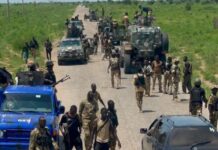
Over the past decade, the security challenges posed by terrorists and insurgents operating in Northern Nigeria have severely tested the resolve of the nation’s Armed Forces. However, through sheer determination and via collaboration with militaries of contiguous nations, those threats have been largely contained, albeit with pockets of attacks on soft targets. Precision air strikes by the Nigerian Air Force in the early hours of 23 August 2025, on terrorists’ hideouts at Kumshe near the Nigeria-Cameroun Border in Borno State, Northeast Nigeria, as well as the recent arrest of 2 key leaders of the Ansaru terrorist group, Abu Baraa, the group’s Amir (leader), and Mahmuda, the deputy Amir, are strong pointers to the gains of close synergy and collaboration between the various security agencies as well as with neighbouring countries to jointly eliminate the common threats of terrorism.
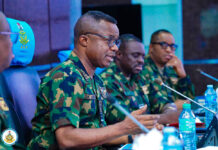
The gathering of the Chiefs of Defence Staff (CDS) from the 54 African countries at the Maiden African Chiefs of Defence Staff Summit in Abuja to fashion out an Africa-led solutions to the continent’s myriads of security challenges is therefore apt and could not have come at a more auspicious time. Without doubt, it tallies with the growing consensus that Africa is stronger when we come together, act with a shared purpose and partner with each other in the right way, to solve our common challenges.
It also aligns with the notion that fragmentation of counter-terrorism efforts only serves the perpetrators who thrive by sowing divisions, hence the need for a united and urgent responses focused on fostering unity of purpose, dialogue, trust and coordinated action. This is beside the well-known fact that the dynamic and transnational nature of terrorism reinforce one truth: a threat to security anywhere is a threat to security everywhere.
Accordingly, the Summit presents an avenue for the Defence Chiefs to engage in dialogue on shared defence and security mechanisms to enhance defence capabilities amongst their various nations. With the theme, “Combating Contemporary Threats to Regional Peace and Security in Africa: The Role of Strategic Defence Collaborations,” the Summit would cover 4 thematic areas, including: Initiating Discussions on Collective Strategies for African Security Issues; Facilitating Collaborative Response to Peace and Security Issues in Africa; Developing Mechanisms for Integrating the Private Sector into Africa’s Defence Efforts; and Establishing a Roundtable for the Initiation of Homegrown Solutions to Africa’s Defence Needs. It is equally good that the Summit will showcase Africa’s R&D and defence capabilities through an exhibition to hold on the sideline of the Summit.
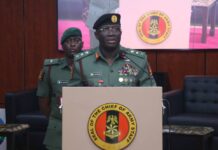
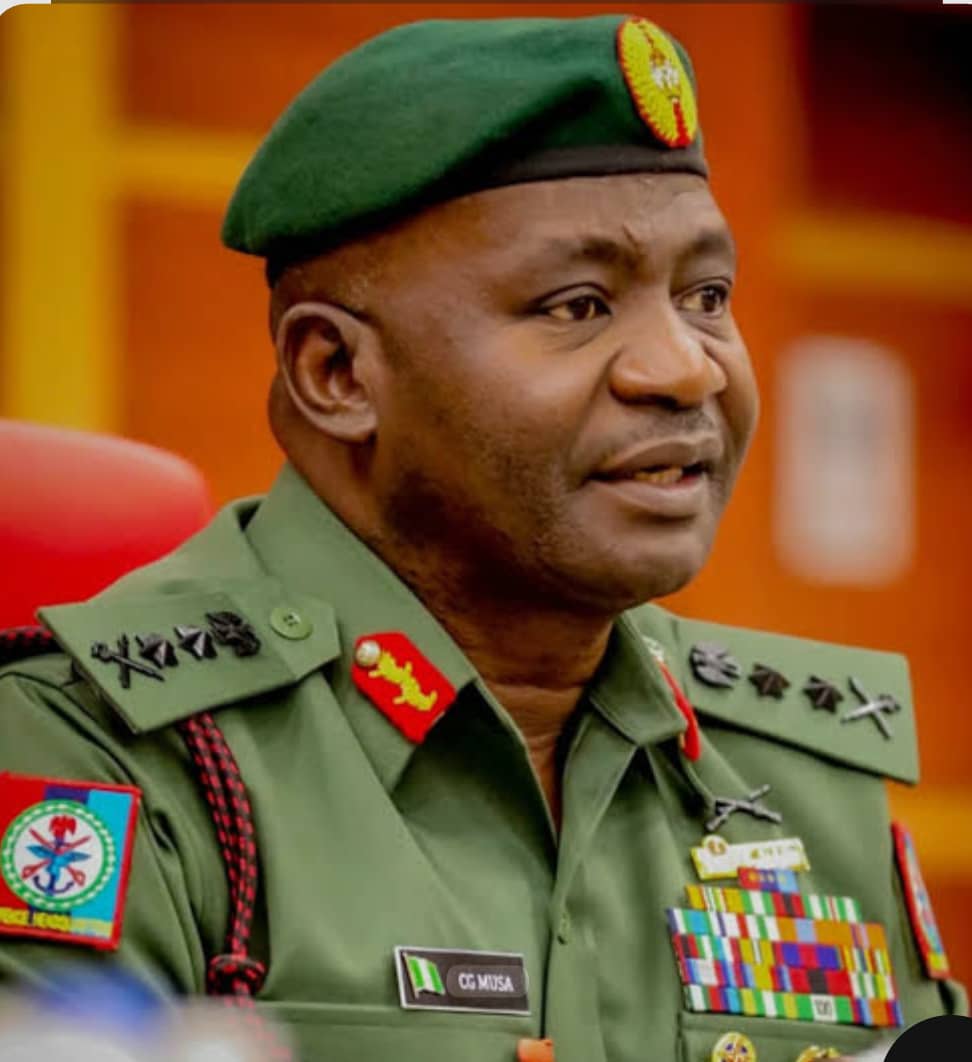
At this point, CDS, General Chris Musa, and the other Service Chiefs must be commended for initiating the Summit and seeing to its realization. So much efforts must have gone to organizing an event of this magnitude and much more will be expected out of it.
This positive momentum must also be encouraged and sustained because the cost and damages that terrorism, insurgency and banditry inflict to African nations and societies are monumental and debilitating.
*Gabkwet is a serving Air Vice Marshal and former NAF spokesperson.