Why Nigeria Must Fix the Language of Conflict Now
By Dr. Kabir Adamu
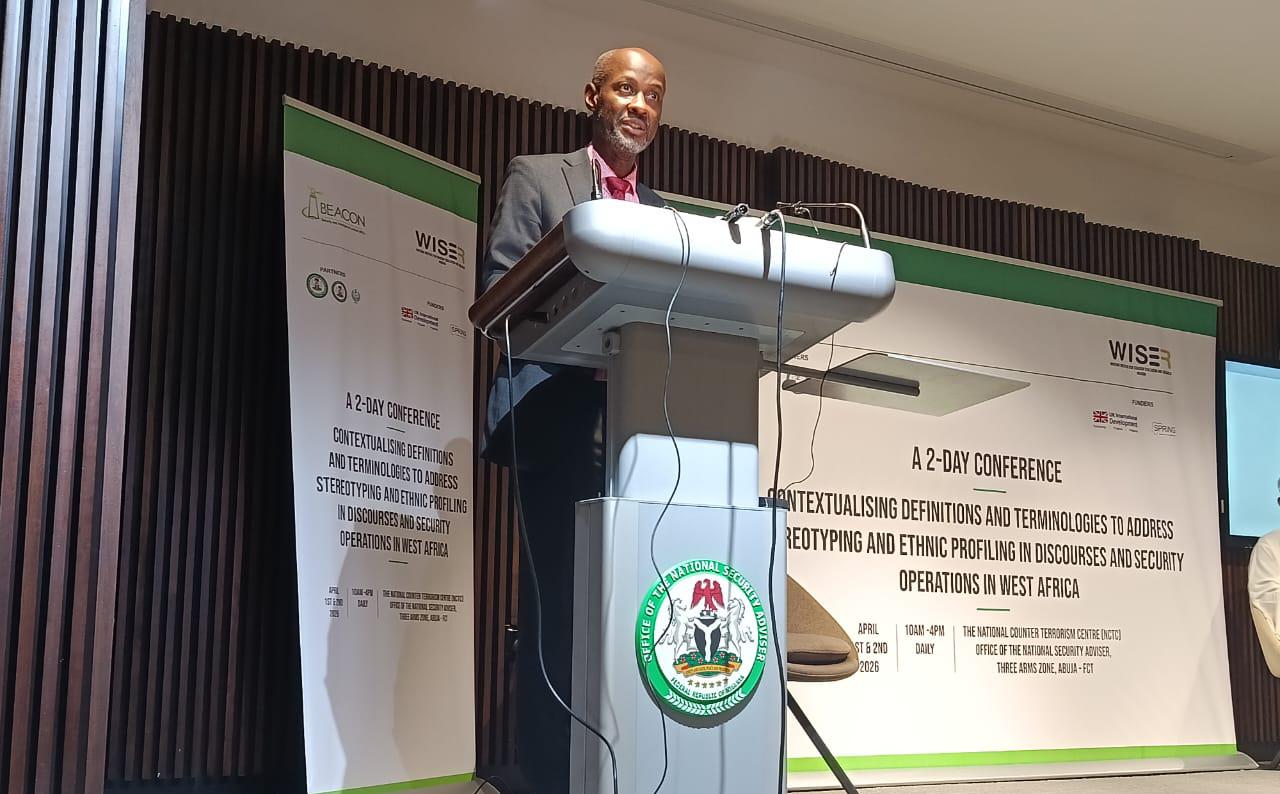
For two days in Abuja, Nigeria confronted an uncomfortable truth: the country is not only battling insecurity on the ground; it is also losing control of the narratives that surround it.
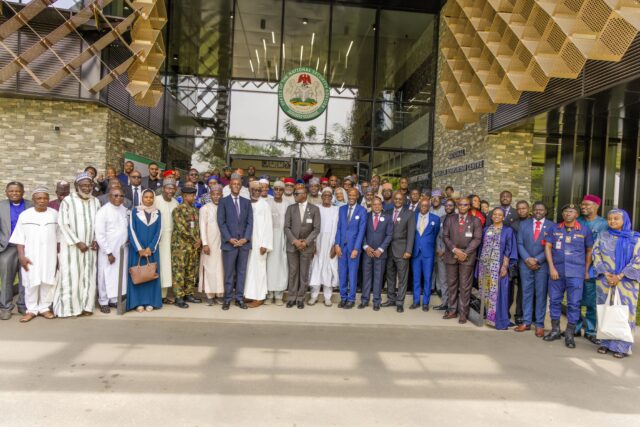
The conference hosted by the National Counter Terrorism Centre, Office of the National Security Adviser and supported by UKAid funded Strengthening Peace and Resilience in Nigeria (SPRiNG) project, media professionals, academics, security and military personnel, and civil society actors as well as religious clerics reached a rare consensus: how Nigeria defines and describes conflict is increasingly shaping how that conflict evolves.
At the centre of that conversation was the keynote address by the Honourable Minister of Information and National Orientation, Mohammed Idris. His message was clear and deliberate.words matter, and in fragile environments, they can either stabilise or inflame.
“Definitions are not neutral,” he warned. When used carelessly, they reinforce stereotypes, deepen divisions, and erode trust between citizens and institutions. When used responsibly, they build understanding and support cooperation. That distinction is now critical for Nigeria.
Across Nigeria’s conflict zones, a familiar pattern has taken root. Violence erupts, and before facts are fully established, narratives are quickly framed along ethnic, religious, or occupational lines.
The complexity of insecurity whether driven by criminality, land pressure, or governance failures is reduced to simplistic labels. Those labels, once amplified by headlines, social media, and sometimes even official statements, harden into public perception.
What the Abuja conference made clear is that this pattern is no longer harmless. It is in fact dangerous.
Participants from the media acknowledged the pressure to report quickly in a highly competitive information environment. But they also conceded that speed has too often come at the expense of accuracy and context, creating room for speculation and distortion.
Military representatives highlighted the challenge of communicating in real time during operations. Yet, they recognised that premature or imprecise statements can create confusion, contradict field realities, and inadvertently validate unverified claims.
Civil society voices added a critical dimension. Communities at the receiving end of such narratives often feel collectively profiled and unfairly targeted. This erodes trust, discourages cooperation with security agencies, and ultimately weakens the broader effort to restore peace.
Language as an Operational Tool
From the security standpoint, the message was even more direct. The National Coordinator of the National Counter Terrorism Centre, Maj. Gen Adamu Garba Laka, underscored that terminology is not merely a communication issue it is an operational one. He drew particular attention to the dangers of stereotyping and ethnic profiling within both public discourse and security operations.
When such practices go unchecked, they can undermine intelligence gathering, weaken cooperation between communities and security agencies, and ultimately hinder national and regional security objectives.
In conflict environments, where success often depends on timely and credible intelligence, trust is indispensable. Language that alienates communities or suggests collective blame erodes that trust and creates barriers to cooperation.
The Coordinator further emphasised that platforms like the Abuja conference are essential in fostering more precise, balanced, and professional use of language across institutions. In an era where information spreads instantly, the cost of mischaracterisation is higher than ever.
His central point was clear, responsible terminology is not about political correctness it is about operational effectiveness.
This perspective was reinforced by the Angolan Ambassador, Jose Bamokina Zau, who warned that the security challenges are defined often determines the solutions that follow.
When definitions are simplistic or biased, policies risk missing root causes or worse, aggravating the very problems they seek to resolve.
Read Also:
Across Africa, he noted, conflicts are too often reduced to identity narratives that obscure deeper structural drivers such as socio-economic inequality, governance deficits, environmental pressures, and the disruptive influence of emerging technologies.
Africa’s diversity cannot be reduced to narrow labels without distorting reality. And when reality is distorted, policy becomes ineffective.
He also raised a critical issue, narrative ownership. African voices, he argued, must lead in defining African realities. While international partnerships remain valuable, the framing of local conflicts must reflect lived experiences, not external assumptions.
On his part the Rwandan Ambassador to Nigeria, His Excellency Ambassador Moses Rugema reflected on the 1994 genocide in his country noting how incitement, hate, ethnic stereotyping later spread often reinforced through official channels led to devastating consequences.
He however noted Rwandan subsequent recovery illustrates how deliberate leadership, consistent policy of societal commitment shape national narrative move away from ethnic categorisation and emphasised shared National identity, fostering reconciliation, cohesion and stability healed the wounds to make Rwanda and international Model of reconciliation.
At the heart of the Abuja discussions was a simple but powerful truth. Security is not only about force; it is about trust.
When communities feel labelled or stereotyped, they withdraw. When they withdraw, intelligence dries up. And when intelligence weakens, security operations suffer. This is the hidden cost of careless language.
The Minister cautioned against attaching security challenges to ethnic or religious identities, noting that such framing risks profiling entire communities for the actions of a few. In a country as diverse as Nigeria, this is not merely insensitive, it is strategically damaging. One of the most important outcomes of the conference was a shift from blame to shared responsibility.
The media shapes public perception. The military shapes official narratives. Civil society reflects community realities. When these actors operate without coordination, contradictions emerge and trust breaks down. But when they align around shared standards, clarity improves and credibility is strengthened.
In today’s digital environment, where propaganda, disinformation and misinformation spreads rapidly, this alignment is no longer optional.
Out of these deliberations emerged a clear recommendation: the development of a national conflict reporting and communication toolkit.
This is not about censorship. It is about accountability and discipline. The toolkit would establish practical guidelines for how conflicts are reported and communicated. It would discourage the casual use of ethnic and religious identifiers, except where they are verified and necessary. It would strengthen verification standards, ensuring that facts are clearly distinguished from speculation.
It would also promote context, encouraging reporting that reflects the structural drivers of conflict rather than reducing them to identity clashes.
For the military, it would provide a framework for clearer, more consistent communication. For the media, it would reinforce professional standards. For communities, it would signal fairness and inclusion.
As repeatedly emphasised during the conference, responsible terminology is not a matter of convenience it is a requirement for legitimacy, trust, and effective security outcomes.
The stakes are clear:
Nigeria has held many conferences. What will determine the importance of this one is what happens next. The recommendations must move beyond paper. The proposed toolkit must be developed, adopted, and embedded in both media practice and security communication.
Institutions like the National Orientation Agency have a critical role to play in reinforcing these values and promoting a culture of responsible communication. At its core, this is about national cohesion.
Nigeria cannot afford narratives that deepen division or weaken trust. It cannot afford to ignore the link between language and security. The Abuja conference has made one thing clear, Nigeria must take control of its narratives or risk those narratives taking control of its conflicts.
In today’s Nigeria, words do not merely describe reality. They shape it. And unless that reality is shaped with care, discipline, and responsibility, the consequences will continue to unfold not just in headlines, but in lives.
*Dr Kabir is the Managing Director of Beacon Security and Intelligence Limited