Nigeria and the United States: From Security Tensions to a United Front Against Terrorism
By Chidi Omeje
When President Donald Trump announced the successful elimination of Abu-Bilal al-Minuki, reportedly the second-in-command of ISIS in the region, one aspect of his statement stood out beyond the military triumph itself.
“Tonight, at my direction, brave American forces and the Armed Forces of Nigeria flawlessly executed a meticulously planned and very complex mission…” Those words mattered.
Not merely because they acknowledged operational success, but because they reflected something far deeper: a significant shift in the tone, character and maturity of relations between the United States and Nigeria in the collective fight against terrorism.
For years, conversations around insecurity in Nigeria, particularly the Boko Haram and ISIS-linked insurgencies ravaging parts of the North-East and the wider Lake Chad region, were often framed through the prism of external pressure, criticism and, at times, veiled threats of unilateral intervention. There were moments when sections of the international community appeared to question Nigeria’s capacity to manage its own internal security crisis.
At different stages, rhetoric emanating from Washington under the Trump administration created apprehension among many Nigerians who feared that the strategic relationship between both countries could deteriorate into one defined by distrust, pressure politics or even coercive security posturing.
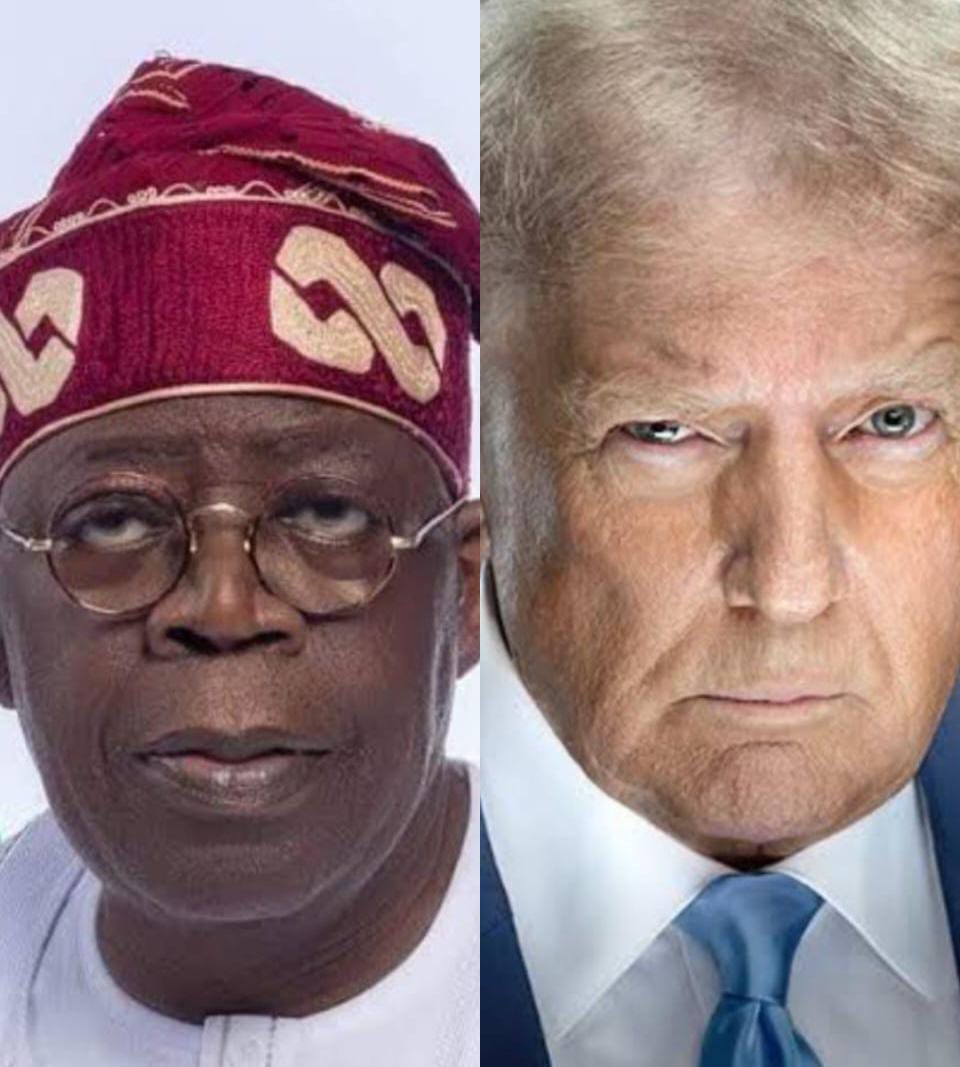
Yet, rather than respond with hostility, panic or diplomatic grandstanding, the administration of President Bola Ahmed Tinubu appears to have adopted a more measured and strategic approach. Through careful statecraft, sustained military diplomacy and intelligence cooperation, Nigeria gradually transformed what could have become a tense security relationship into a mutually respectful counterterrorism partnership.
That transformation is now becoming visible. The latest joint operation against ISIS elements demonstrates a model that many security experts have long advocated: partnership without subservience; cooperation without erosion of sovereignty.
The language used by President Trump in acknowledging the role of the Armed Forces of Nigeria was not accidental. In international relations, words are instruments of power. States do not casually share operational credit, especially in high-profile counterterrorism missions. By explicitly recognizing Nigerian forces as equal operational partners in a “meticulously planned and very complex mission,” Washington effectively signaled confidence in Nigeria’s military professionalism and strategic importance.
That is no small diplomatic achievement. For Nigeria, this moment represents more than symbolic validation. It reflects years of painful battlefield experience, institutional adaptation and intelligence evolution by the Armed Forces of Nigeria. From the Sambisa campaigns to the ongoing multidimensional offensives across the country, Nigerian troops have remained the principal force confronting terrorism in one of the world’s most difficult operational environments.
Read Also:
The insurgency itself has evolved from a local extremist movement into a transnational terror ecosystem with affiliations to ISIS and other global jihadist networks operating across the Sahel and Lake Chad Basin. This evolution means terrorism in West Africa is no longer merely Nigeria’s problem; it is now an international security challenge with implications for Africa, Europe and the United States.
The destabilisation of the Sahel following political upheavals in countries like Mali, Burkina Faso and Niger has created fertile ground for extremist expansion. ISIS affiliates and other terrorist groups increasingly exploit porous borders, weak governance spaces and illicit trafficking corridors stretching across the sub-region.
In that context, Nigeria remains the single most important regional anchor against total extremist encroachment in West Africa. The United States brings advanced surveillance capabilities, intelligence assets, precision targeting support and global counterterrorism experience. Nigeria brings something equally critical: local operational knowledge, human intelligence networks, cultural understanding, regional legitimacy and battle-tested troops with years of experience fighting asymmetric warfare.
Importantly, this partnership also avoids the historical mistakes that have complicated Western military engagements elsewhere in Africa and the Middle East. Rather than imposing solutions from outside, the emerging Nigeria-US security framework appears increasingly rooted in collaboration, respect for national sovereignty and shared strategic interests.
Military force alone, however, will never permanently defeat terrorism. Even Nigerian military commanders have repeatedly emphasized that kinetic operations account for only part of the solution, while governance, economic opportunity, education and social stabilization constitute the larger battle against violent extremism.
But security remains the indispensable foundation upon which development can stand. Without security, schools cannot function. Farms cannot thrive. Roads cannot be built. Investments cannot survive. Communities cannot heal.
The successful Nigeria-US operation against ISIS therefore sends multiple messages simultaneously: to terrorists, that there is growing international alignment against them; to Nigerians, that their military is earning increasing global respect; and to the wider world, that Nigeria is not a passive recipient of foreign security assistance but an active strategic partner in shaping regional stability.
This is exactly how counterterrorism cooperation should work. Not through condescension. Not through threats of invasion. Not through attempts to sideline local forces. But through respectful partnerships between sovereign nations confronting a common enemy.
In an era where global terrorism has become borderless, intelligence-driven and technologically adaptive, no country can fight alone. The emerging Nigeria-US security cooperation demonstrates that when diplomacy is carefully managed and mutual respect is prioritized, former tensions can evolve into productive alliances capable of confronting even the most dangerous threats.
And perhaps most importantly, it shows that Nigeria is no longer being spoken about merely as a victim of terrorism, but increasingly as a central strategic actor in the international fight against ISIS and violent extremism in Africa.
*Chidi Omeje is the Editor, Security Digest (www.securitydigestng.com)