
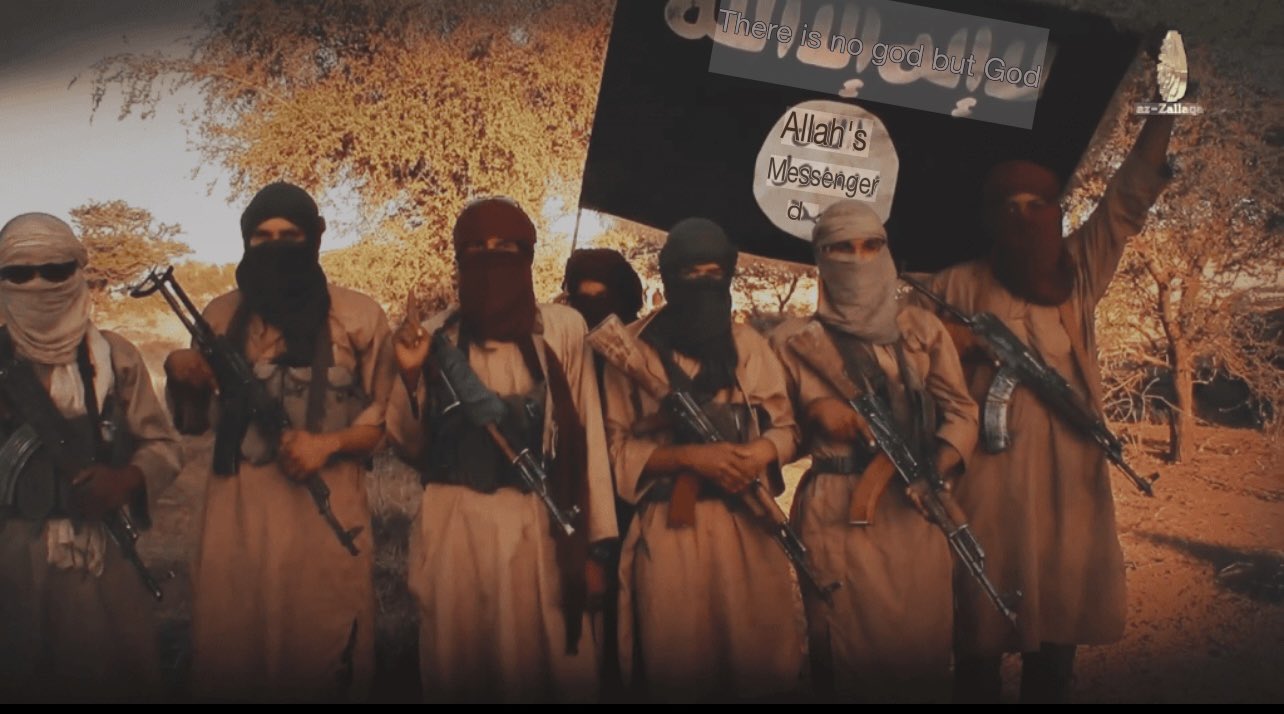
JNIM attack in Tillaberi signals deepening jihadist rivalry and expanding Sahel instability
By: Zagazola Makama
The reported deadly attack on a Nigerien Army engineering unit near Garbougna in the Tillaberi Region marks a significant escalation in the evolving security dynamics of western Niger and the wider Sahel.
With an estimated 67 soldiers and civilians reportedly killed and a military camp destroyed, the incident underscores both the intensity and increasing sophistication of militant operations in the region.
Beyond the immediate casualties, the attack is notable for its attribution to Jama’at Nusrat al-Islam wal-Muslimin (JNIM), which swiftly claimed responsibility. Tillaberi have long been considered a stronghold of Islamic State in the Sahel (IS Sahel), suggesting a possible shift in operational influence or encroachment into contested territory.
The incident reflects an emerging pattern of geographic diffusion of jihadist violence across the Tera–Niamey corridor, an axis that has repeatedly come under pressure from armed groups. The corridor connects several vulnerable departments, including Tera, Torodi, Say and Ayorou, all of which have experienced repeated attacks in recent years.
The Garbougna attack also fits into a broader sequence of high-casualty operations across Niger since early 2026, including reported strikes near Niamey airport in January and Makalondi in February. These incidents collectively indicate sustained pressure on Nigerien security forces and an expanding operational reach of armed groups closer to strategic population centres.
Read Also:
Of particular concern is the apparent intensification of competition between IS Sahel and JNIM. While both groups have historically operated in overlapping zones, recent claims of responsibility and counter-claims suggest a more overt struggle for influence, recruitment, and territorial control. The reported clash between the two factions near Petel Kole earlier in the year further supports this assessment.
The implications of this rivalry are significant. Rather than reducing violence through competition, the fragmentation of jihadist groups in the Sahel has in some cases resulted in increased attacks, as factions seek to demonstrate operational strength and legitimacy.
At the same time, the weakening of state presence in rural and border communities is compounding the crisis. Reports of closed schools, non-functional health facilities, and inactive markets point to a gradual erosion of governance structures in affected areas. This vacuum continues to facilitate militant mobility and recruitment.
Another critical dimension is the increasing use of improvised explosive devices (IEDs), which has reportedly hindered post-attack clearance operations in the Garbougna area. Such tactics not only slow military response but also expand the risk zone for civilians and security forces alike.
Strategically, Tillaberi remains the epicentre of Niger’s insecurity challenges, given its proximity to the Mali and Burkina Faso border regions. The corridor’s proximity to Niamey raises additional concerns, particularly regarding potential spillover effects into the capital’s security perimeter.
The Garbougna attack, therefore, illustrates a convergence of three destabilising trends: escalating casualty levels, intensified jihadist competition, and shrinking state control in border regions. Taken together, these dynamics suggest a deteriorating security outlook for western Niger, with implications that extend beyond national boundaries into the wider Sahel security architecture.