Mali Faces Mounting Security and Logistical Strain After April 25 Attacks
By: Zagazola Makama
Mali’s security environment has entered a more complex and volatile phase following the coordinated attacks of April 25, 2026, attributed to Jama’at Nusrat al-Islam wal-Muslimin (JNIM) and reported allied elements of the Front de Libération de l’Azawad (FLA).
While official statements from Bamako maintain that the situation remains under control, emerging patterns across the country point to a widening strain on military, economic, and logistical systems that underpin state authority.
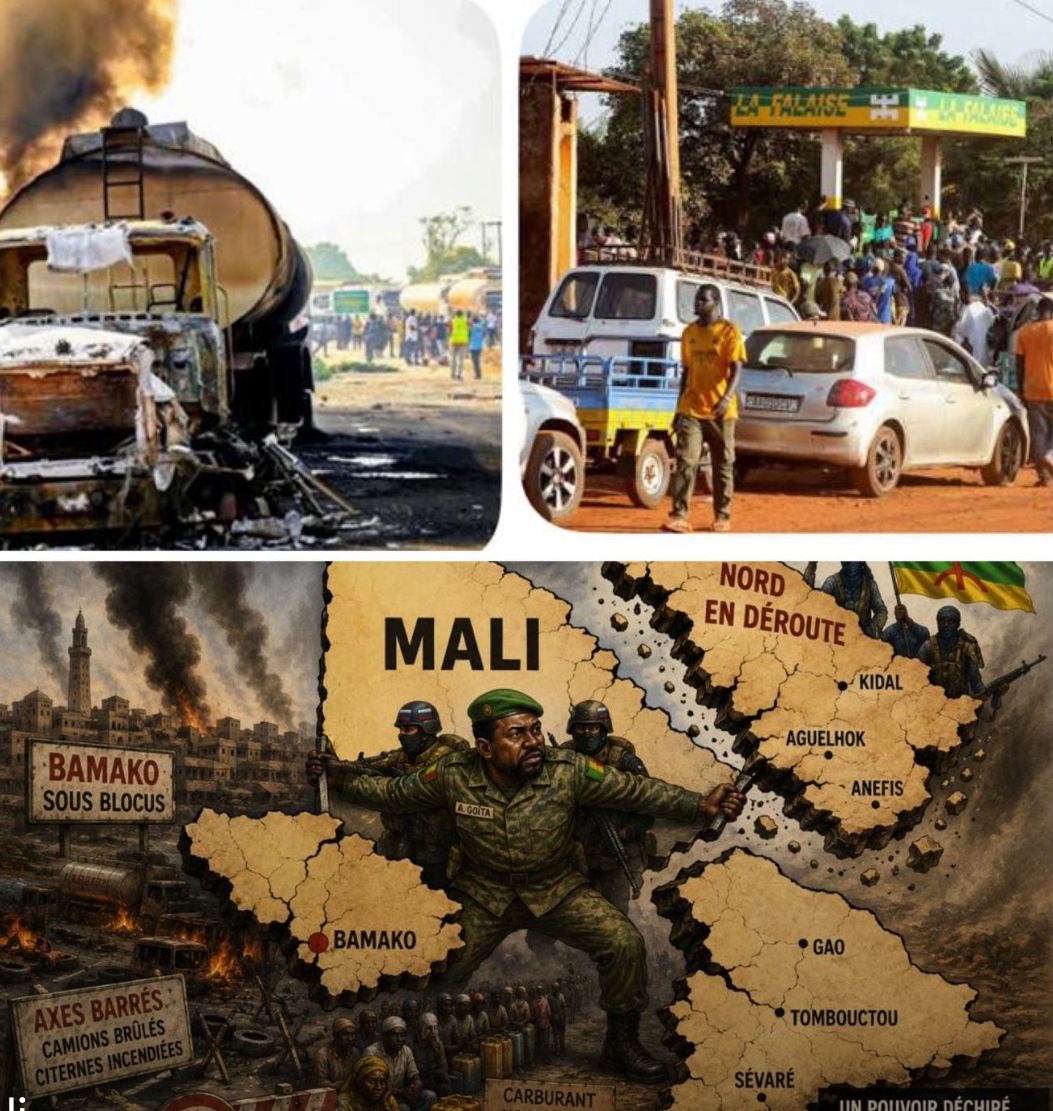
At the peak of the evolving crisis is the growing pressure on transport corridors linking the capital, Bamako, to other regions. Disruptions along these routes have reportedly contributed to shortages of fuel and essential goods, with knock-on effects on prices, mobility, and public services.
Transport operators and market observers describe increasingly difficult operating conditions, particularly for long-distance haulage. In practical terms, even intermittent interruptions along major highways have been enough to create supply bottlenecks in a capital heavily dependent on road logistics.
Beyond the economic impact, the security dimension is equally significant. Sources note that the reliability of military supply chains is closely tied to the same transport infrastructure now under pressure. Fuel, ammunition, reinforcements, and troop rotations all depend on secure corridors, meaning that insecurity on the roads has both civilian and military consequences.
In the north, the situation remains fluid, with continued reports of pressure on government positions in several localities. Although details remain contested and difficult to independently verify, the broader trend reflects persistent contestation between state forces and armed groups in remote areas.
This dual pressure on the capital’s supply lines and on northern positions creates a “two-front strain”: the need to secure Bamako’s logistical lifeline while simultaneously maintaining territorial presence in distant and often isolated garrisons.
Read Also:
The government, for its part, has continued to project confidence, emphasizing ongoing counterinsurgency operations and efforts to restore stability. Officials insist that security forces remain capable of responding to threats and safeguarding national territory.
However, the operational reality described by sources suggests a more constrained environment. The need to protect supply routes, defend key urban centres, and sustain operations in remote regions is stretching available resources and complicating command priorities.
It was argued that this situation reflects a classic asymmetry in modern insurgencies: armed groups do not need to hold territory continuously to exert strategic pressure. Instead, intermittent disruption of infrastructure and mobility can produce outsized effects on governance, economic stability, and public perception.
There is also growing attention to the role of external security partnerships supporting Malian forces. While these arrangements are officially framed as counterterrorism cooperation, they also highlight the increasing complexity of the conflict and the reliance on non-domestic support structures in stabilisation efforts.
Importantly, claims of a full-scale blockade of Bamako remain unverified and are not supported by independent evidence. However, partial and sporadic disruptions to supply chains are widely acknowledged as a growing concern, particularly given their cumulative impact over time.
The broader implication of the current trajectory is not necessarily immediate state collapse, but rather progressive strain on multiple systems security, economic, and administrative that reinforce each other.
In Bamako, the central challenge is therefore not only military in nature. It is also logistical and political, ensuring that essential goods continue to flow, maintaining public confidence, and preventing isolated security incidents from evolving into systemic disruption.
As the situation develops, Mali appears to be entering a phase where control is less about decisive territorial gains or losses, and more about managing sustained pressure across interconnected fronts.