Terrorist Footprint Grows in Africa As 4 Regions Accounted For 98% Of Terrorism-related Deaths In 2025
By ADF
An expanding swath of Islamic terrorism stretching from western Mali through the Lake Chad Basin to Somalia and Mozambique accounted for nearly all terrorism-related deaths on the African continent in 2025, according to a new report.
In 2025, nearly 24,000 people died in terrorist violence across Africa, up 24% from the previous year, according to research by the Armed Conflict Location & Event Data Project. The 10 deadliest terror attacks worldwide were in sub-Saharan African, with six of those in Burkina Faso alone, according to the most recent edition of the Global Terrorism Index.
The Sahel nations, which have been the global epicenter of terrorism for the last three years, accounted for 41% of those deaths. Somalia (37%), Lake Chad Basin (20%) and Mozambique (2%) rounded out the list.
Terrorist groups Jama’at Nusrat al-Islam wal-Muslimin (JNIM), Boko Haram, al-Shabaab, and multiple factions of the Islamic State group continue to increase their footprint across Africa. In their recruitment efforts, the groups take advantage of local grievances including ethnic animosity, economic insecurity and anger at the state. Terror groups are also benefiting from anger against security forces when actions result in civilian deaths. Security forces and allied militias in Mali and Burkina Faso, for example, killed more civilians than did militant Islamist groups between 2023 and 2025, according to the Africa Center for Strategic Studies.
“The elevated number of reported fatalities in the Sahel persists despite growing restrictions on reporting from the region that are likely undercounting the severity of this violence,” Africa Center analysts reported.
According to a 2025 report to the United Nations Security Council, JNIM is capable of directly threatening regional capitals due to its proficiency with drone warfare and its ability to move freely throughout Burkina Faso, Mali, and Niger.
“It is also poised to expand operations into northern Togo, Benin and the Sokoto region in Nigeria,” the report noted.
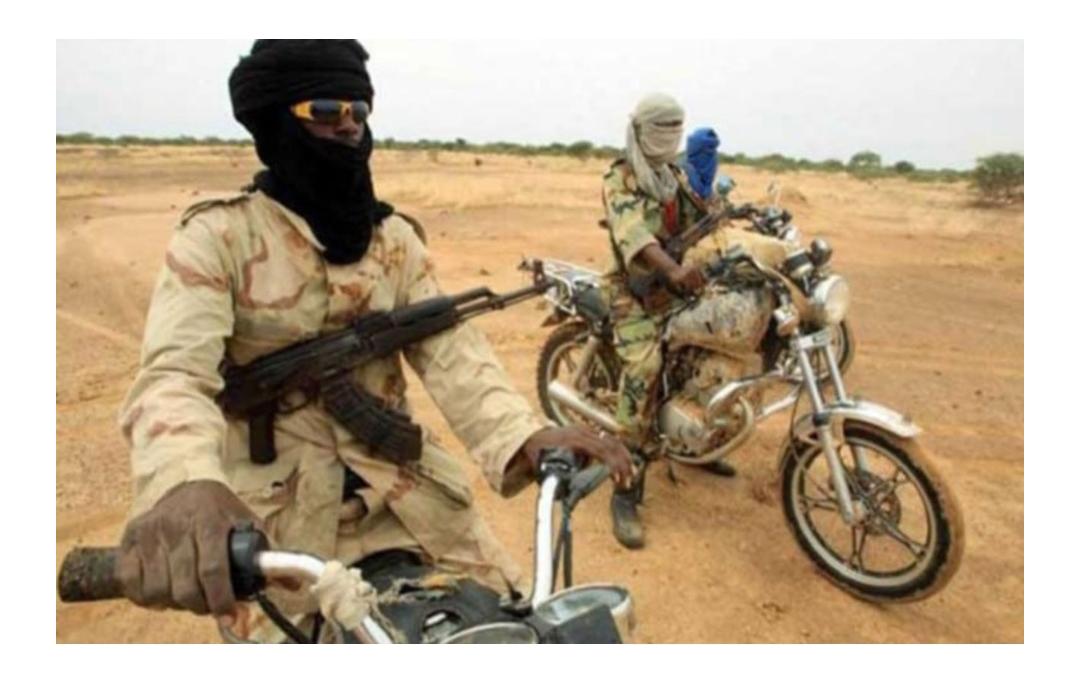
JNIM’s Sahelian rival, Islamic State Sahel Province (ISSP), formerly known as Islamic State in the Greater Sahara, is likewise growing in both territory controlled and membership as it establishes a base of operations north of Niamey, Niger. In a show of force in late January, ISSP fighters on motorcycles launched a surprise attack using drones and small arms against Niamey’s international airport and the military’s adjoining Air Base 101, which housed Russia’s Africa Corps mercenaries.
Read Also:
“The attack was not an isolated security breach, but a deliberate, high-value operation aimed at Niger’s military and strategic infrastructure,” African Security Analysts wrote in a report following the attack.
Analysts say that coups that toppled democratic governments in Burkina Faso, Mali and Niger between 2021 and 2023 have boosted terrorist organizations across West Africa by disrupting regional security cooperation. The three countries formed the Alliance of Sahelian States (AES) to collaborate on counterterrorism efforts. Since then, however, JNIM and Islamic State Sahel have continued to expand, attracting fighters from other countries.
“Unless both the growing presence of foreign terrorist fighters in the region and the near non-existent regional security architecture are addressed, the Sahel could increasingly serve as a platform for transnational jihadi activity,” the South African Institute of International Affairs wrote in a May, 2026, report.
The Islamic State group already has used ISSP’s trans-Saharan transportation networks to launch repeated attacks in Morocco, where the government broke up terror cells in 2025 and again this year. In northwestern Nigeria, the group Lakurawa appears to have relationships with both ISSP in Sokoto State and with JNIM in Kwara State, which borders Benin. JNIM reported its first attack in Nigeria in Kwara State in October 2025.
Meanwhile, ISSP has received fuel, weapons and training from Islamic State West African Province (ISWAP) through Islamic State’s al-Furqan office in the Lake Chad Basin. ISWAP, which began as an offshoot of Boko Haram, continues to compete with it for territory and recruits in Borno State, Nigeria, and Cameroon’s Far North Province.
In Somalia, civilian deaths nearly doubled to more than 8,800 between 2024 and 2025 as Islamic State-Somalia and al-Shabaab escalated attacks in Puntland and the central Shabelle region. Al-Shabaab has turned to Houthi rebels across the Red Sea in Yemen for weapons and technical support while Islamic State-Somalia has become a hub for the broader organization’s financial and logistical support on the continent.
International efforts such as the African Union Support and Stabilization Mission in Somalia continue to push al-Shabaab out of territory it has captured while Puntland security forces fight a multinational group of Islamic State recruits in the Cal Miskaad mountains of northern Somalia.
Mozambique’s Cabo Delgado region saw violence by Ahl al Sunnah wal Jama’a (ASWJ) jump 51% between 2024 and 2025 as the Southern Africa Development Community wound down its mission there. Rwandan troops continue to support Mozambique’s armed forces against the estimated 350 ASWJ fighters.
According to the authors of the 2026 edition of the Global Terrorism Index, terrorist groups are shifting their strategy toward economic blockades, such as the one JNIM imposed on the Malian capital earlier this year.
“The outlook for terrorism in 2026 is concerning,” Index authors wrote.