Buratai hails Army expansion to 12 divisions as historic boost to Nigeria’s security architecture
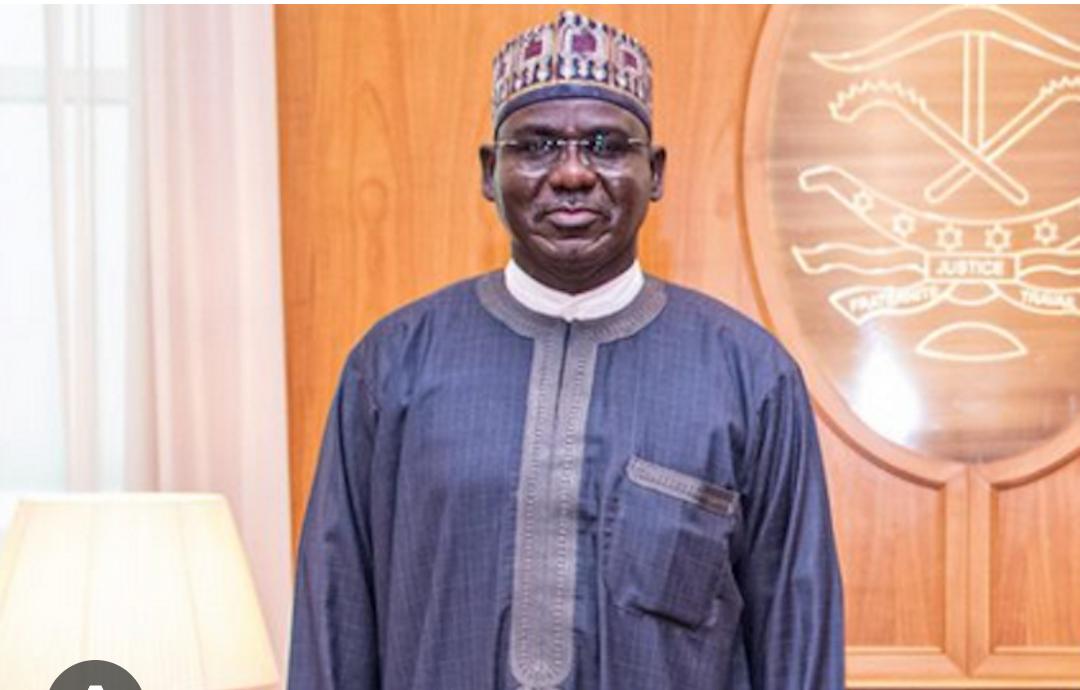
Former Chief of Army Staff, Lt. Gen. Tukur Yusuf Buratai (Rtd), has described President Bola Ahmed Tinubu’s approval for the expansion of the Nigerian Army from eight to 12 divisions, alongside the recruitment of 28,000 additional personnel, as a landmark decision that will fundamentally reshape Nigeria’s security architecture.
In a detailed strategic assessment released on Monday in Abuja, Buratai said the restructuring represents the most significant reorganisation of the Nigerian Army in decades and reflects the administration’s commitment to addressing the country’s evolving security threats.
He noted that the approval, driven by the vision of the Chief of Army Staff, Lt. Gen. Waidi Shaibu, would strengthen command and control, improve operational responsiveness, enhance intelligence integration and provide more effective security coverage across all geopolitical zones.
According to the former Army Chief, Nigeria’s security landscape has transformed significantly over the last decade, with the Armed Forces simultaneously confronting terrorism in the North-East, banditry in the North-West, communal conflicts in the North-Central, separatist violence in the South-East, and oil theft and maritime crimes in the Niger Delta.
He argued that the previous eight-division structure had become overstretched due to the vast geographical areas under each formation, resulting in delayed decision-making, extended logistics chains and reduced operational efficiency.
Buratai said the new force structure would decentralise command, allowing divisional headquarters to focus on smaller areas of responsibility, thereby enabling faster deployment of troops, improved intelligence gathering, stronger civil-military cooperation and more efficient logistics.
He also highlighted the strategic significance of the newly created formations, including 5 Division, Makurdi, 9 Division, Ilorin, 10 Division, Jalingo, and 83 Division, Benin City, saying they would strengthen security in regions facing persistent farmer-herder conflicts, cross-border crimes, insurgency, oil theft and other emerging threats.
Read Also:
The retired general further described the recruitment of 28,000 additional soldiers as a major boost to both national security and youth employment.
He said the exercise would reduce operational pressure on existing personnel, improve troop rotations, expand specialist capabilities in areas such as intelligence, engineering, logistics, cyber operations and medical services, while also providing thousands of young Nigerians with meaningful career opportunities.
Buratai noted that the establishment of additional training depots at Osogbo in Osun State and Amasiri-Edda in Ebonyi State would significantly enhance the Army’s capacity to train the new recruits within a year.
He stressed that the expansion must be supported by sustained investments in modern military hardware, including armoured fighting vehicles, artillery systems, intelligence and surveillance platforms, drones, advanced communications equipment, cyber defence capabilities and logistics assets to ensure the Army remains prepared for contemporary and future warfare.
While commending the Federal Government’s commitment to defence reform, Buratai called on the National Assembly to provide adequate and predictable funding for the Armed Forces, describing security as the foundation for economic growth, investment and national development.
He also urged state governments to support the initiative by providing land for barracks and training facilities, while encouraging traditional institutions, local communities and the private sector to deepen collaboration with the military through intelligence sharing, welfare support and civil-military partnerships.
Buratai further described the expansion as a strategic investment in Nigeria’s democracy and national unity, noting that a well-equipped and professional military remains the ultimate guarantor of the country’s sovereignty and constitutional order.
He praised President Tinubu for what he described as visionary leadership and decisive action on national security, while also commending the Chief of Army Staff, Lt. Gen. Waidi Shaibu, for providing the strategic leadership that led to the historic restructuring of the Nigerian Army.
According to him, the expansion marks a watershed in Nigeria’s defence history and will significantly enhance the Armed Forces’ ability to respond to current and future security challenges while promoting lasting peace, stability and national prosperity.