When Hate Speech Meets Political Violence: Nigeria’s Dangerous Descent
By Chidi Omeje
In a space of 4 days, Nigeria was rocked by two cataclysmic statements that have the capacity and potential to throw the country into monumental turmoil. The statements were made on two different occasions by two ideologues, one religious and the other political. The statements were dangerous interventions in a country already battling terrorism, banditry, kidnapping, communal violence, ethnic suspicion and an increasingly toxic political environment.
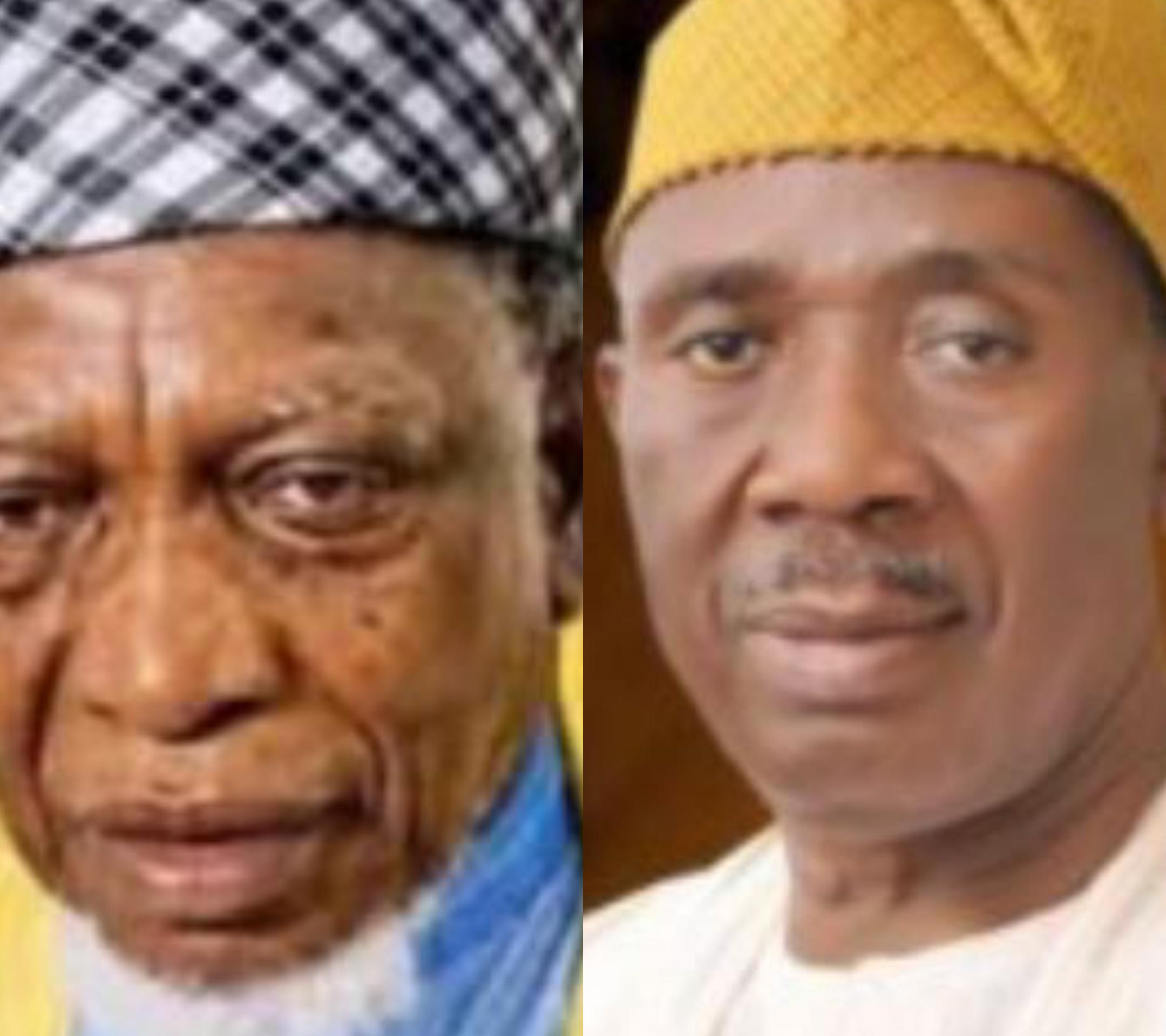
On Saturday, 6th of August, 2026 at a mass wedding ceremony organised by the Kano State Government in Kano, Shirk Sani Jingir, an Islamic preacher renowned for controversial and inflammatory sermons, declared that the Muslim-Muslim ticket of President Tinubu and Vice President Shettima was all that was needed to confirm the numerical superiority of Moslems in Nigeria and that Nigeria is a Muslim country. He didn’t stop there, he branded the entire Christian population in Nigeria as infidels who must be politically dominated by Muslims.
The shocking statement definitely strikes at the constitutional foundation of a secular, plural and multi-religious Nigeria. It reduces citizenship to religious identity and transforms political competition into a contest for religious supremacy. That is a particularly dangerous proposition in a country where religion has historically been exploited to mobilize passions, deepen mistrust and, at it worst, justify violence.
That the remarks were reportedly made in the presence of senior public officials, including the Governor of Kano State and other political dignitaries, makes the matter even more disturbing. Public officials may not be responsible for every utterance made at a public gathering, but their presence creates an undeniable responsibility to make clear where the state stands when inflammatory rhetoric crosses the line into incitement and discrimination.
While the country was still reeling from the shocking brassiness of Shirk Jingir’s incendiary statement, yet another verbal bomb exploded on the polity on Tuesday, this time by an unhinged political ‘leader’ and a serving senator of the Federal Republic! At a political gathering in Ilesa, Osun State, a certain Senator Francis Fadahunsi, notorious for talking before thinking, publicly gave orders to his supporters to hunt and kill any member of the Accord Party sighted in the state. The deadly instruction delivered in Yoruba (perhaps to ensure that his goons who are mostly illiterate, understood it clearly), could hardly be dismissed as an unfortunate choice of words. No, it is not. It was a chilling call for political violence, precisely the kind of language that can turn already combustible political contests into bloodletting.
Osun State is preparing for an off-cycle governorship election, and political tensions have already been running high since the commencement of campaigns. In fact, about a hundred people have been reported killed by opposing camps, and so, this new order issued by Sen Fadahunsi has just upped the ante in the spate of killings in the state.
Of course, a public call to kill political opponents should not be dressed as just irresponsible rhetoric by a politician. It should rather be seen as a potentially actionable threat to life and public order. Political disagreement, however intense, cannot become a licence to eliminate opponents.
These two episodes expose a frightening common denominator: the normalisation of impunity. Both men are associated with the ruling All Progressives Congress (APC) and are known supporters of President Bola Ahmed Tinubu. Whether or not the President personally endorses their utterances is beside the point. What matters is the perception created when individuals who enjoy proximity to political power make statements capable of provoking religious or political violence and the state appears conspicuously silent.
Silence, in such circumstances, is not neutral. It can be interpreted as tolerance. Tolerance can quickly become encouragement. And encouragement, in an environment already saturated with grievance and insecurity, can become a licence for others to act.
Read Also:
This is why the Presidency and law-enforcement authorities must understand that the issue is bigger than the two individuals involved. The real test is whether Nigeria’s institutions are prepared to enforce the law consistently, regardless of political affiliation, religious identity or proximity to power.
The Nigerian Police Force and the Department of State Services cannot afford to appear selective in responding to threats to public safety. The law must not be allowed to operate with a political filter. If an ordinary citizen publicly threatens the life of another person, the state is expected to act. If a politician or religious figure makes an equally grave threat from a public platform, the expectation should be even greater, not less.
Nigeria has seen where unchecked inflammatory rhetoric can lead. We have witnessed how apparently reckless words can acquire a life of their own, travel through communities, harden prejudices and eventually provide justification for violence. In a country where millions are already traumatised by terrorism, banditry, kidnapping and communal conflicts, political and religious leaders should be lowering the temperature, not pouring petrol on the fire.
The danger is particularly acute because today’s incendiary speech can become tomorrow’s mobilisation order. A preacher who tells one religious community that another is inferior or should be politically dominated contributes to the architecture of intolerance. A politician who tells supporters to kill members of an opposing party tears another brick from the wall of democratic restraint. Put the two together and the picture is frightening: religious supremacy on one side and political extermination on the other. Nigeria cannot afford either.
The country belongs equally to Muslims, Christians and adherents of other faiths. It belongs to northerners and southerners, Igbos, Yorubas, Hausas, Fulani, Tiv, Efiks, Ijaws and every other ethnic group. It belongs to APC members, PDP members, Labour Party supporters, Accord Party members and citizens who belong to no political party at all.
Democracy is not a war in which the winner inherits the country and the loser loses his citizenship. Political power is temporary; citizenship is permanent. Governments come and go, political parties rise and fall, but the Nigerian state must endure. Any ideology, be it religious or political, that suggests otherwise is a threat to the republic.
The response, therefore, cannot be partisan. The authorities must investigate the reported statements, establish the facts and, where criminal thresholds are met, prosecute the perpetrators. The same standard must apply to everyone.
President Tinubu’s administration has a responsibility here beyond the immediate legal question. It must demonstrate that political loyalty does not confer immunity from the consequences of reckless speech. If the administration truly believes that nobody is above the law, this is one of those moments to prove it.
There is also a responsibility on political and religious leaders to draw a clear line between robust advocacy and dangerous incitement. Freedom of expression does not mean freedom to threaten lives. Freedom of religion does not mean freedom to declare fellow citizens second-class citizens. Political mobilisation does not mean authorisation to unleash thugs against opponents.
Nigeria is already standing on too many fault lines. We do not need public figures widening them. The country needs leaders who cool tempers, not fire them; leaders who build bridges, not deepen trenches; leaders who persuade citizens to compete peacefully, not mobilise them to fight.
The Presidency must speak. Law-enforcement agencies must act where the law has been breached. Political parties must condemn violence within their ranks. Religious leaders must reject sectarian supremacy. And Nigerians must refuse to allow themselves to be recruited into another cycle of religious and political violence.
Nobody, no preacher, politician, party leader or government official, is above the law.
Nigeria has paid too high a price for inflammatory words that were allowed to go unchecked. It cannot afford to wait for the next incendiary statement to become the next act of violence.
The time to draw the line is now.
*Chidi Omeje is the publisher of Security Digest