The Military Deserves Our Respect, Not Disparagement
By Chidi Omeje
I will like to begin this discourse with a straight forward statement of fact: Nigeria must learn to respect its Armed Forces. And this is not me calling for blind support or making an argument that military personnel are incapable of wrongdoing.
Like every institution made up of human beings, the military has had its share of bad eggs. However, where individual officers or soldiers commit crimes or abuse their powers, such conduct should be investigated and, where established, sanctioned according to the law.
But there is a fundamental distinction between holding individuals accountable and disparaging an entire institution that remains one of the pillars of Nigeria’s sovereignty and security, and I dare say, the only truly indispensable one in Nigeria.
It is therefore troubling when rhetoric from any quarter seeks to portray the Nigerian military as an institution synonymous with criminality and villainy. Such a tendency is not only unfair to the overwhelming majority of personnel who serve honourably; it can also have damaging consequences for national security.
The men and women of the Armed Forces of Nigeria do not enjoy the luxury of choosing the circumstances in which they serve. While most Nigerians sleep in the comfort of their homes, thousands of soldiers, sailors and airmen remain deployed across difficult and dangerous theatres, confronting terrorists, bandits, insurgents and other threats to the country’s security.
Some have paid the ultimate price. Others have returned from operations with permanent injuries. Some carry bullets and shrapnel in their bodies. Many spend months away from their spouses, children and parents, often under conditions that most of us would find unbearable.
These sacrifices deserve recognition and appreciation. It is also important to remember that the Armed Forces are not deployed only against external threats. In Nigeria’s peculiar security environment, they are routinely called upon to support civil authorities in dealing with internal security challenges. They are in the forests, communities, highways and troubled regions where the state needs their presence most.
Yet, remarkably, the same institution we call upon whenever insecurity becomes overwhelming is sometimes casually vilified whenever there is an opportunity to score political, social or personal points. This must stop.
Freedom of expression is fundamental to democracy. Citizens, activists, lawyers, journalists and public commentators have every right to criticise government institutions. Indeed, a healthy democracy requires robust scrutiny. But freedom of expression should not be confused with a licence to recklessly demean institutions whose personnel are risking their lives to protect the society in which that freedom is exercised.
Read Also:
There is a difference between criticism and contempt; between accountability and blanket condemnation; between exposing wrongdoing and deliberately undermining public confidence in a national institution. The distinction matters.
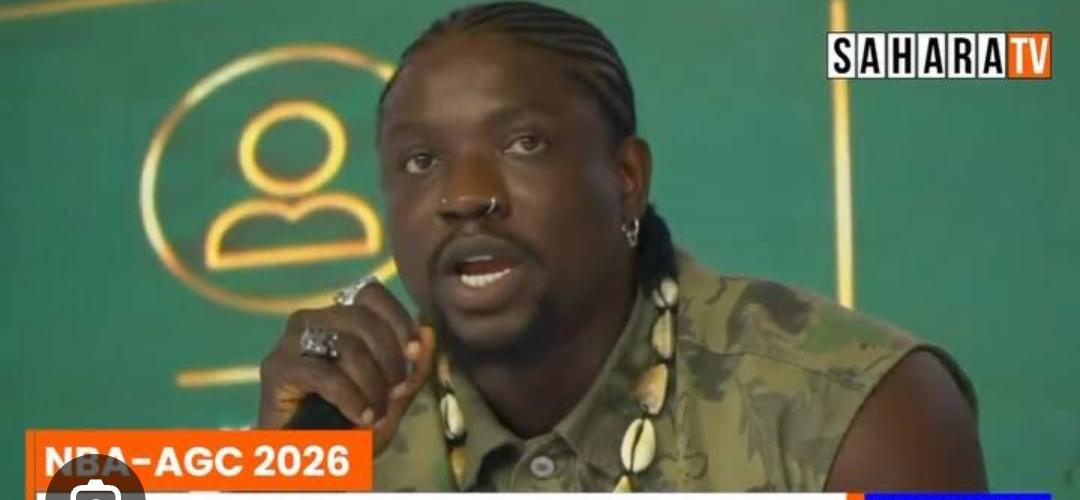
The recent controversy surrounding the invitation of social commentator, one Vincent Otse, otherwise known as VeryDarkMan, to speak at the Nigerian Bar Association Conference in Port Harcourt provides a useful context for this conversation. The organisers are entitled to determine whom they invite and why. They presumably had their reasons, and those outside the organising process may not have the full picture.
But wherever public platforms are provided, there must also be an appreciation of the boundaries that come with responsible speech. We should be particularly careful about celebrating individuals simply because they have successfully fashioned public identities around being “outlaws” or relentless antagonists of established institutions. Provocation may generate applause, entertainment and social-media engagement, but not everything that attracts attention contributes positively to society.
The military should not be beyond criticism. I agree with that. But neither should it be reduced to a convenient punching bag. If a soldier commits an offence, name the soldier. If an officer abuses power, investigate the officer. If a military policy is wrong, challenge the policy. If there is institutional failure, demand institutional reform.
But we must resist the temptation to translate the misconduct of a few into a verdict against thousands who are serving with honour. We should also understand the psychological and operational consequences of constantly portraying those who serve in uniform as villains. A soldier who leaves his family to fight for the country should not have to wonder whether the society he is defending considers him part of the problem. Morale matters in warfare. Public confidence matters in national security. Institutional legitimacy matters.
Nigeria needs a strong, professional and accountable military. Achieving that requires constructive criticism, institutional reform and accountability; not indiscriminate vilification.
The Armed Forces belong to all Nigerians. Their successes are our successes, and their failures should be corrected in the national interest. But when we condemn them collectively, we risk weakening an institution whose strength we may desperately need tomorrow.
We must therefore learn to draw the line. Criticise wrongdoing. Demand accountability. Expose abuses. Insist on professionalism. But let us not disparage the men and women who, every day, put their lives on the line so that the rest of us can live ours.
A nation that asks its soldiers to die for it must also be capable of respecting them while they live.
*Chidi Omeje is the publisher of Security Digest and member of Zagazola Media Network