Nigeria, Indonesia Move to Deepen Defence Cooperation
The Nigerian Army and the Indonesian military are set to deepen bilateral defence cooperation, with emphasis on counterinsurgency, professional military education, emerging technologies and the exchange of operational expertise.
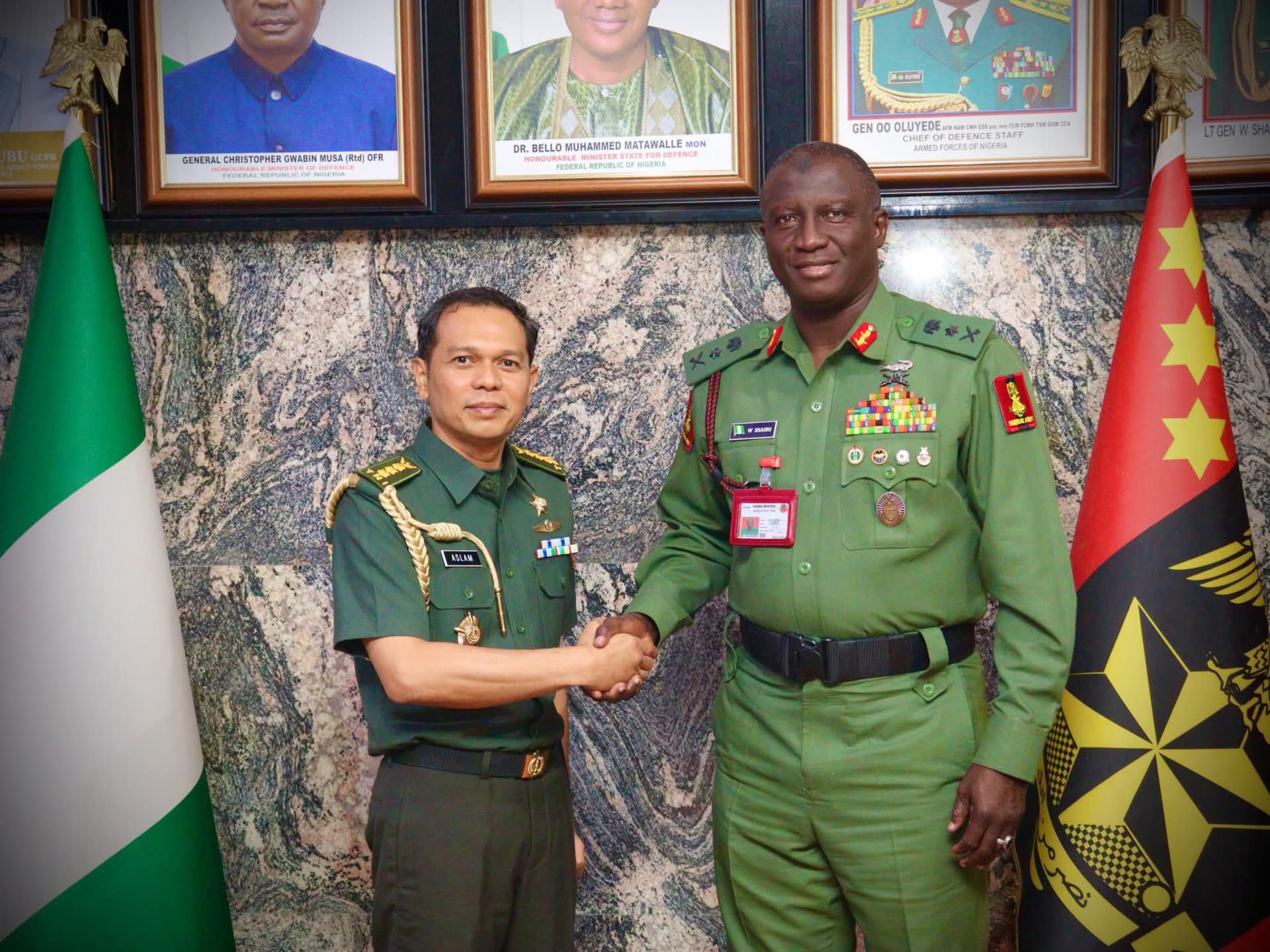
The Chief of Army Staff (COAS), Lieutenant General Waidi Shaibu, disclosed this on Thursday, September 17, 2026, when he received the Defence Attaché of the Embassy of the Republic of Indonesia to Nigeria, Colonel Aslam Setiawan, at Army Headquarters, Abuja.
Shaibu said the longstanding military relationship between Nigeria and Indonesia had remained mutually beneficial, particularly in the areas of professional military education, operational experience and participation in multinational exercises.
He stressed that sustained military-to-military engagement was essential to building a professional, adaptable and combat-ready force capable of responding effectively to emerging and evolving security threats.
According to him, there is a need to expand existing areas of cooperation to include counterinsurgency operations, emerging technologies and other areas of mutual military interest.
Read Also:
The Army Chief noted that increased exchange of expertise and technology between both countries could strengthen situational awareness, operational planning and battlefield effectiveness.
Shaibu also drew attention to the ongoing expansion of the Nigerian Army from eight to 12 divisions, saying the development would require corresponding investments in infrastructure, training, technology and institutional support.
He said such investments were necessary to enhance the Army’s capacity to effectively discharge its constitutional responsibilities.
Earlier, Colonel Setiawan reaffirmed Indonesia’s commitment to strengthening bilateral defence relations with Nigeria.
He identified professional exchanges and multinational military exercises, including Exercise Super Garuda Shield, as important platforms for enhancing interoperability, sharing operational experiences and strengthening the capacity of both armies to confront contemporary security challenges.
The engagement underscores the growing importance of international military partnerships to professional military development, operational effectiveness and institutional capacity-building as both countries seek to strengthen their respective responses to evolving security threats.