Hubris Followed by Nemesis: How US Military Interventions in Iran Turn into Political Vulnerabilities
By
Edward Gabkwet
There is a fascinating historical irony in the relationship between the United States and Iran. For more than seven decades, Washington has struggled with the consequences of its interventions, confrontations and strategic calculations involving Tehran. What makes this relationship particularly instructive is that the consequences have not remained confined to the Middle East. On significant occasions, developments involving Iran have become important factors in America’s domestic political calculations, including its presidential and congressional elections.
The story is a compelling illustration of how foreign policy can eventually come home to influence the very political system from which it originated. To understand the present, it is necessary to trace the history of US involvement in Iran from the mid-1950s.
The seeds of a prolonged confrontation
In 1951, Iran’s Prime Minister, Mohammad Mosaddegh, nationalized the country’s oil industry, challenging the interests of British petroleum companies. His decision, although rooted in Iran’s desire to exercise greater control over its natural resources, generated considerable anxiety in London and Washington. Against the backdrop of the Cold War, the United States and Britain feared that political instability in Iran could create opportunities for Soviet expansion.
In August 1953, the CIA and Britain’s MI6 participated in Operation Ajax, a covert operation that helped overthrow Mosaddegh and restore the Shah, Mohammad Reza Pahlavi, to a stronger position of authority. The operation achieved its immediate objective. However, its longer-term consequences would prove considerably more complicated.
The Shah consolidated his power and presided over an increasingly authoritarian political system. Political opposition was suppressed, dissent was punished, and the activities of SAVAK, his notorious intelligence and security organisation, became synonymous with repression. For many Iranians, the Shah’s government came to represent not merely authoritarian rule but also the consequences of foreign interference in their country’s political affairs.
When history came knocking
In January 1979, following months of demonstrations and political upheaval, the Shah fled Iran. The Islamic Revolution subsequently brought Ayatollah Ruhollah Khomeini to power. On November 4, 1979, Iranian students stormed the United States Embassy in Tehran and seized American diplomatic personnel. The seizure was justified by its supporters partly on the grounds that Washington was preparing another coup to restore the Shah. This suspicion was reinforced by the American decision to admit the exiled monarch into the United States for medical treatment. The memory of the 1953 coup was central to the students’ fears. What followed was the infamous Iran hostage crisis, during which 52 American diplomats and citizens were held captive for 444 days. (November 4, 1979, to January 20, 1981).
The crisis became an international embarrassment for Washington and a defining test of President Jimmy Carter’s leadership. It also exposed an uncomfortable strategic reality: a country with overwhelming military and economic superiority could still find itself constrained by the actions of a considerably weaker adversary.
The hostage crisis and Carter’s electoral fortunes
The hostage crisis became a major issue in the 1980 American presidential election. Carter’s administration faced mounting criticism over its inability to secure the hostages’ release. The failed Operation Eagle Claw rescue mission in April 1980, which resulted in the deaths of eight American servicemen, further damaged the administration’s standing. The daily television coverage of the crisis reinforced perceptions of an American government struggling to resolve an international confrontation. Republican challenger Ronald Reagan capitalised on the political environment, making American strength, leadership and international standing important themes of his campaign. On November 4, 1980, precisely one year after the American Embassy was seized, Reagan defeated Carter decisively.
The hostage crisis was widely regarded as an important contributing factor to Carter’s defeat, although economic difficulties and other domestic issues also played significant roles. A post-election survey revealed exactly how the crisis swung the electorate in the election’s final days. The survey found out that 20% of voters changed their minds in the final four days leading up to Election Day and of those late-deciding voters who switched their votes, 60% swung away from Carter, largely driven by the Iranian parliament’s last-minute announcement of unresolvable hostage release conditions on the final Sunday before the election. Interestingly, the hostages were released on January 20, 1981, minutes after Reagan was inaugurated.
History repeats itself
More than four decades later, Iran has once again become a significant factor in American domestic politics. The latest confrontation between Washington and Tehran has generated substantial economic and political consequences, particularly through disruptions to energy markets, rising oil prices and the financial burden of prolonged military engagement. These consequences have become increasingly difficult to separate from America’s domestic political environment.
Read Also:
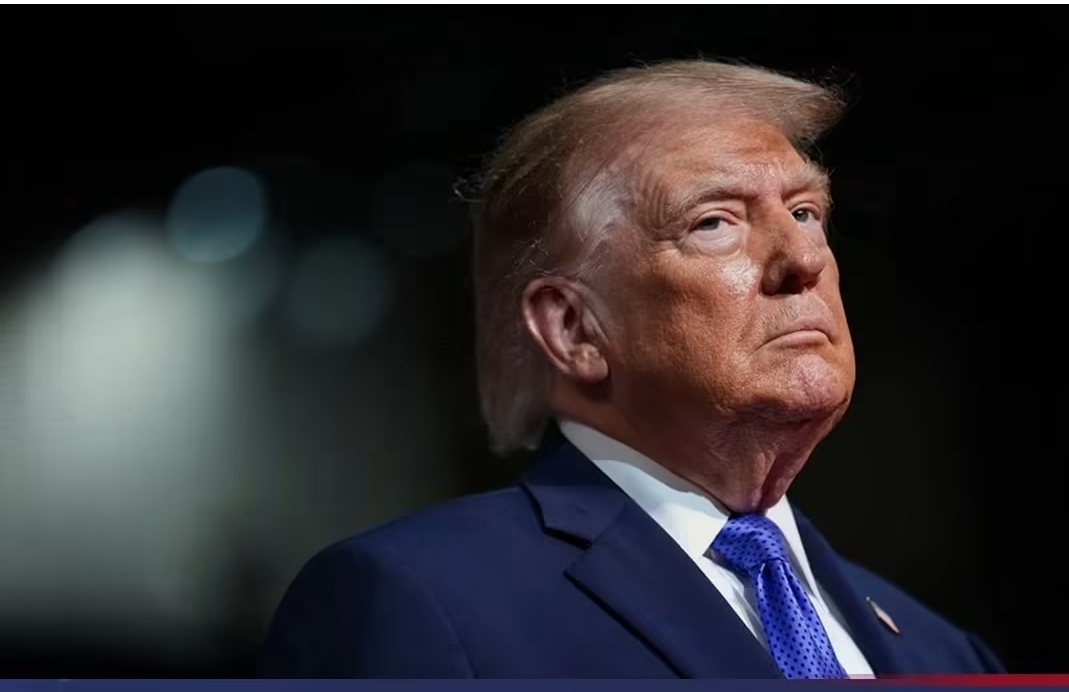
Following the November 3, 2026 midterm elections, President Donald Trump acknowledged that the war with Iran had played a role in Republican electoral losses. Indeed, a survey published on October 29, 2026 by Fox News had found that 71 percent of voters believed the Trump administration “lacks a clear strategy” for ending the hostilities, which have helped to raise inflation and send fuel prices soaring. The revelation comes on the day before the start of in-person voting for the US midterm elections in November, with the unpopular war helping to send the disapproval rating of President Donald Trump’s overall performance to 61 percent.
The President’s acknowledgement is particularly noteworthy because it connects the foreign conflict directly to the domestic electoral consequences. It is important, however, to distinguish between Iran deliberately engineering an American electoral outcome and the domestic political consequences of a war involving Iran. The latter is evident in the President’s own acknowledgement; the former requires separate evidence.
Nevertheless, the strategic implications are considerable. Iran does not need to defeat the United States militarily to impose political and economic costs on Washington. The consequences of military confrontation, particularly when they affect energy prices, household finances and public confidence, can create political pressures within the United States itself.
The strategic cost of foreign interference
The historical relationship between the United States and Iran offers a lesson that extends beyond the two countries. Foreign intervention may produce immediate political or military advantages, but it can also generate grievances that survive the governments responsible for creating them. The 1953 coup helped shape Iranian perceptions of American intentions. The 1979 hostage crisis reflected, among other factors, the revolutionary government’s determination to prevent a repetition of foreign interference. The ensuing confrontation became a major political challenge for the Carter administration.
Today, the economic and political consequences of the latest confrontation have once again demonstrated how foreign policy decisions can reverberate through domestic political institutions. This is not to suggest that every Iranian action since 1953 is a direct consequence of the coup, or that Iran alone determines American electoral outcomes. Rather, it illustrates the cumulative nature of strategic consequences and the danger of treating foreign interventions as isolated events. A government may win a particular confrontation but lose strategic ground over time.
Nigeria knows this too well. Its military interventions in Liberia and Sierra Leone during the 1990s stand as the most poignant examples of how a nation’s foreign policy can become its domestic political nemesis. Spearheaded through the Economic Community of West African States Monitoring Group (ECOMOG), Nigeria poured an estimated $13 billion into stabilizing the West African sub-region. While these campaigns successfully restored regional stability, enforced ceasefires, and reinstated democratic leadership, they catalysed severe domestic political vulnerabilities for the then military rulers, coupled with the high military casualty figures and the economic strain at home.
Lessons for Nigeria and Africa
For Nigeria and other African countries, these developments should remind us of the consequences of foreign military interventions, especially when poorly planned and executed. Our national security thinking must move beyond the traditional emphasis on territorial defence, military hardware and the conventional balance of power. The modern security environment increasingly involves economic resilience, information superiority, political legitimacy, strategic communication and the ability to anticipate the long-term consequences of foreign policy decisions.
There are at least three important lessons. First, respect for sovereignty matters. Foreign interference in domestic political processes can create resentment, undermine institutional legitimacy and produce consequences that outlive the original intervention.
Second, economic resilience must be viewed as a national security imperative. The disruption of energy supplies, trade routes and commodity markets can become instruments of strategic pressure.
Nigeria’s over-dependence on oil revenues and exposure to international energy-market fluctuations make this particularly relevant. Third, the information environment is now a strategic battlefield. Governments must recognise that public perception, political narratives and the credibility of state institutions can influence national security outcomes just as significantly as conventional military capabilities.
For Nigeria, strengthening strategic communication, countering disinformation, protecting democratic institutions and maintaining public confidence should therefore be considered integral components of national defence.
The battlefield does not always end at the border
The history of US-Iran relations demonstrates that the consequences of foreign policy decisions are not necessarily confined to the countries in which they are made. In 1953, Washington and London helped engineer a political outcome in Iran. In 1979, the consequences of that intervention formed part of the historical context for a crisis that severely tested American leadership.
In 1980, that crisis became an important factor in the political fortunes of an American president. In 2026, another confrontation with Iran has become a domestic political liability for an American administration. Though the circumstances are different and the events are historically unconnected, the recurring lesson is unambiguous: That military superiority does not guarantee freedom from strategic vulnerability.
Perhaps the most important lesson for policymakers everywhere is that the true cost of foreign policy cannot always be measured by the immediate outcome of a military operation or diplomatic intervention. Sometimes, the most consequential battlefield is the domestic political environment of the intervening power itself. In international politics, the consequences of today’s decisions can become tomorrow’s strategic vulnerabilities.
*Gabkwet, a PhD researcher in Policy and Strategic Studies at the University of Abuja, writes from Abuja.