
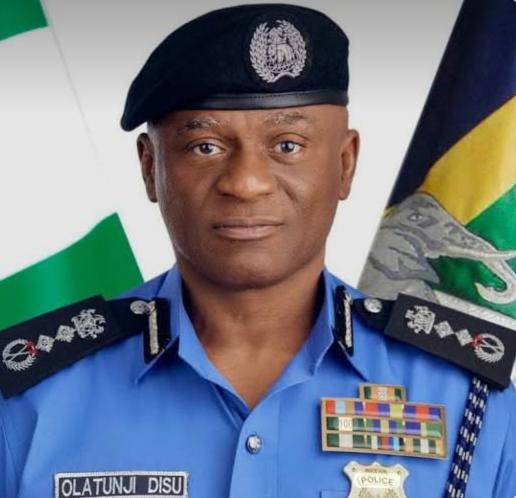
IGP DISU: From Operational Leadership to Institutional Transformation
From intelligence-led operations and internal discipline to public trust and institutional renewal, IGP Olatunji Disu has an opportunity to redefine policing in Nigeria. The real test, however, is whether he can turn early promise into lasting change.
By Chidi Omeje
There is a troubling double standard in how Nigerians assess our security institutions. We are quick to amplify failures, condemn setbacks and question competence, but often reluctant to acknowledge successes or celebrate meaningful reforms.
In my last article, “When Our Military Wins, Why Is the Nation Silent?”, I challenged this culture of selective outrage, arguing that military victories deserve the same passion with which setbacks are condemned. Today, I extend that challenge to the Nigeria Police Force.
Nigerians must look beyond the familiar chorus of criticism and acknowledge the significant strides and emerging leadership direction under Inspector-General of Police, Olatunji Rilwan Disu. With a refreshing approach to policing, a reform-driven outlook and a renewed sense of institutional purpose, Disu is offering the Force something it urgently needs: renewed hope, clearer direction and the prospect of a more effective response to Nigeria’s security challenges.
Since assuming office in February 2026 as Nigeria’s 23rd indigenous Inspector-General of Police, Disu has brought to the office a combination of operational experience, administrative discipline and reform-minded leadership. At a time when Nigerians are demanding a more professional, accountable and responsive police institution, his stewardship offers a fresh opportunity for the Force to confront its longstanding weaknesses and reclaim public confidence.
The challenges are enormous. From kidnapping and armed robbery to banditry, cult violence and organised criminality, the demands on the police are daunting. Equally troubling are institutional problems involving corruption, abuse of authority, inadequate public confidence and the urgent need to modernise policing methods.
Addressing these challenges requires more than rhetoric, routine deployments or occasional displays of force. It demands leadership that understands the operational realities of policing, appreciates the value of intelligence, insists on professional discipline and recognises that public cooperation is indispensable to sustainable security.
Disu’s professional background suggests that he understands these demands. He is not approaching the office merely as an administrator issuing directives from headquarters. His career has exposed him to frontline operations, tactical command and the difficult business of confronting violent criminal networks.
His tenure as Commissioner of Police in Rivers State demonstrated his capacity to lead decisive anti-crime operations against notorious cult figures and violent criminal elements. Among the high-profile operations associated with his command was the pursuit of Gift Okpara, popularly known as General 2Baba, linked to serious violent crimes, including the killing of a Divisional Police Officer.
Such operations underscore an important principle: criminal networks cannot be dismantled through public declarations alone. They require intelligence gathering, tactical coordination, courage and the determination to pursue offenders regardless of their notoriety.
Equally instructive was his leadership of the Lagos State Rapid Response Squad between 2015 and 2021. Under his command, the squad gained considerable recognition for its anti-robbery and rapid-response capabilities. Its performance demonstrated what focused leadership, operational preparedness and clear performance expectations can achieve within a police formation.
His international peacekeeping experience also adds an important dimension to his professional profile. In 2005, he led a Nigerian police contingent deployed to the African Union Mission in Sudan, supporting stabilisation efforts amid the Darfur crisis. That exposure to a complex international security environment reinforced the importance of adaptability, coordination and professionalism.
The significance of these experiences lies not simply in the positions he has occupied, but in the leadership lessons they offer: clear command, purposeful deployment, operational discipline and the ability to translate strategy into action.
The fight against kidnapping, banditry and organised crime cannot be won through reactive policing alone. Criminal networks exploit intelligence gaps, weak investigations, poor inter-agency coordination and inadequate engagement with local communities.
Disu’s emphasis on intelligence-led policing and operational coordination is therefore welcome. Arrests, recovered weapons and rescued victims are important indicators of police activity, but they are not the ultimate measure of success.
The real test is whether criminal networks are dismantled, offenders successfully prosecuted and communities made safer. This requires stronger intelligence analysis, better investigative and forensic capabilities, modern technology and closer cooperation among security agencies. It also requires commanders to be assessed on measurable outcomes.
The objective should be simple: make crime more difficult to organise, more dangerous to execute and less profitable to sustain.
If intelligence-led policing becomes an institutional practice rather than a leadership slogan, the Force will move from a largely reactive posture towards more proactive and effective law enforcement. This is why its prioritisation in Disu’s reform agenda deserves attention.
Perhaps no reform is more important to the Force’s long-term credibility than internal discipline. Allegations of extortion, unlawful detention and abuse of authority have severely damaged public confidence in the police over the years.
Read Also:
Such misconduct does more than violate individual rights; it discourages citizens from reporting crimes, sharing intelligence and cooperating with investigators. A police force cannot credibly demand respect for the law while tolerating its violation by its own personnel.
Disu has consistently emphasised discipline and accountability, making it clear that the uniform must never become a shield against the consequences of wrongdoing. His administration’s willingness to sanction errant officers, irrespective of their positions or locations, sends an important message that misconduct must have consequences.
Nigerians are watching, and such a commitment to cleaning up the system deserves recognition.
It must be emphasised, however, that disciplinary action against individual officers, important as it is, cannot substitute for systemic reform. Investigations must be fair, procedures transparent and sanctions consistent with established rules. Officers who demonstrate integrity and professionalism must equally be protected, supported and rewarded.
The objective is not to demoralise the Force but to establish a clear distinction between professional service and abuse of authority.
Indeed, the fight against police corruption is inseparable from the fight against insecurity. Citizens who trust the police are more likely to provide useful information, assist investigations and support lawful security operations.
Disu is on a mission to win back public confidence. He understands that no police force can effectively police a society that has lost faith in it. Authority may compel obedience, but trust encourages cooperation.
His engagement with civil society organisations, human rights advocates and community stakeholders is therefore important. Citizens must be treated as partners in security, not merely recipients of police services.
Community policing must also move beyond official pronouncements. Accessible police leadership, responsive complaint mechanisms, respectful treatment and meaningful engagement with communities are essential ingredients of effective policing.
Respect for human rights and effective policing are not competing objectives. Professional officers can confront violent criminals firmly while respecting the law, protecting innocent citizens and observing due process. When citizens believe the police will treat them fairly, they are more likely to volunteer information that can prevent crime and save lives.
The challenge is to make this relationship of trust a nationwide reality, extending beyond major cities and high-profile commands to rural communities and underserved areas. That would be a reform whose benefits endure long after Disu’s tenure.
Ultimately, Disu must ensure that his reform agenda reaches the ordinary police station, divisional headquarters, investigative unit and officer on patrol. A citizen seeking help should encounter a professional who understands that the authority of the state carries a corresponding duty to protect and serve.
Similarly, operational successes must become products of institutional capacity rather than isolated achievements dependent on individual commanders. That is the difference between a police chief who records successes and a leader who transforms an institution.
It would be unrealistic to expect Nigeria’s policing challenges to disappear within a few months. The scale of insecurity, resource constraints and longstanding institutional weaknesses demand sustained commitment.
Disu must consolidate whatever gains his leadership produces through improved training, modern investigative tools, better personnel welfare, stronger internal oversight and clear performance standards across commands. He must also strengthen cooperation with other security agencies without blurring institutional responsibilities.
The military remains essential when threats exceed ordinary law-enforcement capacity, but the police must remain central to criminal investigation, routine law enforcement and the restoration of normal civic life.
Ultimately, Nigerians should judge his stewardship by outcomes that matter in their daily lives: fewer kidnappings, safer roads, reduced violent crime, more successful investigations, stronger prosecution of offenders and greater public confidence in the police. These are the minimum expectations of a society entitled to safety and lawful protection.
IGP Disu and his team deserve the support of Nigerians as they undertake the difficult task of cleaning up the system. It is certainly a herculean assignment, but the early indications suggest a leadership prepared to confront it.
We must criticise them when they falter, but our criticism should be constructive, not destructive. Constructive criticism is indispensable in a democracy, particularly when public safety and human rights are at stake. But fairness also demands that credible efforts to improve public institutions be acknowledged and encouraged.
All said, Disu’s operational background, emphasis on intelligence-led policing, commitment to discipline and engagement with civil society offer reasons for cautious optimism about the direction of the Nigeria Police Force. That optimism, however, must never become a blank cheque. Nigerians must continue to demand accountability, measurable results and unwavering respect for the rule of law.
What the country needs is a police force that criminals fear because it is competent, citizens trust because it is professional, and public officials respect because it is disciplined and impartial.
Achieving this requires leadership that combines firmness with fairness, operational effectiveness with sound judgment, and authority with accountability.
Disu has an opportunity to set that standard. His responsibility is to ensure that the momentum associated with his leadership becomes the foundation of lasting institutional reform, not a temporary high point in the Force’s history.
That is the change Nigeria needs, and the standard against which Disu’s leadership must ultimately be judged.
*Chidi Omeje is the publisher of Security Digest (www.securitydigestng.com)