
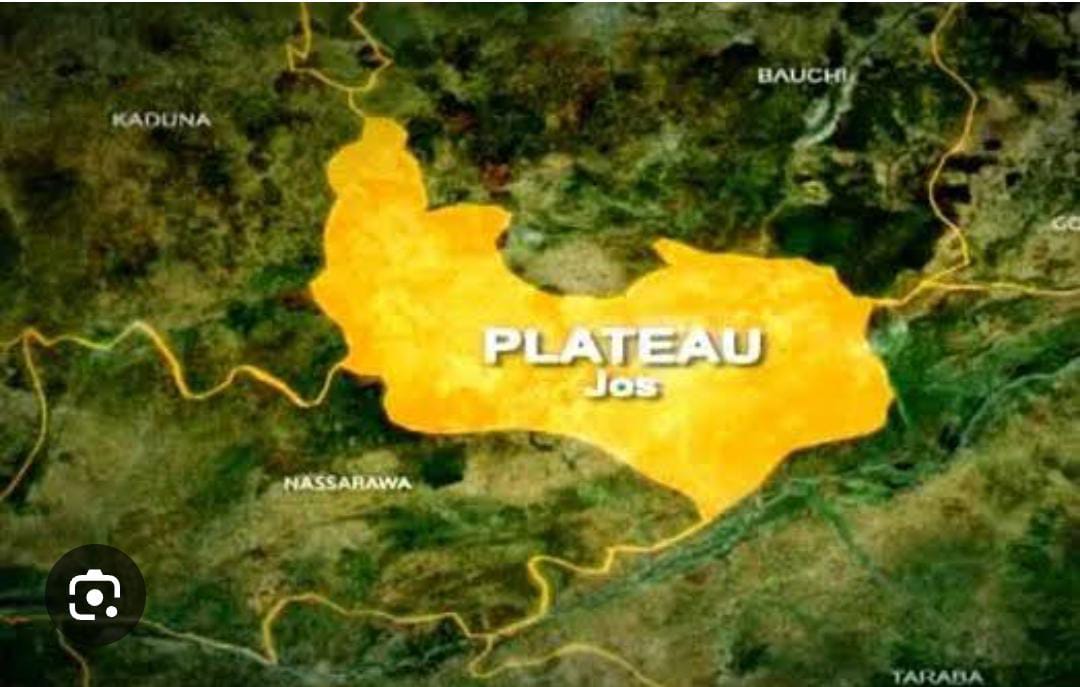
Plateau unrest deepens as curfew, counter-operations and dangerous rhetoric reshape security dynamics
By: Zagazola Makama
The evolving security situation in Plateau State is increasingly reflecting a complex interplay of armed violence, civil unrest, and inflammatory narratives, as the Armed forces of Nigeria intensify efforts to contain tensions and escalation following recent deadly incidents in Jos North and surrounding areas.
The imposition of a 48-hour curfew by the Plateau State Government after a deadly attack at Angwan Rukuba Junction marked a critical turning point but failed after it’s elapsed with the youths going on rampage and launching attacks on immediate communities.
Security reports indicate that at about 7:30 a.m. on March 29, gunmen carried out a guerrilla-style attack along the Jos–Bauchi highway, opening fire on commuters and residents, killing several persons including Christian and Muslims and injuring others before fleeing the scene.
The aftermath of the attack quickly spiralled into reprisal violence, with some residents reportedly targeting passersby, leading to killing of two persons and burning their corpses. Same night, Additional casualties were recorded as many other corpses were evacuated to the hospitals, further heightening ethnic and religious tensions in the town.
Consequently, the relaxation of the curfew made the matter even worst. Subsequent incidents, including unrest at Gada Biu and the killing of a civilian near the University of Jos main gate, further added to the volatility of the situation, even as troops under Operation Enduring Peace (OPEP) moved swiftly to restore calm.
The situation was further complicated by retaliatory actions reportedly carried out by local youths, including the use of machetes in targeted attacks, marking a dangerous shift from an initial armed assault to mob violence.
In the Jos North, between Duala junction to Anguwan Rukuba Junction, there was mass shooting targeting at non indigenous people particularly muslims by hunters using dane guns. Seven people were shot and currently receiving treatment at La tahzan hospital in Filin ball. One of the victims simply identified as Alkasim died. Violence was recorded in several other areas.
However, beyond the kinetic response, emerging patterns suggest that the crisis is being increasingly shaped by narratives capable of inflaming passions and distorting the nature of the conflict.
What initially appeared to be an armed attack with unclear attribution has, in the public space, been rapidly reframed along ethno-religious lines, a development that could have far-reaching consequences. Preliminary field analysis suggests that the modus operandi of the attackers involving mobility, use of firearms, and indiscriminate targeting differs from typical patterns associated with farmer-herder clashes.
There are indicators that the attack was designed to trigger wider communal unrest that should spread beyond plateau states but in Neighboring states like Bauchi, Nassarawa, Kano, Kaduna and other Northern States.
The pattern does not clearly align with previous herder-related incidents. Also, Rukuba community is situated in the middle of the town making it nearly impossible for any bandits or criminals to operate and easily escape. At the initiate stage of the attack, residents thought it was security agencies that were carrying out raid because the area is known for habouring drug users and cartels.
Security sources insisted that their investigation revealed that nature of the ammunition attackers, it was suggested that the attack was carried out by terrorists.
Such transitions from isolated attacks to communal reprisals have historically contributed to cycles of violence in Plateau, making early containment and narrative control critical.
Read Also:
In this context, the role of inflammatory rhetoric has come under increasing scrutiny. The latest viral video by popular social media personality, Martins Vincent Otse, widely known as VeryDarkMan, has drawn criticism for statements perceived as inciting violence during the crisis.
In the video, he was heard urging residents to adopt a confrontational posture, stating:
“Anybody you see that is not from here, anybody that looks suspicious, before they get you down, get them down!” He further said: “If you keep quiet and wait for the government… it won’t be the first time… when does this stop?”
In another part of the video, he added:
“No be only Boko Haram sabi kill, no be only bandit sabi kill… all of us fit kill.”He also called on residents: To the people of Rukuba, enough is enough… anybody wey you see wey cross your part, kill am.
Indeed, reports indicate that within hours of the circulation of such messages, incidents of targeted violence and unrest were recorded in parts of Jos.
Beyond individual actors, broader concerns have also been raised about the proliferation of subversive narratives capable of deepening divisions. Rev. Ezekiel Dachomo has previously called on Plateau youth to go and prepare and go to ‘WAR’.
Rev. Dachoma was also heard declaring that residents would no longer “run away,” adding that if there was to be a “full-blown war,” they were prepared to defend themselves.
“We are not going to run away, if there will be full blown WAR it will start from today to the day that the God has placed for us. Let them continue to gather, we have chosen to die than to remain burying our brothers.
“My fellow brothers and sisters i am rounding this message so that we can go back and stay and go for WAR, since the Fulani said we will not rest in plateau, they are not afraid of the security from today we will not be afraid of the security. The Berom youths Leader in Barkin Ladi, had previously vowed that they cannot Longer Guarantee Peace and Unity in the Plateau if Fulani continue grazing on our land.
Many believed that it was rhetorics like this that acted as a trigger in the already fragile contexts, as its lowers the threshold for violence and legitimises reprisal actions against other ethnic groups that had nothing to do with the violence.
Security assessments highlight the growing use of social media by various actors to promote competing narratives, including claims of religious persecution, often without full context of the complexities on the ground. Experts caution that such narratives risk oversimplifying conflicts, obscuring the role of criminal elements, and fuelling mutual suspicion among communities.The danger is that once a conflict is framed purely along religious lines, it becomes harder to de-escalate.
Amid these challenges, security forces have continued to record operational successes aimed at restoring stability. The recovery of 30 rustled cattle in Barkin Ladi and Riyom Local Government Areas is seen as part of broader efforts to address rural criminality that often intersects with communal tensions.
Troops also maintained presence across key areas, conducted patrols, and responded to distress calls, actions that have contributed to preventing further deterioration of the situation.
Nevertheless, while military, police and other security operations remain essential, they must be complemented by strategic communication, community engagement, and accountability mechanisms.
There is a need to clamp down on crises entrepreneurs and those blaming the ambers of war, failure can undermine overall stability.
As Plateau navigates this delicate phase, the convergence of armed violence, civil unrest, and information warfare presents a multidimensional challenge requiring coordinated responses at all levels.
For now, the restoration of relative calm offers a window of opportunity. But without addressing the drivers of misinformation, inflammatory rhetoric, and underlying grievances, the risk of recurrence remains high.