72-Hour High-Stakes Rescue: Missing US F-15 Weapons Officer Saved Deep in Hostile Iranian Territory: Urgent Lessons for Nigeria’s Armed Forces and Intelligence Services
By Bishop C. Johnson
In the dead of night, deep inside southeastern Iran, American special operations forces pulled off one of the most audacious combat search-and-rescue (CSAR) missions in recent memory. A missing weapons systems officer from a downed F-15E Strike Eagle was extracted alive from rugged, enemy-held terrain within 72 hours of his jet being shot down. The operation, shrouded in secrecy and protected by overwhelming US airpower, stands as a masterclass in fusing intelligence, technology, and raw courage. For Nigeria’s Armed Forces and intelligence community grappling with insurgencies, banditry, and complex regional threats, this is not just a headline from a distant conflict. It is a blueprint for what modern rescue operations must look like if Nigerian pilots and troops are ever to be brought home safely from hostile territory.
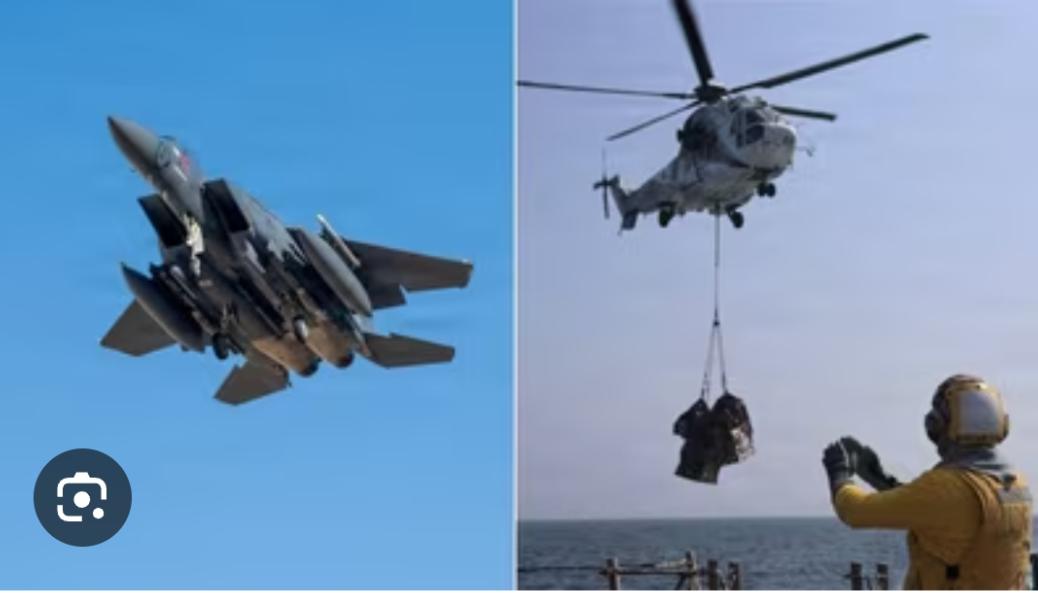
The drama began when an American F-15E Strike Eagle, the $100 million workhorse of US air operations, was brought down by a “lucky shot” from an Iranian surface-to-air missile during Operation Epic Fury also known as Roaring Lion. Both crew members ejected successfully. The pilot was rescued quickly and swiftly, but Iranian forces opened fire on the recovery aircraft, downing the A-10 Thunderbolt II which the pilot was able to navigate to friendly before safely ejecting and was instantly rescued, and at least one HH-60 rescue helicopter. The weapons systems officer, however, landed in far more treacherous ground: a mountainous crevice that made him virtually invisible to conventional search efforts.
What followed was a textbook demonstration of American excellence. US officials described the terrain as “exceptionally difficult” and credited “exquisite capabilities” for pinpointing the airman’s exact position. A senior Trump administration official called it “the ultimate needle in a haystack,” made possible only by the CIA’s deception tactics and advanced surveillance tools. The aviator’s standard-issue rescue beacon and combat search-and-rescue radio proved decisive. These rugged devices such as Elbit Systems’ PRC-648 or Boeing’s Combat Survivor Evader Locator automatically activate on ejection, transmitting encrypted GPS coordinates, short messages, and homing signals via military satellites. They resist jamming, water immersion, and electronic interference, keeping the downed officer in continuous contact even if unconscious.
High-resolution satellite imagery, signals intelligence, and classified systems capable of detecting heat signatures and electronic emissions closed the gap in real time. Once his location was confirmed, a rapid night-time extraction was launched under the protective umbrella of substantial US air cover. Combat search-and-rescue helicopters, equipped with advanced night-vision avionics, terrain-following navigation, and defensive countermeasures, flew low and fast through hostile skies. Fighter jets, electronic warfare aircraft, and aerial refueling tankers sustained the operation over long distances. MQ-9 Reaper drones provided overwatch, striking Iranian military-aged males approaching the site. Two MC-130J Commando II special operations aircraft became stuck in sand and had to be destroyed by US troops to prevent capture yet the mission pressed on undeterred.
The officer had been trained in Survival, Evasion, Resistance, and Escape (SERE) protocols, the gold standard for aircrew facing capture. Had he fallen into Iranian hands, the strategic and political fallout would have been catastrophic: a high-value prisoner-of-war scenario that could have eroded domestic support for the war and haunted a president elected on a promise to end America’s endless conflicts. Instead, the seamless integration of intelligence, aviation, special operations, and electronic warfare delivered a clean victory.
*What Nigeria Must Learn Now from the American Experience*
Read Also:
In modern warfare: speed, precision, and coordination are no longer luxuries, they are decisive factors between success and catastrophic failure. The rescue of the missing weapons systems deep within hostile Iranian territory offers a compelling case study in operational excellence. More importantly, it provides critical lessons for Nigeria’s Armed Forces and intelligence community at a time when asymmetric threats, insurgency, and complex security challenges persist across the nation.
This United States operation was not the triumph of a single gadget or heroic individual. It was the product of a system deliberately designed to function under extreme pressure in the most hostile environments. Nigeria’s Armed Forces and intelligence services face their own “needles in haystacks” daily; pilots downed over the Sambisa Forest, troops cut off in bandit-controlled northwest territories, or special forces operating far behind enemy lines in the Lake Chad basin. Yet our current CSAR capabilities remain rudimentary, reliant on ad-hoc ground teams and limited air support that often arrive too late.
First, Nigeria must invest ruthlessly in modern survival technology. Every Nigerian Air Force pilot and special operator must be issued state-of-the-art personal locator beacons with encrypted satellite uplink, automatic activation, and anti-jamming features. These are not luxuries; they are life insurance that buys precious hours for rescuers.
Second, master SERE training must be ” A Must”. American aircrew are drilled relentlessly on Survival, Evasion, Resistance, and Escape (SERE).Nigeria must institutionalise similar programmes of the U.S. military’s doctrine of Survival, Evasion, Resistance, and Escape (SERE) across the Air Force, Army Aviation and ground forces, and intelligence agencies so that isolated personnel become assets in their own rescue rather than liabilities.
Third, fuse intelligence, airpower, and special operations into a single, rapid-response machine. Real-time satellite imagery, signals intelligence, drone overwatch, and electronic warfare must be integrated under unified command. The US showed how deception tactics, layered air cover, and armed drones can neutralise threats before they reach the survivor. Nigeria’s intelligence services, particularly the Defence Intelligence Agency and National Intelligence Agency should prioritise acquiring and mastering these “exquisite capabilities” rather than depending on foreign partners during crises.
Fourth, build night-fighting and low-visibility extraction expertise. The American rescue succeeded under cover of darkness using terrain-hugging helicopters and night-vision dominance. Nigerian special operations helicopters and fixed-wing assets must be upgraded and crews trained to the same standard. Terrain in the Northeast and Northwest is no less unforgiving than the Iranian mountains.
Finally, treat every downed airman or isolated soldier as a national priority. The US demonstrated that when an American life is at stake, bureaucratic delays vanish and every available asset is committed. Nigeria must adopt the same mindset. A robust, pre-positioned CSAR force backed by political will and adequate funding could turn potential propaganda disasters into morale-boosting triumphs.
The overnight rescue in Iran was deliberately kept low-profile, yet it revealed the invisible backbone of American power: intensive training, fused technology, and an unyielding commitment to bringing every service member home. Nigeria’s Armed Forces and intelligence services cannot afford to watch from the sidelines. In an era of sophisticated threats, from advanced MANPADS to drone-enabled insurgencies, the difference between a tragic loss and a heroic extraction may be measured in hours, beacons, and the courage to act decisively.
The 72-hour miracle in hostile territory is more than a success story from a distant war. It is a wake-up call and a roadmap for Nigeria to build the kind of rescue capability that ensures no Nigerian warrior is ever left behind enemy lines anywhere in Nigeria and beyond.
Capt. Bishop C. Johnson, US Army (rtd), is a national defense and military strategist, and a political commentator.