Troops intensify operations to crush Lakurawa terrorists in Sokoto border communities
By Chidi Omeje
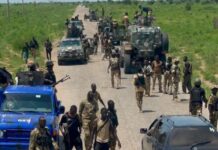
From the remote plains of Tangaza to the dry border corridors of Illela, a renewed military onslaught is underway against the remnants of the Lakurawa terror group, once feared, now retreating under the firepower of Operation Fansan Yamma.
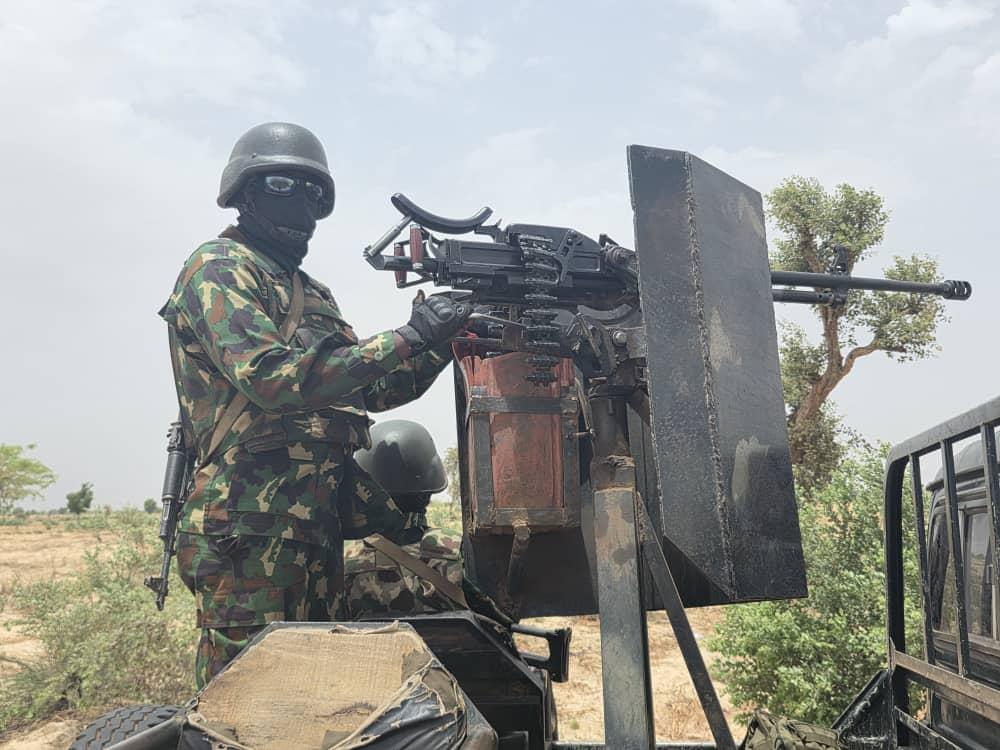
In Sokoto State’s northern flank, troops of the 248 Recce Battalion, Illela Unit, have not only dug in but are also advancing with surgical precision. Their objective is simple but critical: root out bandits and neutralize the remnants of a transnational militia that once posed a grave threat to Nigeria’s security architecture in the North-West.
Col Abdullahi Umar, commanding officer of the battalion and head of the Defence Headquarters’ Special Operations Brigade, has described the ongoing operations as decisive, sustained, and fully supported by the Nigerian Army high command.
“Before our deployment about five months ago, the Lakurawa insurgents had taken advantage of the porous border with the Niger Republic and were terrorising border communities in Binji, Gada, Gudu, Silame, and Illela. Today, the story is different,” Col. Umar told newsmen on a media tour to the unit’s forward base in Illela.
According to Umar, a combination of relentless clearance operations over 10 in the last few months and improved cross-border coordination with Nigerien security forces has drastically degraded the operational strength of the Lakurawa.
“They no longer have the capacity to launch organised attacks. We’ve forced them into retreat. Most of their fighters are on the run,” he said.
The Lakurawa group, Umar explained, did not begin as a criminal gang. Trained initially under the regime of former Nigerien President Ibrahim Baré Maïnassara in the late 1990s, the group was created to protect rural communities in Niger from cross-border cattle rustling, especially from Malian bandits.
However, over the years, especially after Maïnassara’s assassination, the group splintered, radicalized, and drifted across the Sahel into Nigeria, where it found sanctuary in ungoverned border spaces.
“Once in Nigeria, they exploited shared cultural, linguistic, and religious ties to gain the trust of locals,” Umar said. “They began recruiting youths and engaging in cattle rustling to fund their operations. Some communities even offered them shelter.”
That acceptance, according to the army, is partly why the group entrenched itself in parts of Sokoto State without immediate resistance. But once their activities turned deadly targeting farmers, extorting villagers, and disrupting local commerce, residents began to push back.
Read Also:
“Regrettably, it took violence for the locals to understand that these were not protectors but predators,” he added.
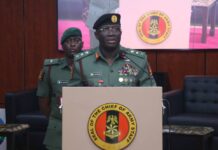
The commanding officer commended the unwavering support of the Chief of Army Staff, Lt.-Gen. Olufemi Olatubosun Oluyede, and the General Officer Commanding 8 Division and Sector Commander of Operation Fansan Yamma, Maj.-Gen. Ibikunle Ajose.
“From the day the Chief of Army Staff visited this unit shortly after his appointment, he gave directives that every request we made should be met. Our logistics have improved, and operations are no longer delayed due to supply issues,” Umar said.
Despite the high cost of maintaining a reconnaissance battalion equipped with armoured platforms, Umar stressed that troops in Illela have not experienced a shortage of critical supplies or operational equipment.
He also acknowledged the increasing effectiveness of CSK armoured vehicles in navigating the rugged terrains typical of border areas in Sokoto, noting that such platforms give troops the confidence to press ahead with operations without fear of ambush or breakdowns.
Umar also raised concern about the growing challenge of misinformation, which he said was being weaponised in some quarters to paint false narratives and fuel panic among civilians.
“We often find that after every successful operation, exaggerated casualty figures or claims of abuse circulate online none of which are verified. This undermines the confidence of the civilian population and sometimes emboldens the terror groups,” he explained.
He traced some of the tensions in the region to long-standing conflicts between Hausa farmers and Fulani pastoralists’ grievances that insurgents exploit to recruit, radicalise, and maintain local support networks.
“We must draw a line between criminality and ethnicity, between terrorism and religion. Once we stop profiling and start treating criminals as criminals irrespective of their tribe, the battle will be half-won,” he said.
The battalion maintains regular contact with Nigerien security forces to ensure seamless coordination and prevent terrorists from slipping across the border during Nigerian military operations.
“There is ongoing collaboration with our counterparts in the Niger Republic. When we move, they know. When they move, we know. That synergy is critical in border operations,” Umar stated.
With the farming season approaching, Col. Umar said troops are doubling their patrols and consolidating cleared zones to enable farmers to return to their lands safely.
“Our goal is not just to kill terrorists, but to restore confidence so that normal life —farming, trading, schooling—can resume. That is the true measure of victory,” he concluded.
*Chidi Omeje is an Editor at Zagazola Media Network