Army Says Ethnicity-Focused Social Media Attacks Part of Pro-IPOB Campaign to Undermine Military Gains in South-East
The Nigerian Army has accused pro-Indigenous People of Biafra (IPOB) actors of orchestrating a social media campaign aimed at undermining recent military gains in the South-East by diverting attention from ongoing operations and instead attacking the ethnicity of a military spokesperson.

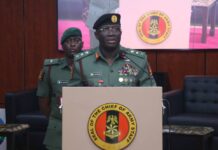
The allegation was contained in a statement issued by the Acting Deputy Director, Army Public Relations at Headquarters Operation Udo Ka (OPUK) and the 82 Division Nigerian Army, Lt. Col. Olabisi Olalekan Ayeni.
According to the Army, recent online posts disputing the authenticity of images showing improvised explosive devices (IEDs) recovered by troops were part of a coordinated propaganda effort designed to cast doubt on security operations in the region.
The military noted that instead of focusing on the operational success of troops, some social media users had attempted to stir ethnic sentiments by highlighting the background of the Army spokesperson who issued the operational update.
Describing the development as a deliberate distraction, the Army said such narratives were intended to erode public confidence in security operations and downplay the progress recorded against armed groups linked to IPOB and its militant wing, the Eastern Security Network (ESN).
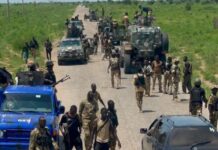
The controversy followed the release of images on 12 March 2026 showing IEDs allegedly recovered by troops during Operation Eastern Sanity, an ongoing offensive targeting insurgent camps in the Orsu axis of Imo State and Anambra State.
Some social media posts had questioned the authenticity of the photographs, claiming the devices were not recovered in the South-East and suggesting that the images originated from other parts of the country.
The Army, however, dismissed the claims as misinformation, explaining that the geolocation details on the images were intentionally blurred as a routine operational security measure.
Read Also:
“The devices in the images released were recovered during the ongoing operations EASTERN SANITY conducted simultaneously in Imo and Anambra states, as stated in the media releases on this operation. However, the geo-location on the pictures were blurred for operational security reasons and not for any ulterior motives,” the statement said.
Troops, according to the Army, have in recent weeks dismantled several camps, hideouts and IED-making facilities linked to IPOB and ESN in the Orsu–Eketutu “Mother Valley” general area, which spans parts of Imo and Anambra states.
The military further alleged that certain individuals sympathetic to IPOB manipulated metadata and geolocation markers on the released photographs in an attempt to falsely suggest that the recoveries were made in Lagos State and Oyo State rather than in the South-East.
To counter the claims and enhance transparency, the Army said it had invited media organisations, civil society groups and independent observers to undertake a verification tour of the Orsu–Eketutu Mother Valley and Orsu–Ihiteukwa operational areas.
According to the statement, interested media executives, defence correspondents and civil society representatives can liaise with the Army Public Relations Department at Headquarters 82 Division to arrange an inspection of the operational areas and view recovered IED-making materials in a controlled environment that would not compromise ongoing operations.
Reaffirming its institutional character, the Army stressed that the Nigerian military remains a professional and multi-ethnic organisation whose personnel are deployed across the country regardless of their state of origin.
“The Nigerian Army is, and remains, an apolitical, professional and multi-ethnic institution.
Personnel are deployed across the country irrespective of state of origin in service to the nation,” the statement added.
The Army also urged Nigerians to exercise caution in sharing unverified information online, warning that misinformation, ethnic profiling and propaganda could undermine security efforts in a sensitive operational environment.
It added that both the original images from the operation area, the blurred versions published on official platforms and what it described as manipulated copies circulated online had been made available for public scrutiny.