From Tragedy to Transformation: How deadly military error sparked rebirth of Tudun Biri
By Chidi Omeje
On a chilly evening in December 2023, the sleepy village of Tudun Biri, nestled in Igabi Local Government Area of Kaduna State, was suddenly thrust into the national consciousness. It was for the most heartbreaking circumstance.
Residents had gathered under the stars to celebrate Maulud, the birth of the Prophet Mohammed; a night meant for prayer and community bonding. But joy turned to horror as fate had other plans for them.
In a devastating case of mistaken identity, the Nigerian military, engaged in counterterrorism operations nearby, misidentified the gathering as a terrorist enclave, and what followed was a tragic mistaken drone strike on the innocent civilians. In mere moments, over eighty lives were tragically lost, and many more were wounded, traumatized, and broken. The incident sent shockwaves across the country, sparking outrage, grief, and a national conversation about civilian protection and military accountability.
The Nigerian Army swiftly acknowledged the mistake, calling it an “unintended and deeply regrettable accident.” In a further show of remorsefulness, the government launched a formal investigation and set up a committee to figure out how to compensate the victims and rebuild trust with the community.
Fast forward a year and six months, and the scars of that dark night, though not entirely erased, have begun to heal. The scale of the incident and the symbolic weight it carried catalyzed an unusual wave of governmental response.
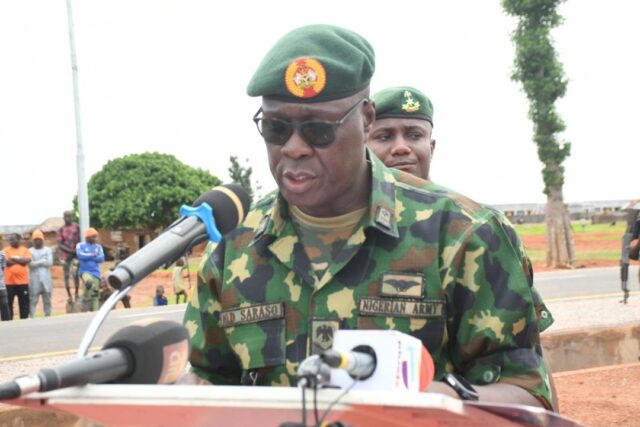
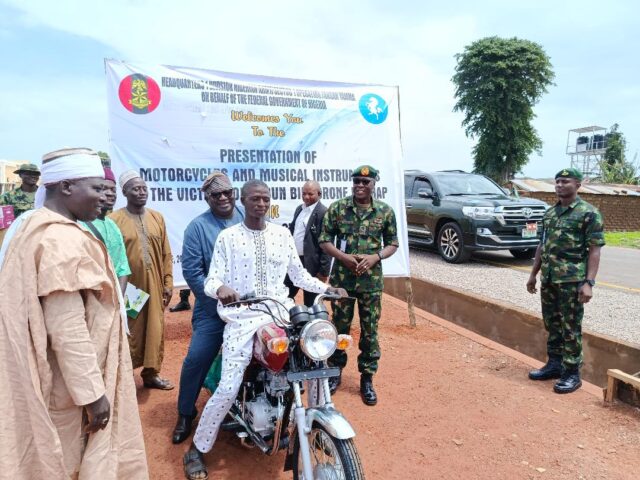
On Wednesday, June 18, 2025, this reporter was in Tudun Biri to witness the presentation of additional relief materials to the community by the General Officer Commanding (GOC) 1 Division of the Nigerian Army and Commander Sector 1 Joint Task Force Operation FASAN YAMMA, Maj Gen Mayirenso Saraso, on behalf of the Federal Government.
The atmosphere in the community had palpably changed. The tears have dried up, and hope now lingers in the air, soft but steady.
What was once a community left at the margins of government presence has become a symbol of national reckoning, resilience, and unexpected renewal. Tudun Biri now tells a story of irony, healing, and quiet transformation. In a twist of fate, the community has become a beneficiary of unprecedented attention and development following the tragic incident.
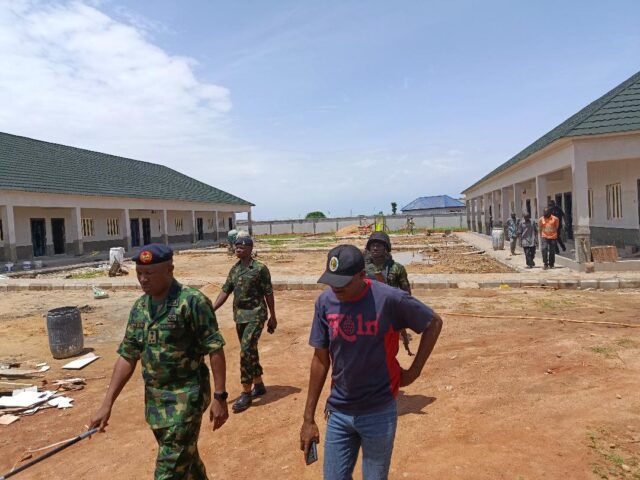
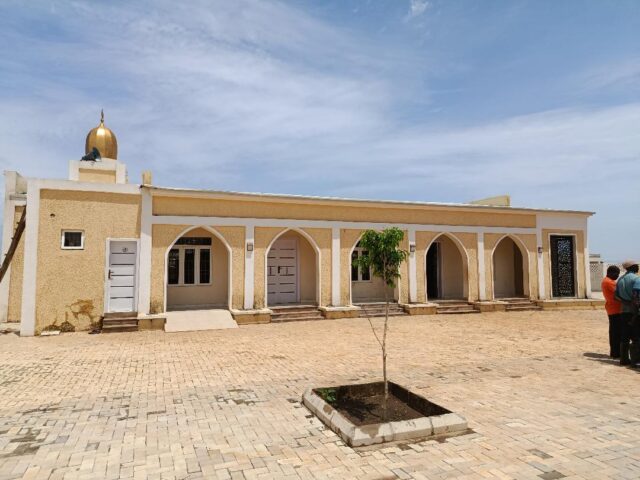
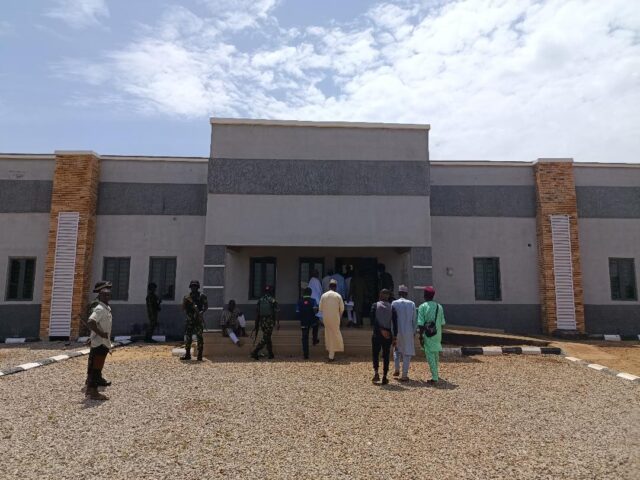
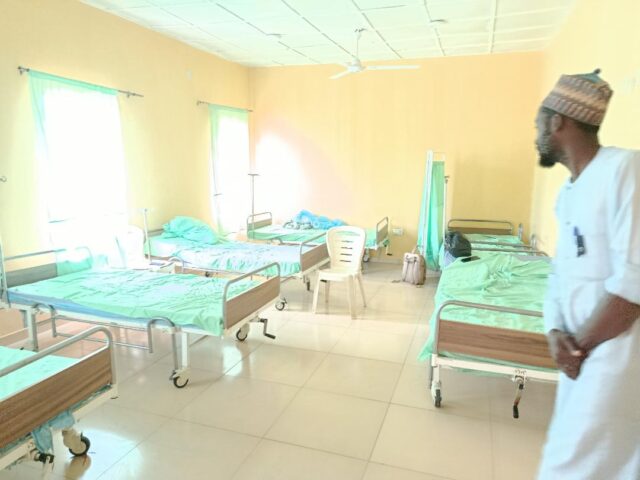
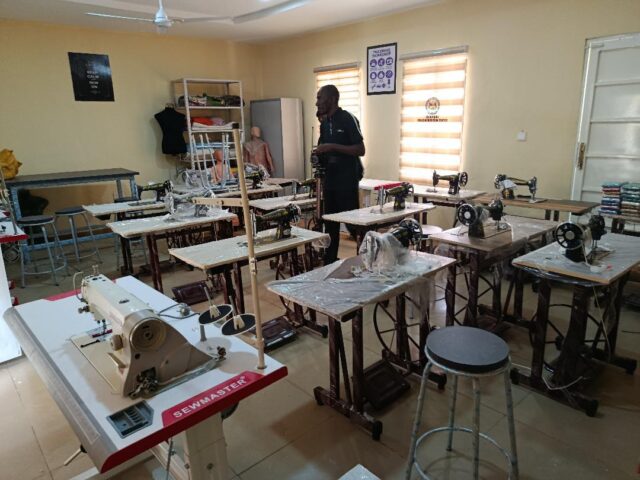
To atone for the tragedy, both the federal and Kaduna State governments, along with the Nigerian Army, have committed themselves to transforming the community’s fortunes. Tudun Biri is no longer the neglected village it once was. It now boasts a range of infrastructural projects: a newly tarred 5-kilometer access road that connects the town to nearby communities; a soon-to-be-commissioned ultra-modern primary school built by the Nigerian Army, a well-equipped clinic constructed and equipped by the Kaduna State Government; a skill acquisition centre equipped with state-of-the-art facilities; a 140-apartment housing estate that is nearing completion; a befitting mosque sitting beautifully on the ground zero (the exact place the bomb dropped); and a soon-to-be-rebuilt Baptist Church – the only church in the community.
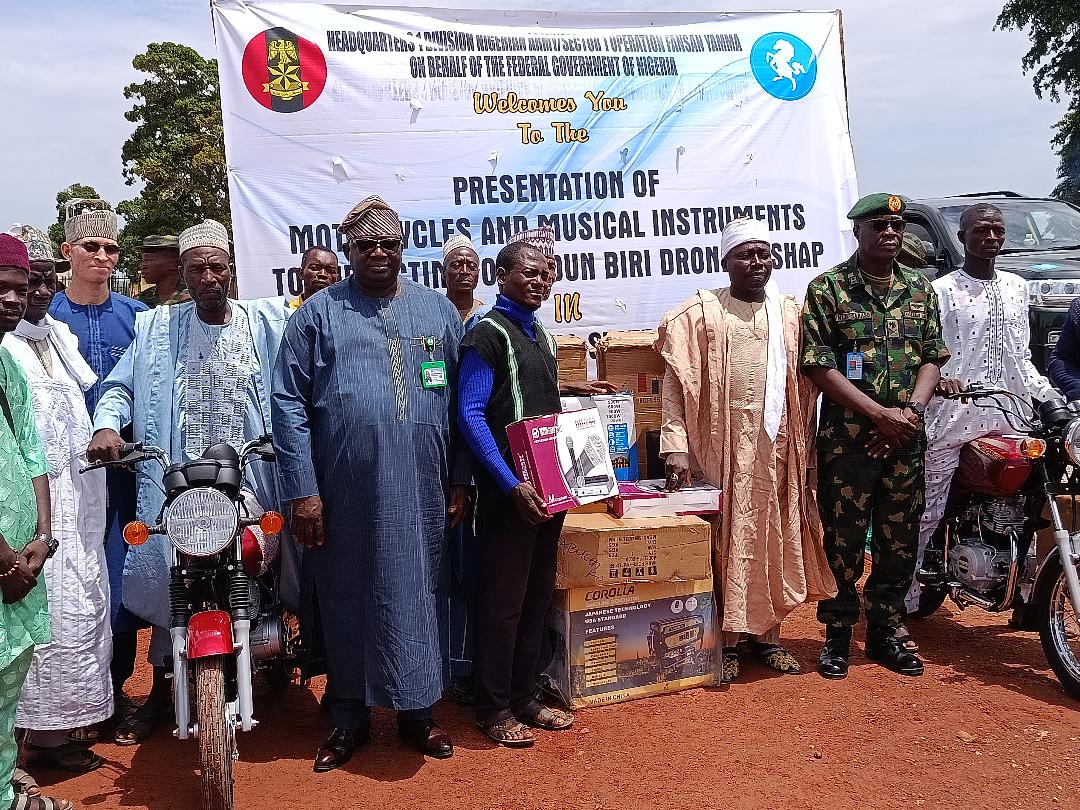
On Wednesday, the federal government again presented two motorcycles, a Corolla generator, two wireless microphones, a single power amplifier mixer, and 500 watts’ floodlights to beneficiaries, including Isuwa Haruna, Ridwan Yakubu and Isah Ahmed.
Gen Saraso said the gesture was in fulfillment of the recommendation of a high-level federal government delegation, including the former Chief of Army Staff, late Gen Lagbaja, that visited the community in the aftermath of the incident.
Read Also:
“This is not just about items; it is about rebuilding trust, healing, and continuing our engagement with the good people of Tudun Biri”.
According to him, the Nigerian Army under the leadership of Lt Gen Olufemi Oluyede takes the issue of community relations very seriously, as the Army recognizes the indispensability of the support and partnership with the people and the community in the success of its operations.
“Our presence at the community today is part of community relations efforts. We don’t neglect the non-kinetic approach, and the Chief of Army Staff, Lt Gen Oluyede is keen on ensuring that we create a robust relationship with members of the community wherever we are deployed”.
He said the event on the 3rd December, 2023 remained regrettable, adding that the Nigerian Army and indeed the entire Nigerian Armed Forces are professional forces committed to the protection of the Nigerian people and defence of the country’s geographic space.
On hand to witness the presentation of motorcycles and musical instruments to the Tudun Biri community include, Dr James Kanyip, Kaduna State Commissioner of Internal Security. He praised the resilience of the people of Tudun Biri and tasked them to remain steadfast, knowing that the government and the military have not forgotten them. He assured that Kaduna State Government will make available to the community all the necessary civil authorities, including security outposts, to ensure that the community remains secure.
For survivors like Aliyu Shehu, a young man who narrowly escaped death on that fateful night, the irony is staggering. “We lost so many dear ones that day”, he says through an interpreter, “but in trying to make amends, the government and the military have remembered us in a way we never thought possible”.
The Mai Angwar (community head) of Tudun Biri, Alhaji Balarabe Garba, was effusive in his gratitude and appreciation to the Nigerian Army and the government. He thanked President Bola Tinubu, the Chief of Army Staff, Lt Gen Oluyede and the GOC, Maj Gen Saraso, for their dedication in ensuring that Tudun Biri was not forgotten after the ugly incident.
Speaking through an interpreter, he said, “Since the sad incident, the Army has not turned their back on us; they have continued to help us rebuild our lives and we are grateful to the Chief of Army Staff”.
“Among other things, the Army is building a primary school for us, and the state government is also putting finishing touches on the clinic and skill acquisition centre. Today, the Army people have come to present motorcycles and musical instruments to our people. We are indeed grateful.”
His sentiment echoes across Tudun Biri. While the pain of loss can never be fully erased, many residents now view the tragic incident as a bitter turning point, one that brought overdue attention to their plight and needs.
Indeed, Tudun Biri’s story is one of tragic irony. A community devastated by the very forces meant to protect it has, in seeking justice, found renewal. But it also speaks to the power of institutional accountability, public empathy, and the possibility of redemption through action.
The bombs may have fallen in error, but the response that followed has, at least in part, righted the wrong in a way Nigerians rarely see. And though no development can truly compensate for the lives lost, Tudun Biri stands today as a living memorial and a hopeful example of what is possible when tragedy leads not to abandonment, but to attention.
• Chidi Omeje is a senior editor at Zagazola Media Network