
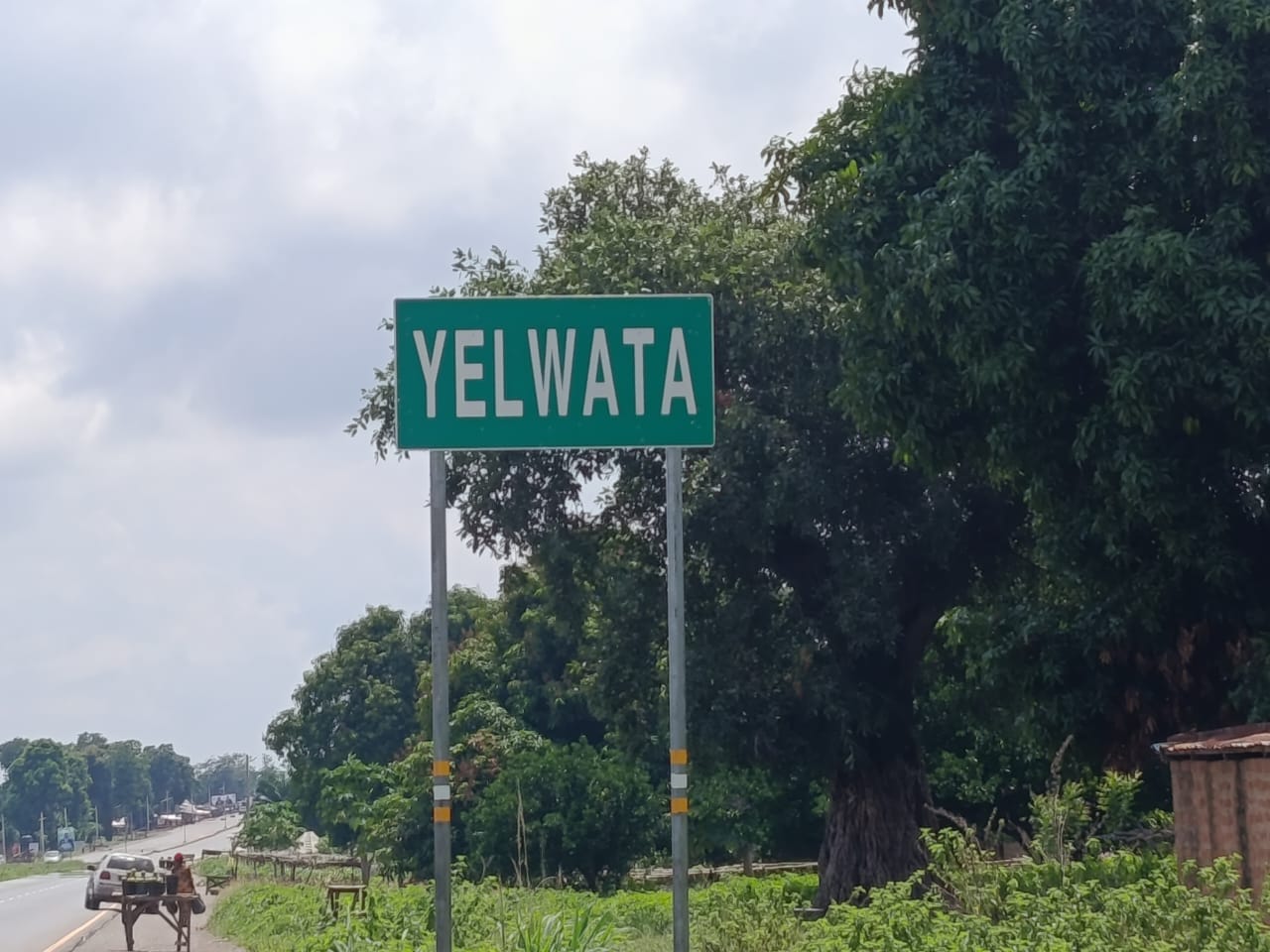
One Year After Yelwata Killings: Army-Led Security Efforts Restore Hope, Bring Displaced Residents Home
By Chidi Omeje
One year after the devastating massacre that left more than 200 residents dead and reduced Yelwata community in Benue State to ashes, signs of recovery and renewed hope are gradually emerging, driven by sustained military operations and peacebuilding efforts that have restored a measure of stability to the once-troubled area.
On June 13, 2025, Yelwata, a farming settlement in Guma Local Government Area, was plunged into one of the darkest moments in its history when armed attackers identified as Fulani bandits launched a coordinated assault in the early hours of the morning. The attackers opened fire indiscriminately, killing men, women, children and the elderly, while also razing homes, shops and critical community infrastructure.
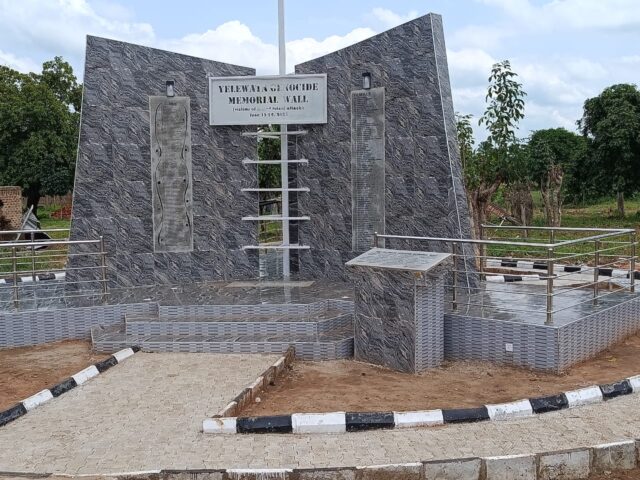
The massacre triggered national outrage and drew widespread condemnation across Nigeria and beyond. In its aftermath, survivors fled en masse, leaving the community largely deserted as fear and uncertainty gripped the area.
Twelve months later, however, the situation presents a markedly different picture.
The deployment of troops under the Chief of Army Staff (COAS) Special Intervention Battalion 11 has significantly altered the security landscape, enabling displaced residents to return and rebuild their lives. Farms that once lay abandoned are now active again, schools have reopened, markets are gradually recovering, and socioeconomic activities are steadily returning.
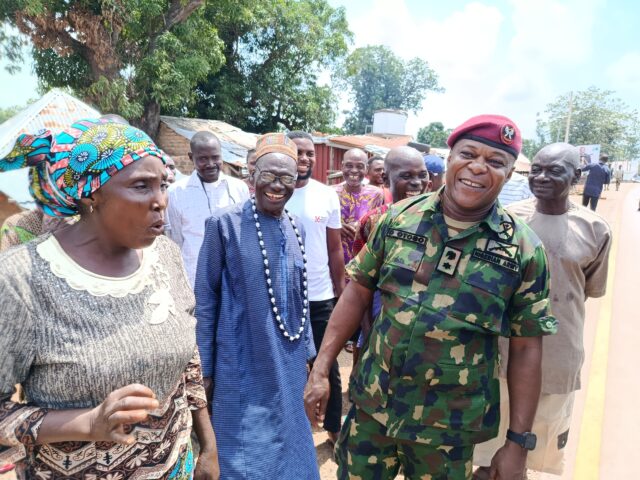
Community spokesman, Matthias, said the presence of security forces, particularly troops of the Nigerian Army, has been instrumental in restoring confidence among residents.
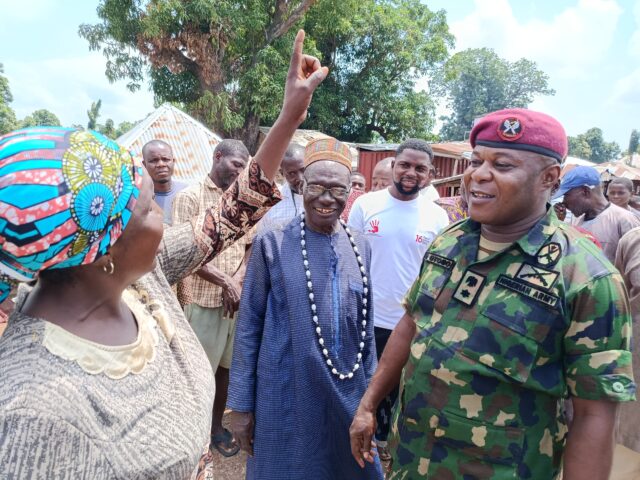
According to him, nearly 70 per cent of those who fled following the massacre have since returned.
“We are very grateful to the soldiers for the way they have conducted themselves. They have remained relentless in ensuring our safety and have helped restore confidence among our people,” he said.
“Today, economic activities are picking up, farmers are back on their farms, and people are gradually rebuilding their lives.”
Matthias commended the Nigerian Army for its professionalism and commitment to safeguarding the community, noting that residents now feel secure enough to return from internally displaced persons (IDP) camps.
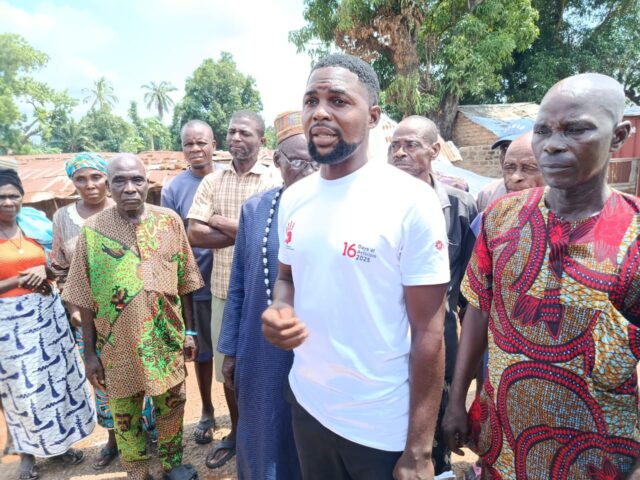
Guiding journalists around the area, the Commanding Officer of the COAS Special Intervention Battalion 11, Lt.-Col. Donatus Otobo, said sustained military pressure had transformed what was once one of Benue’s most volatile security corridors into a relatively stable environment.
Otobo disclosed that the battalion was specifically established to address persistent insecurity in Benue and underwent six months of intensive training at the Nigerian Army School of Infantry, Jaji, before deployment on July 12, 2025.
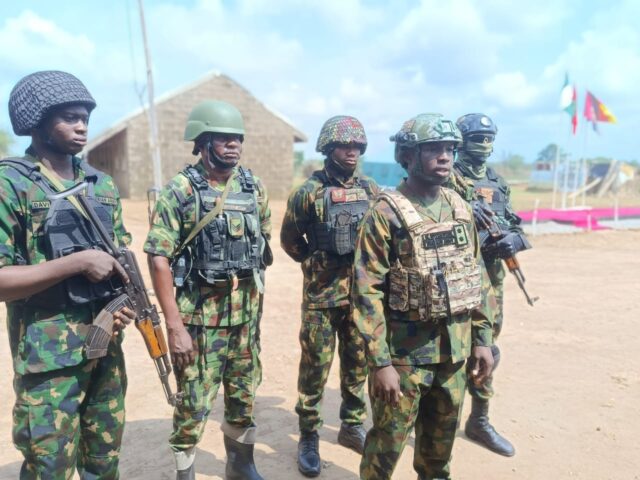
Upon arrival, the battalion was tasked with securing a 30-kilometre stretch from the Nigerian Army School of Military Engineers (NASME) to Ude in Makurdi Local Government Area, an area previously notorious for bandit attacks and violent criminal activities.
“Before our deployment, civilians could hardly travel through this corridor without risking their lives,” he said.
“During our initial reconnaissance missions, we encountered armed bandits at multiple locations. We immediately launched aggressive clearance operations and sustained pressure until they abandoned the area.”
According to him, troops penetrated difficult forest terrain on foot, denying criminal elements freedom of movement and disrupting their operational bases.
Read Also:
Within weeks, the battalion had neutralised three armed bandits and recovered two AK-47 rifles, significantly weakening criminal networks operating in the area.
The success of those operations led military authorities to expand the battalion’s area of responsibility to cover the entirety of Guma Local Government Area and parts of Makurdi.
Otobo noted that prior to military intervention, Guma recorded an average of five to six attacks weekly, largely due to its proximity to neighbouring Nasarawa State, where armed groups often launched attacks before retreating across state boundaries.
“Today, the situation has changed significantly,” he said.
“For the past six months, there has not been a single successful attack within Guma Local Government Area. This achievement is the result of aggressive patrols, intelligence-driven operations, area domination exercises and the continuous presence of troops in vulnerable communities.”
The improved security situation has also revitalised agricultural activities, a critical component of the local economy.
While soldiers initially escorted farmers to their fields for protection, Otobo said such measures have become less necessary as confidence and security improved.
“We now conduct regular farm patrols and dominate the environment. Farmers can access their lands without fear because of the security architecture we have established,” he explained.
The commander further revealed that military operations had facilitated the return of more than 1,000 internally displaced persons to their ancestral communities.
According to him, nearly 85 per cent of communities within the battalion’s operational area had been abandoned before the deployment of troops, with only a handful remaining populated due to existing military detachments.
“As of today, about 80 per cent of those communities have been reoccupied,” he said.
“The few yet to return are largely facing economic challenges rather than security concerns, having lost farming seasons and sources of livelihood.”
Beyond kinetic operations, the battalion has also adopted a robust non-kinetic approach hi aimed at addressing the root causes of communal tensions and preventing future violence.
Otobo said troops have facilitated several peace dialogues involving farmers, herders, traditional rulers and community stakeholders, helping to rebuild trust and encourage peaceful coexistence.
“People who previously could not sit together are now engaging in discussions and resolving disputes related to farmland encroachment, grazing routes and other community concerns,” he said.
“Our strategy combines military action with dialogue, stakeholder engagement and community participation. When threats arise, we respond decisively. Afterwards, we bring all parties together to sustain peace.”
He added that troops regularly engage community leaders and residents to discourage reprisals and prevent actions capable of reigniting old conflicts.
The commander attributed much of the battalion’s success to sustained support from the Chief of Army Staff, Lt.-Gen. Waidi Shaibu, Army Headquarters and the 401 Special Forces Brigade.
According to him, the Army Chief has maintained close oversight of the battalion’s welfare and operational requirements, ensuring prompt responses to challenges encountered on the ground.
“The morale of our troops remains high because their welfare is prioritised. Allowances are paid promptly, feeding arrangements are adequate, and operational needs are met in good time,” he said.
Otobo reaffirmed the battalion’s commitment to consolidating the gains already achieved and ensuring that peace becomes permanent across Guma and adjoining communities.
For the people of Yelwata, the scars of the June 2025 massacre remain fresh. Yet, one year later, the return of displaced families, the reopening of schools, renewed farming activities and the absence of fresh attacks offer tangible evidence that the community is slowly but steadily emerging from tragedy.
What was once a symbol of devastation is gradually becoming a story of resilience, recovery and the determination of a people rebuilding their future under the protection of sustained security operations.
*Chidi Omeje is the publisher of Security Digest and member of Zagazola Media Network