Plateau’s Endless Cycle of Violence: When Two Narratives Collide
By Chidi Omeje
There is a popular saying among the Nsukka people of Enugu State: when the first person in a dispute tells his story, you are so convinced that you remove your clothes in disbelief; when the second person tells his side, you hurriedly put them back on. The wisdom behind the allegorical statement is timeless; every conflict has multiple narratives, and truth often lies beyond the first account heard.
That age-old lesson came alive recently in Jos, Plateau State, when a team of senior defence and security correspondents embarked on a fact-finding mission facilitated by Operation Enduring Peace, the military task force charged with restoring stability in the troubled state.
The objective was simple but profound: listen to both sides of the long-running conflict between Plateau’s indigenous communities and Fulani groups, understand the grievances driving the violence, and explore possible pathways to peace.
What emerged from the separate engagements was a sobering portrait of a conflict sustained by decades of mistrust, competing historical claims, criminality, political failures, and deep-seated fears.
A Delicate Security Challenge
Speaking on behalf of the General Officer Commanding 3 Division and Commander, Operation Enduring Peace, Major General Folusho Oyinlola, the Chief of Staff of the operation, Brigadier General Selong Sule, described the Plateau crisis as one of Nigeria’s most complex security challenges.
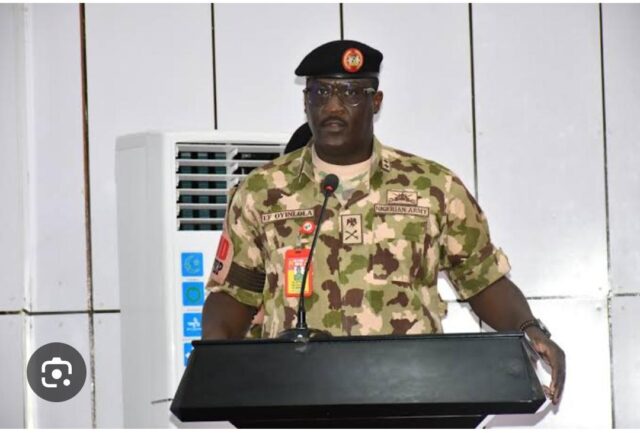
According to him, hostility between local communities and Fulani groups has become deeply entrenched, making conflict resolution increasingly difficult.
He identified several recurring triggers of violence, including destruction of farmlands by grazing cattle, kidnappings for ransom, cattle rustling, illegal mining activities, proliferation of small arms and light weapons, and growing distrust of security agencies.
The military officer also pointed to what he described as insufficient political will to decisively address recurring violations of law and order, noting that sustainable peace would require both security and political solutions.
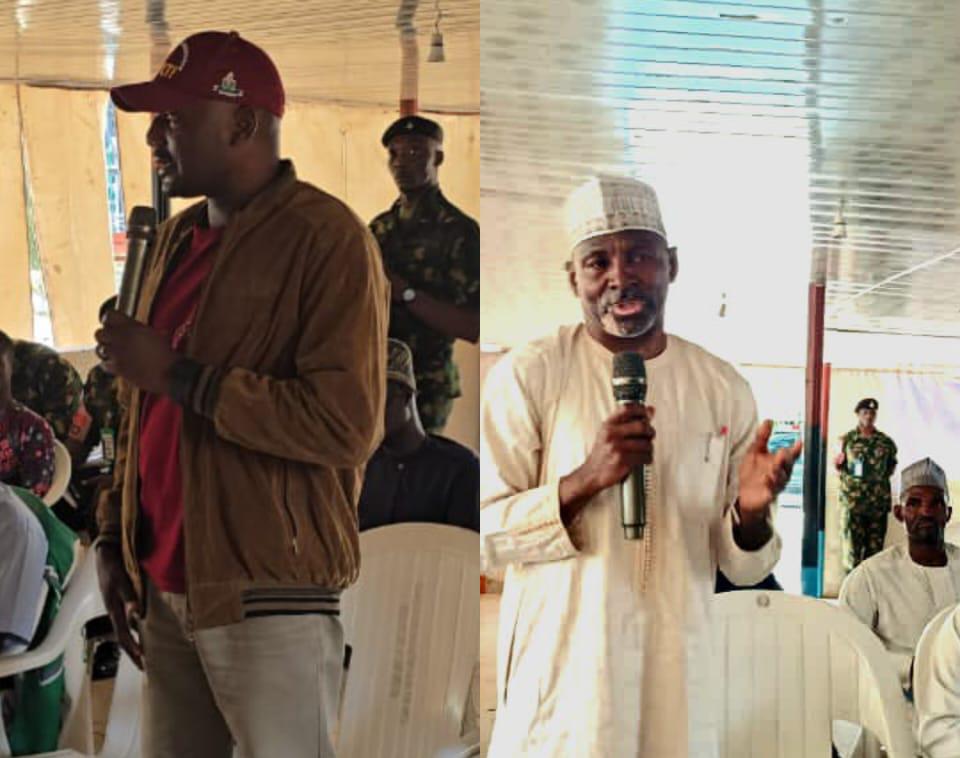
To avoid confrontations and encourage frank discussions, both groups met separately with the media team, providing detailed accounts of their experiences and perspectives.
Indigenous Communities: “We Are Under Siege”
Representatives of the Berom, Irigwe, Kulere, and Mushere communities spoke passionately about what they described as years of attacks, displacement and destruction.
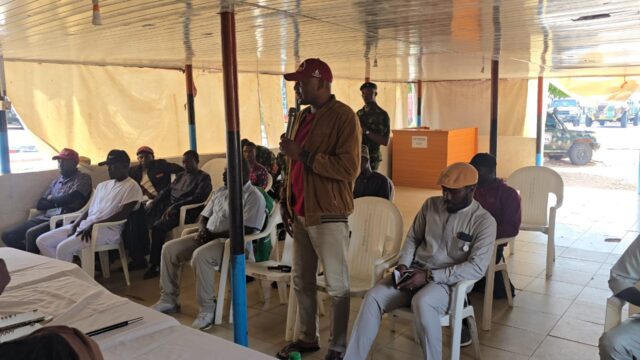
Leading the presentation for the Irigwe Youth Movement, President of Irigwe Youth Movement, Ambassador Ezekiel Peter Bini argued that the destruction of farmlands by grazing cattle remains the most persistent trigger of violence across affected communities.
According to him, irrigation farms that serve as economic lifelines for many families have suffered extensive destruction over the years.
Bini rejected the widely used description of the crisis as a “farmer-herder conflict,” insisting instead that indigenous communities view it as a campaign of land occupation and systematic attacks against local populations.
For the Birom community, represented by the National Publicity Secretary, Birom Youth Moulders Association, Rwang Tengwong, concerns centred on insecurity and alleged cross-border criminal infiltration. The group’s leader claimed that armed individuals from neighbouring countries, including Niger and Chad, had become active participants in attacks across Plateau communities.
He argued that repeated destruction of farms and perceived government inaction have left many local communities feeling abandoned and vulnerable.
“The right to life has become threatened,” he said, adding that retaliatory actions by some youths were often driven by desperation and survival instincts.
The Kulere Kingdom painted an equally troubling picture.
Its Youth President, Panye M. Joseph recounted incidents of isolated killings, mass attacks and the displacement of more than 40 communities. He alleged that many displaced residents could no longer access their farmlands because of persistent security threats.
He also highlighted the absence of telecommunications infrastructure in many rural communities, noting that the lack of telephone networks often prevents residents from alerting authorities during attacks.
Fulani Leaders: “We Too Are Victims”
Read Also:
When it was their turn, Fulani leaders in Plateau State offered a narrative that sharply contrasted with that of the indigenous groups.
Representing the Miyetti Allah leadership, Barrister Salisu Mohammed acknowledged that disputes over land remain a major driver of conflict. However, he argued that criminality exists on both sides and that some individuals have become “crisis entrepreneurs,” benefiting from continued instability.
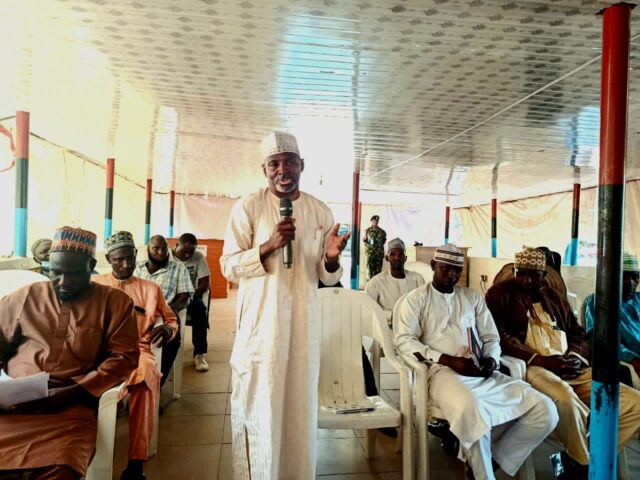
He admitted that some Fulani communities had failed to adequately expose criminal elements within their ranks but maintained that the broader Fulani population should not be judged by the actions of a few offenders.
Mohammed also pointed to what he described as a lack of political courage by government authorities to address the conflict impartially.
“Our cattle are killed regularly, yet there is no compensation,” he lamented, alleging unequal treatment in the distribution of relief and support to victims of violence.
According to him, mutual suspicion lies at the heart of the crisis. “Fulani suspects Berom; Berom suspects Fulani,” he observed.
To break the cycle, he advocated sustained dialogue among all stakeholders, stronger control of illegal arms, dismantling of illicit weapons production networks, and government-supported modern livestock management systems.
While supporting the transition to ranching, he argued that the high cost of establishing ranches makes government intervention necessary.
Another Fulani leader, Mallam Ado, acknowledged that grazing on cultivated farmlands is wrong but argued that unrestricted expansion of farming activities has also reduced traditional grazing routes and opportunities.
He called for equal application of justice and the reopening of designated grazing areas, while alleging discriminatory treatment against Fulani communities by state authorities.
The Miyetti Allah Youth leader, Alhaji Nuhu Mainasara, blamed recurring violence on civilians taking the law into their own hands.
He maintained that Fulani groups do not oppose the arrest and prosecution of criminals within their communities but accused some indigenous groups of resisting accountability when their members are implicated in violence.
He alleged one-sided treatment by the state government in favour of the indigenes. He cited an example of when the First Lady, Mrs Tinubu visited last year and donated N500m and came again this year and donated another N1billion to distressed people in the state, not a kobo was given to the Fulanis.
The Youth leader said taking laws into their hands by civilians in Plateau State have triggered a serious cycle of violence and crisis in the state. He said his group has never protested the arrest of any Fulani criminal. The same cannot be said of the other side, he claimed. He complained that false allegations against Fulanis in the state are rampant.
Nuhu also alleged that Fulani travellers are often times singled out from vehicles and get killed on roads, and that many Fulani families have been displaced from properties they legally acquired.
“We are often excluded from governance and security consultations,” he said, adding that profiling all Fulanis as criminals only deepens divisions and fuels resentment.
Between Two Truths
Listening to both sides revealed a troubling reality: each community sees itself as the victim and the other as the aggressor.
The indigenous groups speak of killings, land loss, destruction of farmlands and displacement. Fulani leaders speak of discrimination, cattle rustling, exclusion and collective blame. Both complain of insecurity. Both accuse government of bias. Both express frustration with the failure of authorities to deliver justice.
Yet amid the competing narratives, one point of convergence stood out, both sides acknowledged that criminal elements exploit the conflict, and both recognised the need for stronger government intervention and genuine dialogue while commending the Nigerian military the important roles they’ve continued to play in brining peace and security to Plateau State.
The challenge for Plateau, therefore, is not merely identifying who is right or wrong. It is finding a way to break a cycle of violence that has endured for decades and continues to consume lives, livelihoods and communities.
Perhaps the old Nsukka proverb offers the most important lesson.
Until Nigerians are willing to listen to both sides, remove their clothes, and then put them back on again, the search for lasting peace on the Plateau may remain elusive.This version strengthens the storytelling, removes repetitive language, improves neutrality, and ends with a powerful callback to the opening proverb, giving the feature article greater impact and readability.
*Chidi Omeje is the publisher of Security Digest and member of Zagazola Media Network